火炬松半同胞家系针叶儿茶素类含量遗传评估

孙继梦, 贾宗源, 罗洁贤, 宁华珙, 吕欣欣, 黄少伟, 刘天颐

南京林业大学学报(自然科学版) ›› 2025, Vol. 49 ›› Issue (6) : 135-144.

PDF(1937 KB)
PDF(1937 KB)
南京林业大学学报(自然科学版) ›› 2025, Vol. 49 ›› Issue (6) : 135-144. DOI: 10.12302/j.issn.1000-2006.202402029
研究论文

火炬松半同胞家系针叶儿茶素类含量遗传评估

作者信息 +

Genetic evaluation of catechins content in needles of Pinus taeda half-sib families

Author information +
文章历史 +

摘要

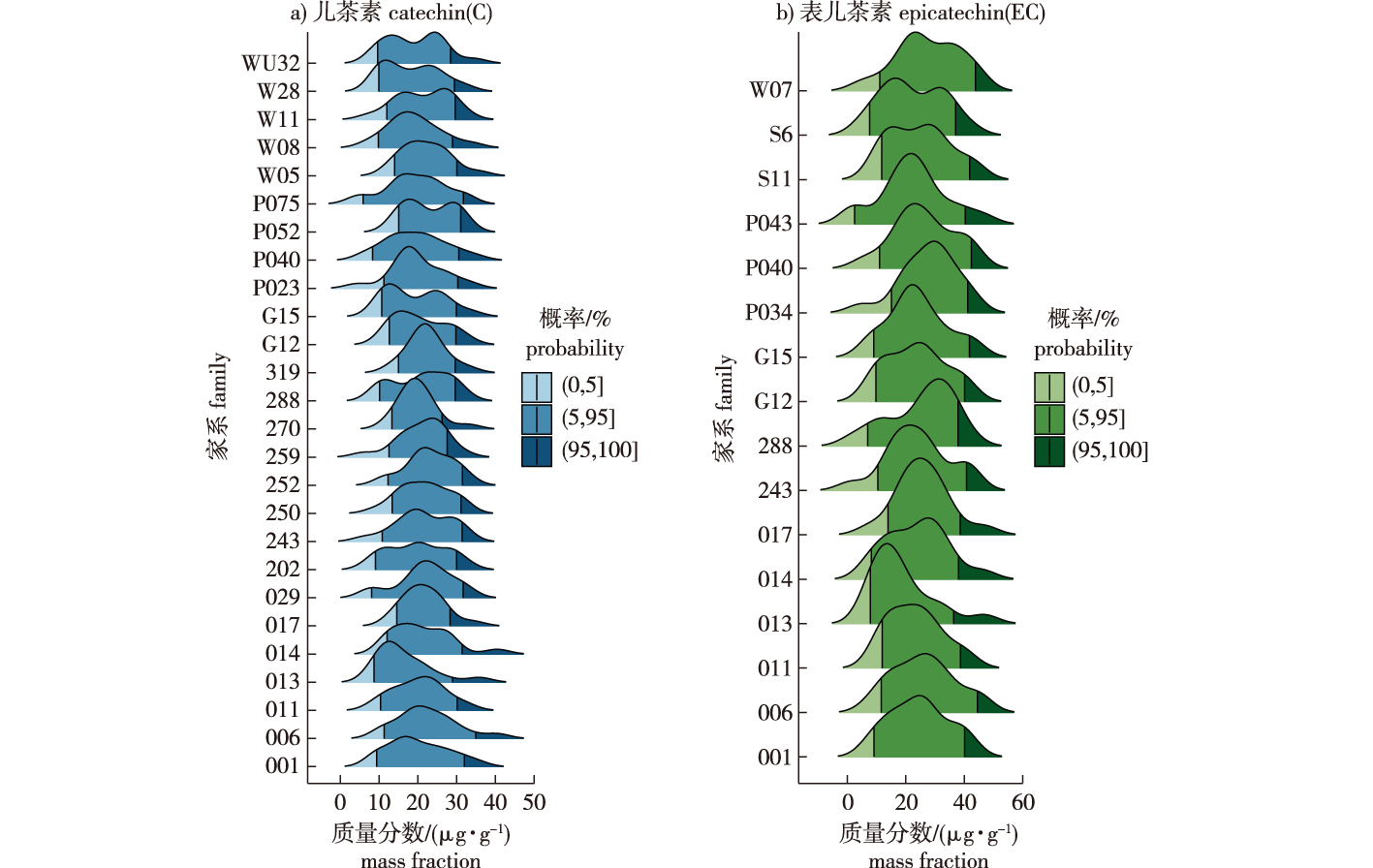
【目的】对火炬松(Pinus taeda)儿茶素类含量在家系间和家系内的遗传变异进行评估,根据遗传变异特性确定优良家系和优良单株,为高儿茶素类火炬松人工林的培育与良种选育提供材料与理论参考。【方法】以54个家系864单株的火炬松针叶为材料,用近红外预测模型测定样品的儿茶素与表儿茶素含量,用ASReml V4软件对针叶儿茶素类含量进行遗传评估。根据育种值排名选择入选家系和单株,预测遗传增益。【结果】火炬松儿茶素和表儿茶素含量在家系间和家系与区组互作效应均达到极显著水平,具有较大的选择潜力。其中儿茶素与表儿茶素的家系平均遗传力为0.376±0.131和0.292±0.147,单株遗传力为0.172±0.091和0.124±0.084,家系内遗传力为0.146±0.080和0.104±0.073。本研究采用3种方法筛选优良单株:①通过育种值排名直接筛选出的单株儿茶素育种值为2.034 2~2.886 4,表儿茶素育种值为2.409 4~3.268 0;②在育种值排名的基础上控制家系入选率筛选出的优良单株,儿茶素育种值为1.793 1~2.886 4,表儿茶素育种值为2.262 8~3.268 0;③通过配合选择筛选,儿茶素遗传增益为1.390 9~2.886 4,表儿茶素遗传增益为1.665 6~3.267 9。【结论】将儿茶素类含量作为生长性状之外的另一选育目标,选育出的优良家系与单株既可作为火炬松高世代遗传改良的基因资源,又可作为高儿茶素类含量火炬松人工林的繁殖材料。

Abstract

【Objective】Pinus taeda (loblolly pine) stands as a globally significant industrial timber species, where genetic improvement efforts have historically centered on growth traits. Given the pivotal role of catechins within the phenylpropanoid metabolic pathway, their potent capacity for scavenging reactive oxygen species (ROS), their contribution to enhanced plant stress resistance, and their substantial application potential in pharmaceutical and food industries, the screening of loblolly pine germplasm resources exhibiting high catechin content is of considerable scientific and practical importance. This study aims to evaluate the genetic variation of catechin and epicatechin contents among and within families of Pinus taeda (loblolly pine). Based on the genetic variation characteristics, superior families and elite individual trees are identified, providing materials and theoretical references for the cultivation of high-catechin Pinus taeda plantations and the selective breeding of fine varieties.【Method】The trial was conducted within a plantation managed by the Forestry Science Research Institute of Yingde City, Guangdong Province, China (113°45' E,24°15' N). The plant material comprised open-pollinated progenies from a 1.5-generation seed orchard of loblolly pine, established in spring 2015. A randomized complete block design was implemented, consisting of eight blocks and 54 families. Each plot contained five trees planted in a single row, with a spacing of 3 m × 3 m, resulting in a total of 864 individual trees sampled. Needle samples were collected, and their diffuse reflectance spectra were acquired using a Perten DA7200 near-infrared (NIR) spectrometer across a wavelength range of 950-1 650 nm, at a resolution of 5 nm, and a scanning speed of approximately 100 spectra per second. Each sample was repacked and scanned three times, yielding a total of 9 spectra per sample. Utilizing a previously established and validated NIR prediction model for needle catechin and epicatechin contents (calibration set: R2 = 0.92, RMSEC = 1.53 μg/g; validation set: R2 = 0.88, RMSEP = 1.84 μg/g, RPD = 3.1), spectral data preprocessing and quantitative analysis were performed on Unscrambler X 10.4 software platform. Preprocessing involved Standard Normal Variate (SNV) transformation combined with Savitzky-Golay first-derivative smoothing for noise reduction. Data visualization and fundamental statistical analysis were conducted using R software (version 4.2.3). Genetic analyses employed the ASReml-R V4 software platform to fit mixed linear models. Best Linear Unbiased Prediction (BLUP) was used to estimate family effects and individual tree breeding values. Key genetic parameters, including family heritability, individual heritability, and within-family heritability, were calculated. Analysis of variance (ANOVA) was performed to assess the significance of effects due to family, block, and their interaction.【Result】Genetic variance analysis revealed that the contents of both catechin (C) and epicatechin (EC) in loblolly pine needles exhibited highly significant variation (P < 0.01) among families and for the family-by-block interaction effect, indicating substantial exploitable genetic variation and significant selection potential. Estimates of genetic parameters were as follows: family heritability was 0.376 ± 0.131 for C and 0.292 ± 0.147 for EC; Individual heritability was 0.172 ± 0.091 for C and 0.124 ± 0.084 for EC; Within-family heritability was 0.146 ± 0.080 for C and 0.104 ± 0.073 for EC. The performance of elite individuals selected via the three methods was characterized: (1) Direct breeding value selection. Selected individuals exhibited C breeding values ranging from 2.034 2-2.886 4 and EC breeding values ranging from 2.409 4-3.268 0. This method yielded the highest individual breeding values but resulted in selections concentrated within fewer families. (2) Selection controlling family co-ancestry. For C, eight families were selected (two trees per family), with breeding values ranging from 1.793 1-2.886 4. For EC, nine families were selected (two trees per family), with breeding values ranging from 2.262 8-3.268 0. This strategy effectively combined genetic gain at both the family and individual levels. (3) Combined selection. For C, this strategy selected five families (two trees per family) and seven families (one tree per family), yielding genetic gains ranging from 1.390 9-2.886 4. For EC, it selected five families (two trees per family) and seven families (one tree per family), yielding genetic gains ranging from 1.665 6-3.267 9.【Conclusion】This study conclusively demonstrates the existence of substantial and exploitable genetic variation in catechin and epicatechin contents within loblolly pine needles. Through systematic genetic evaluation and multi-strategy selection, superior families and elite individual trees exhibiting high breeding values and predicted genetic gains for both C and EC were successfully identified. Targeting catechin contents as an independent and crucial breeding objective, distinct from traditional growth traits, represents a significant paradigm shift. The selected elite germplasm provides invaluable genetic resources for advancing high-generation genetic improvement programs in loblolly pine. Moreover, these materials can be directly utilized as superior propagation stock for establishing plantations specifically dedicated to high catechin production. This research holds considerable theoretical and practical significance for propelling the selective breeding of loblolly pine towards enhanced functional compound utilization and value-added applications.

关键词

火炬松 / 儿茶素 / 表儿茶素 / 育种值 / 遗传力 / 遗传增益

Key words

Pinus taeda (loblolly pine) / catechin / epicatechin / breeding value / heritability / genetic gain

引用本文

导出引用
孙继梦, 贾宗源, 罗洁贤, . 火炬松半同胞家系针叶儿茶素类含量遗传评估[J]. 南京林业大学学报(自然科学版). 2025, 49(6): 135-144 https://doi.org/10.12302/j.issn.1000-2006.202402029
SUN Jimeng, JIA Zongyuan, LUO Jiexian, et al. Genetic evaluation of catechins content in needles of Pinus taeda half-sib families[J]. Journal of Nanjing Forestry University (Natural Sciences Edition). 2025, 49(6): 135-144 https://doi.org/10.12302/j.issn.1000-2006.202402029
中图分类号: S722.5   

参考文献

[1]
FREDERICK W J, LIEN S J, COURCHENE C E, et al. Production of ethanol from carbohydrates from loblolly pine:a technical and economic assessment[J]. Bioresource Technology, 2008, 99(11):5051-5057.DOI: 10.1016/j.biortech.2007.08.086.
[2]
潘志刚. 15年生火炬松种源试验研究初报[J]. 林业科学, 2000, 36(S1):70-79.
PAN Z G. Preliminary report on provenance test of 15-year-old loblolly pine[J]. Scientia Silvae Sinicae, 2000, 36(S1):70-79.DOI: 10.3321/j.issn:1001-7488.2000.Z1.010.
[3]
钟伟华, 石斌, 何昭珩, 等. 美国火炬松优良家系引种试验研究[J]. 广东林业科技, 1997, 13(2):1-6.
ZHONG W H, SHI B, HE Z H, et al. Trial of introduced superior families in loblolly pine from the United States[J]. Forestry and Environmental Science, 1997, 13(2):1-6.
[4]
BROWN D E, RASHOTTE A M, MURPHY A S, et al. Flavonoids act as negative regulators of auxin transport in vivo in Arabidopsis[J]. Plant Physiology, 2001, 126(2):524-535.DOI: 10.1104/pp.126.2.524.
[5]
TAN H J, MAN C, XIE Y, et al. A crucial role of GA-regulated flavonol biosynthesis in root growth of Arabidopsis[J]. Molecular Plant, 2019, 12(4):521-537.DOI: 10.1016/j.molp.2018.12.021.
[6]
TANASE C, BUJOR O, POPA V. Phenolic natural compounds and their influence on physiological processes in plants[M]// Polyphenolsin plants. CambridgeMA, USA: Academic Press,2019:45-58.
[7]
LANDI M, TATTINI M, GOULD K S. Multiple functional roles of anthocyanins in plant-environment interactions[J]. Environmental and Experimental Botany, 2015, 119:4-17.DOI: 10.1016/j.envexpbot.2015.05.012.
[8]
AGATI G, CEROVIC Z G, PINELLI P, et al. Light-induced accumulation of ortho-dihydroxylated flavonoids as non-destructively monitored by chlorophyll fluorescence excitation techniques[J]. Environmental and Experimental Botany, 2011, 73:3-9.DOI: 10.1016/j.envexpbot.2010.10.002.
[9]
葛诗蓓, 张学宁, 韩文炎, 等. 植物类黄酮的生物合成及其抗逆作用机制研究进展[J]. 园艺学报, 2023, 50(1):209-224.
摘要
类黄酮是一类具有“黄烷”骨架的数千种衍生产物的次生代谢物质,其生物合成通路错综复杂,部分通路和相关蛋白酶已被解析和鉴定。类黄酮在植物的生长发育、花和果实的品质形成中起到重要作用。研究表明,植物类黄酮在各类胁迫下响应,有效提高了植物应对胁迫的耐性和抗性。本文综述了类黄酮在植物中的生物合成通路和分子调控机制,类黄酮在植物应对不同胁迫时的响应和作用机制,以及类黄酮未来研究的发展方向,以期为定向培育高抗性、具备深加工和产品开发的园艺作物品种提供理论支撑。
GE S B, ZHANG X N, HAN W Y, et al. Research progress on plant flavonoids biosynthesis and their anti-stress mechanism[J]. Acta Horticulturae Sinica, 2023, 50(1):209-224.DOI: 10.16420/j.issn.0513-353x.2021-1186.
[10]
童观珍, 付晓萍, 杨艳, 等. 表儿茶素的分布及药理活性研究进展[J]. 云南农业大学学报(自然科学), 2018, 33(2):343-349.
TONG G Z, FU X P, YANG Y, et al. Advances in research on the distribution and pharmacological activities of epicatechin[J]. Journal of Yunnan Agricultural University (Natural Science), 2018, 33(2):343-349.DOI: 10.12101/j.issn.1004-390X(n).201705044.
[11]
GERON C D, ARNTS R R. Seasonal monoterpene and sesquiterpene emissions from Pinus taeda and Pinus virginiana[J]. Atmospheric Environment, 2010, 44(34):4240-4251.DOI: 10.1016/j.atmosenv.2010.06.054.
[12]
NAKANISHI T, MUKAI K, YUMOTO H, et al. Anti-inflammatory effect of catechin on cultured human dental pulp cells affected by bacteria-derived factors[J]. European Journal of Oral Sciences, 2010, 118(2):145-150.DOI: 10.1111/j.1600-0722.2010.00714.x.
[13]
NANCE C L, SIWAK E B, SHEARER W T. Preclinical development of the green tea catechin,epigallocatechin gallate,as an HIV-1 therapy[J]. Journal of Allergy and Clinical Immunology, 2009, 123(2):459-465.DOI: 10.1016/j.jaci.2008.12.024.
[14]
夏涛, 高丽萍. 类黄酮及茶儿茶素生物合成途径及其调控研究进展[J]. 中国农业科学, 2009, 42(8):2899-2908.
XIA T, GAO L P. Advances in biosynthesis pathways and regulation of flavonoids and catechins[J]. Scientia Agricultura Sinica, 2009, 42(8):2899-2908.DOI: 10.3864/j.issn.0578-1752.2009.08.031.
[15]
IÑIGUEZ-FRANCO F, SOTO-VALDEZ H, PERALTA E, et al. Antioxidant activity and diffusion of catechin and epicatechin from antioxidant active films made of poly(L-lactic acid)[J]. Journal of Agricultural and Food Chemistry, 2012, 60(26):6515-6523.DOI: 10.1021/jf300668u.
[16]
DEB G, THAKUR V S, LIMAYE A M, et al. Epigenetic induction of tissue inhibitor of matrix metalloproteinase-3 by green tea polyphenols in breast cancer cells[J]. Molecular Carcinogenesis, 2015, 54(6):485-499.DOI: 10.1002/mc.22121.
Aberrant epigenetic silencing of the tissue inhibitor of matrix metalloproteinase-3 (TIMP-3) gene that negatively regulates matrix metalloproteinases (MMPs) activity has been implicated in the pathogenesis and metastasis of breast cancer. In the present study, we demonstrate that green tea polyphenols (GTP) and its major constituent, epigallocatechin-3-gallate (EGCG) mediate epigenetic induction of TIMP-3 levels and play a key role in suppressing invasiveness and gelatinolytic activity of MMP-2 and MMP-9 in breast cancer cells. Treatment of MCF-7 and MDA-MB-231 breast cancer cells with 20 µM EGCG and 10 µg/mL GTP for 72 h significantly induces TIMP-3 mRNA and protein levels. Interestingly, investigations into the molecular mechanism revealed that TIMP-3 repression in breast cancer cells is mediated by epigenetic silencing mechanism(s) involving increased activity of the enhancer of zeste homolog 2 (EZH2) and class I histone deacetylases (HDACs), independent of promoter DNA hypermethylation. Treatment of breast cancer cells with GTP and EGCG significantly reduced EZH2 and class I HDAC protein levels. Furthermore, transcriptional activation of TIMP-3 was found to be associated with decreased EZH2 localization and H3K27 trimethylation enrichment at the TIMP-3 promoter with a concomitant increase in histone H3K9/18 acetylation. Our findings highlight TIMP-3 induction as a key epigenetic event modulated by GTPs in restoring the MMP:TIMP balance to delay breast cancer progression and invasion.© 2014 Wiley Periodicals, Inc.
[17]
PRINCE P D, FISCHERMAN L, TOBLLI J E, et al. LPS-induced renal inflammation is prevented by (-)-epicatechin in rats[J]. Redox Biology, 2017, 11:342-349.DOI: 10.1016/j.redox.2016.12.023.
This work investigated the capacity of (-)-epicatechin to prevent the renal damage induced by LPS administration in rats. Male Sprague Dawley rats were fed for 4 days a diet without or with supplementation with (-)-epicatechin (80mg/kg BW/d), and subsequently i.p. injected with lipopolysaccharide (LPS). Six hours after injection, LPS-treated rats exhibited increased plasma creatinine and urea levels as indicators of impaired renal function. The renal cortex of the LPS-treated rats showed: i) increased expression of inflammatory molecules (TNF-α, iNOS and IL-6); ii) activation of several steps of NF-κB pathway; iii) overexpression of TLR4, and iv) higher superoxide anion production and lipid peroxidation index in association with increased levels of gp91 and p47 (NOX2) and NOX4. Pretreatment with dietary (-)-epicatechin prevented the adverse effects of LPS challenge essentially by inhibiting TLR4 upregulation and NOX activation and the consequent downstream events, e.g. NF-kB activation.Copyright © 2016 The Authors. Published by Elsevier B.V. All rights reserved.
[18]
WU B K, YUAN R Y, CHANG Y P, et al. Epicatechin isolated from Tripterygium wilfordii extract reduces tau-GFP-induced neurotoxicity in zebrafish embryo through the activation of Nrf2[J]. Biochemical and Biophysical Research Communications, 2016, 477(2):283-289.DOI: 10.1016/j.bbrc.2016.06.058.
[19]
BETTS J W, KELLY S M, HASWELL S J. Antibacterial effects of theaflavin and synergy with epicatechin against clinical isolates of Acinetobacter baumannii and Stenotrophomonas maltophilia[J]. International Journal of Antimicrobial Agents, 2011, 38(5):421-425.DOI: 10.1016/j.ijantimicag.2011.07.006.
[20]
MORENO-ULLOA A, CID A, RUBIO-GAYOSSO I, et al. Effects of (-)-epicatechin and derivatives on nitric oxide mediated induction of mitochondrial proteins[J]. Bioorganic & Medicinal Chemistry Letters, 2013, 23(15):4441-4446.DOI: 10.1016/j.bmcl.2013.05.079.
[21]
邱冰, 胡惠静. 松针在医药中的研究进展[J]. 中医药信息, 2017, 34(6):130-133.
QIU B, HU H J. Medical research progress of pine needles[J]. Information on Traditional Chinese Medicine, 2017, 34(6):130-133.DOI: 10.3969/j.issn.1002-2406.2017.06.037.
[22]
詹忠根. 野艾蒿黄酮对活性氧自由基的清除作用及其脂肪酸成分的GC-MS分析[J]. 食品科技, 2008, 33(11):177-179.
ZHAN Z G. Effects of anti-active oxygen free radicals of flavonoids and analysis of fatty acids by GC-MS from Artemisia vulgaris L[J]. Food Science and Technology, 2008, 33(11):177-179.DOI: 10.3969/j.issn.1005-9989.2008.11.050.
[23]
李莲芳, 杨丽莉, 龙艳昆, 等. 紫外分光光度法测定大枣中总黄酮的研究[J]. 云南中医中药杂志, 2019, 40(8):75-77.
LI L F, YANG L L, LONG Y K, et al. Study on determination of total flavonoids in jujube by ultraviolet spectrophotometry[J]. Yunnan Journal of Traditional Chinese Medicine and Materia Medica, 2019, 40(8):75-77.DOI: 10.16254/j.cnki.53-1120/r.2019.08.029.
[24]
任园宇, 魏东伟, 王中伟, 等. 亚硝酸钠-硝酸铝比色法测定干旱胁迫前后玉米幼苗的总黄酮含量[J]. 农学学报, 2020, 10(5):15-20.
摘要
为研究干旱胁迫对不同品种玉米幼苗总黄酮含量的影响,采用亚硝酸钠-硝酸铝比色法,对干旱胁迫前后'浚单20'、'郑单958'和'豫玉22'玉米幼苗的总黄酮含量进行测定,并对试验方法进行方法学考察。结果表明,3个品种玉米幼苗在干旱胁迫前总黄酮含量从高到低依次为'浚单20'、'郑单958'、'豫玉22',干旱胁迫后总黄酮含量从高到低依次为'郑单958'、'浚单20'、'豫玉22'。干旱胁迫后3个品种玉米幼苗总黄酮含量均有所提升,其中'郑单958'在干旱胁迫后总黄酮含量提升最多,为16.21%,'浚单20'其次,为7.61%,'豫玉22'提升较少,为2.67%。亚硝酸钠-硝酸铝比色法测定玉米幼苗总黄酮含量时,其精密度、稳定性和加标回收率均符合方法学要求,具有良好的可行性。干旱胁迫前后,不同品种玉米幼苗由于自身对干旱的敏感程度不同,其总黄酮含量有不同程度的响应。本试验可为研究干旱胁迫下不同品种玉米次生代谢产物总黄酮含量的变化提供一定的参考依据。
REN Y Y, WEI D W, WANG Z W, et al. Total flavonoids in maize seedlings before and after drought stress:determination with sodium nitrite-aluminum nitrate colorimetry[J]. Journal of Agriculture, 2020, 10(5):15-20.DOI: 10.11923/j.issn.2095-4050.cjas20190800161.
[25]
周芳, 郑国栋, 蒋林, 等. 薄层扫描法同时测定广陈皮中三种黄酮化合物的含量[J]. 中药材, 2009, 32(6):911-913.
ZHOU F, ZHENG G D, JIANG L, et al. Simultaneous determination of three flavonoids in pericarpium citri Tangerinae by TLC scanning[J]. Journal of Chinese Medicinal Materials, 2009, 32(6):911-913.DOI: 10.13863/j.issn1001-4454.2009.06.059.
[26]
包强, 刘丽梅, 王延玲, 等. 中药材有效部位总黄酮含量测定方法研究概述[J]. 中国中医药信息杂志, 2018, 25(4):136-140.
BAO Q, LIU L M, WANG Y L, et al. Research overview on content determination methods of total flavonoids in effective parts of Chinese materia medica[J]. Chinese Journal of Information on Traditional Chinese Medicine, 2018, 25(4):136-140.DOI: 10.3969/j.issn.1005-5304.2018.04.031.
[27]
吕欣欣, 冯志恒, 林熙, 等. 火炬松针叶儿茶素含量近红外预测模型的建立[J]. 西北农林科技大学学报(自然科学版), 2022, 50(6):28-34.
X X, FENG Z H, LIN X, et al. Establishment of near-infrared prediction model for catechin content in Pinus taeda L.needles[J]. Journal of Northwest A & F University (Natural Science Edition), 2022, 50(6):28-34.DOI: 10.13207/j.cnki.jnwafu.2022.06.004.
[28]
李赛楠, 吕欣欣, 林熙, 等. 基于近红外光谱技术建立火炬松针叶表儿茶素含量的预测模型[J]. 分子植物育种, 2023, 21(11):3761-3770.
LI S N, X X, LIN X, et al. Prediction model of L-epicatechin content in Pinus taeda based on near infrared spectroscopy[J]. Molecular Plant Breeding, 2023, 21(11):3761-3770.DOI: 10.13271/j.mpb.021.003761.
[29]
林元震, 陈晓阳. R与ASReml-R统计分析教程[M]. 北京: 中国林业出版社, 2014, 467-500.
LIN Y Z, CHEN X Y. R and ASReml-R statistical analysistutorial[M]. Beijing: China Forestry Publishing House,2014:467-500.
[30]
KUDINOV A A, KOIVULA M, AAMAND G P, et al. Single-step genomic BLUP with many metafounders[J]. Frontiers in genetics, 2022, 13:1012205.DOI:10.3389/fgene.2022.1012205.
Single-step genomic BLUP (ssGBLUP) model for routine genomic prediction of breeding values is developed intensively for many dairy cattle populations. Compatibility between the genomic (G) and the pedigree (A) relationship matrices remains an important challenge required in ssGBLUP. The compatibility relates to the amount of missing pedigree information. There are two prevailing approaches to account for the incomplete pedigree information: unknown parent groups (UPG) and metafounders (MF). unknown parent groups have been used routinely in pedigree-based evaluations to account for the differences in genetic level between groups of animals with missing parents. The MF approach is an extension of the UPG approach. The MF approach defines MF which are related pseudo-individuals. The MF approach needs a Γ matrix of the size number of MF to describe relationships between MF. The UPG and MF can be the same. However, the challenge in the MF approach is the estimation of Γ having many MF, typically needed in dairy cattle. In our study, we present an approach to fit the same amount of MF as UPG in ssGBLUP with Woodbury matrix identity (ssGTBLUP). We used 305-day milk, protein, and fat yield data from the DFS (Denmark, Finland, Sweden) Red Dairy cattle population. The pedigree had more than 6 million animals of which 207,475 were genotyped. We constructed the preliminary gamma matrix (Γpre) with 29 MF which was expanded to 148 MF by a covariance function (Γ148). The quality of the extrapolation of the Γpre matrix was studied by comparing average off-diagonal elements between breed groups. On average relationships among MF in Γ148 were 1.8% higher than in Γpre. The use of Γ148 increased the correlation between the G and A matrices by 0.13 and 0.11 for the diagonal and off-diagonal elements, respectively. [G]EBV were predicted using the ssGTBLUP and Pedigree-BLUP models with the MF and UPG. The prediction reliabilities were slightly higher for the ssGTBLUP model using MF than UPG. The ssGBLUP MF model showed less overprediction compared to other models.
[31]
黄少伟, 钟伟华, 陈炳铨. 火炬松半同胞子代配合选择的遗传增益估算[J]. 林业科学, 2006, 42(4):33-37.
HUANG S W, ZHONG W H, CHEN B Q. Estimation on genetic gains of combined selection for growth traits of half-sib progeny of Pinus taeda[J]. Scientia Silvae Sinicae, 2006, 42(4):33-37.DOI: 10.3321/j.issn:1001-7488.2006.04.006.
[32]
杨昆, 赵培方, 赵俊, 等. 甘蔗家系经济性状遗传变异分析及综合选择[J]. 热带作物学报, 2016, 37(2):213-219.
YANG K, ZHAO P F, ZHAO J, et al. Genetic variation of main economic traits and combined selection in sugarcane families[J]. Chinese Journal of Tropical Crops, 2016, 37(2):213-219.
A progeny test was conducted on six traits of 17 family seedlings, including stalk height, stalk diameter, brix, stalk number per stool, weight per stool, and brix weight per stool, then their genetic parameters were analyzed. The family population was evaluated by multi-traits combined selection index. The results showed that, the effects among families were highly significant for all the traits(p<0.01). The range of broad-sense heritability of six traits in family population were from 0.68 to 0.97. The genetic variation coefficient of stalk height was the highest, 14.25%. However, the genetic variation coefficient of brix was the lowest, 4.12%. Through the combined selection index and the genetic gain method, two excellent families were selected. They are YT00-236×GZ75-65 and YZ94-275×CP72-2086.
[33]
BUTLER D G, CULLIS B R, GILMOUR A R, et al. ASReml-R reference manual version 4[M]. Hemel Hempstead: VSN International Ltd, 2017.
[34]
孙晓梅, 杨秀艳. 林木育种值预测方法的应用与分析[J]. 北京林业大学学报, 2011, 33(2):65-71.
SUN X M, YANG X Y. Applications and analysis of methods for breeding value prediction in forest trees[J]. Journal of Beijing Forestry University, 2011, 33(2):65-71.DOI: 10.13332/j.1000-1522.2011.02.020.
[35]
马常耕. 高世代种子园营建研究的进展[J]. 世界林业研究, 1994, 7(1):31-38.
MA C G. Progress in researches on the construction and management of advanced generation seed orchards[J]. World Forestry Research, 1994, 7(1):31-38.
[36]
苏兵强. 火炬松第1代家系生长性状遗传变异及选择[J]. 南方林业科学, 2019, 47(6):1-6.
SU B Q. Genetic variation and selection of first generation families of Pinus taeda[J]. South China Forestry Science, 2019, 47(6):1-6.DOI: 10.16259/j.cnki.36-1342/s.2019.06.001.

基金

广东省林业科技创新项目(2023KJCX018)

编辑: 吴祝华
PDF(1937 KB)

Accesses

Citation

Detail

段落导航
相关文章

/