PDF(3680 KB)

自然恢复对橡胶林皆伐后土壤胞外酶活性及其化学计量变化特征的影响
张贝贝, 鲁强, 卢晓强, 洑香香
南京林业大学学报(自然科学版) ›› 2026, Vol. 50 ›› Issue (3) : 150-160.
PDF(3680 KB)
 PDF(3680 KB)
自然恢复对橡胶林皆伐后土壤胞外酶活性及其化学计量变化特征的影响
Effects of spontaneous restoration after clear-cutting on soil extracellular enzyme activities and stoichiometric characteristics in rubber forests
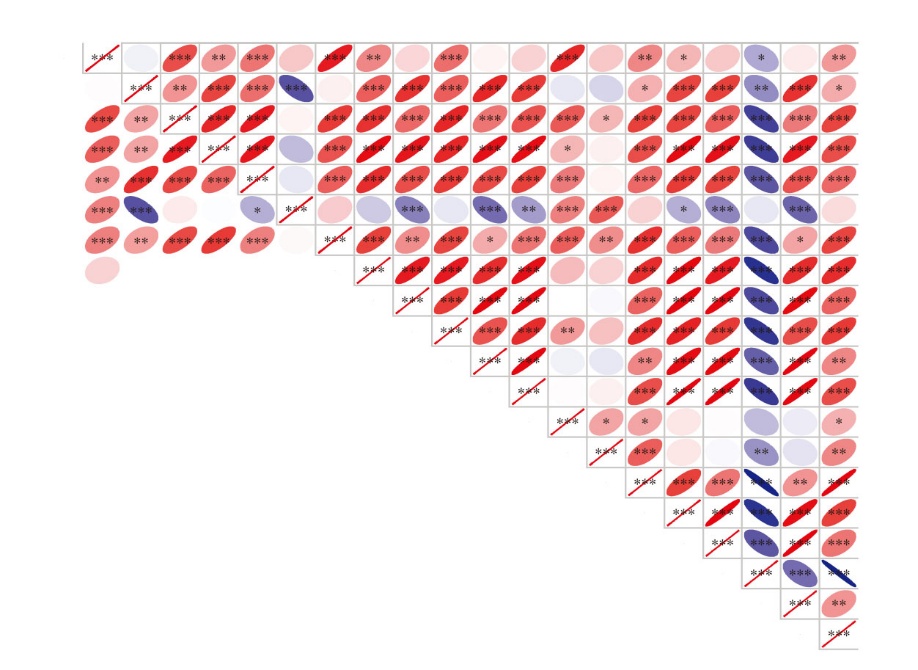
【目的】探究橡胶林皆伐后自然恢复对土壤性状和土壤养分循环的影响。【方法】以西双版纳橡胶林皆伐后通过4个阶段自然恢复(1、10、20和40 a,分别记为SF_1、SF_10、SF_20和SF_40)的次生林和约100 a的天然林(PF)为研究对象,以20年生橡胶人工林(RP)为对照,测定干湿两季土壤理化性质、微生物生物量以及4种土壤胞外酶活性。【结果】随恢复时间的延长,土壤碳、氮、磷(C、N、P)含量与微生物生物量碳氮磷(MBC、MBN和MBP)均呈现明显的上升趋势,土壤全磷(TP)、有效磷(AP)与MBP含量均在SF_40林分达最高值(质量分数分别为0.34 g/kg、13.65 mg/kg和83.28 mg/kg),但在PF林分土壤中下降并趋于稳定。土壤碳和磷获取酶活性(β- 1,4-葡萄糖苷酶,BG;酸性磷酸酶,ACP)随恢复年限的延长表现为先升高后降低的趋势,分别在SF_40和SF_20林分中达峰值,干季分别为926和3 296 nmol/(g·h),且干季显著大于湿季;而氮获取酶活性(β-1,4-N-乙酰氨基葡萄糖苷酶,NAG;亮氨酸氨基肽酶,LAP)变化规律不明显,总体上干季低于湿季。土壤 C、N、P 获取酶活性对数转换后的比值为1.00∶1.55∶1.37,表明研究区内存在一定的N限制。相关性分析结果表明,土壤MBP、AP、可溶性有机碳(DOC)含量和土壤pH为自然恢复过程中土壤胞外酶活性的主要调控因子。【结论】橡胶林皆伐后,随着自然恢复年限的延长,土壤理化性质得到改善,微生物生物量显著增加;RP林分土壤养分含量、土壤胞外酶活性和微生物生物量与SF_1林分相当,但显著低于相同恢复年限的次生林分(SF_20)。本研究为揭示土壤微生物-胞外酶之间养分循环耦合机理提供理论支持,对理解热带季雨林生态系统中生物地球化学循环机制具有重要意义。
【Objective】This study aims to investigate the impacts of post-clear-cutting natural restoration of rubber plantations on soil properties and nutrient cycling dynamics.【Method】Secondary forests undergoing natural restoration at four chronosequence stages(1,10,20 and 40 years post-clear-cutting,designated as SF_1,SF_10,SF_20,and SF_40)and a 100-year-old primary natural forest(PF)were compared with a 20-year-old rubber plantation(RP)as the control. Soil physicochemical properties,microbial biomass(carbon,nitrogen,phosphorus: MBC,MBN,MBP),and four extracellular enzyme activities were analyzed across dry and wet seasons.【Result】Soil carbon(C),nitrogen(N),and phosphorus(P)content,along with microbial biomass(MBC,MBN,MBP),exhibited significant increases with restoration duration. Total phosphorus(TP),available phosphorus(AP),and MBP peaked in SF_40 stands(0.34 g/kg,13.65 mg/kg,and 83.28 mg/kg,respectively),followed by declines in PF stands with stabilization. Carbon- and phosphorus-acquiring enzyme activities(β-1,4-glucosidase,BG; acid phosphatase,ACP)showed initial increases followed by decreases during restoration. BG activity peaked in SF_40(926.02 nmol/(g·h))and ACP in SF_20(3 296.89 nmol/(g·h)),with significantly higher activities observed during the dry season compared to the wet season. In contrast,nitrogen-acquiring enzymes(β-1,4-N-acetylglucosaminidase,NAG; leucine aminopeptidase,LAP)displayed irregular temporal patterns,with generally lower activities during the dry season. Stoichiometric analysis revealed a log-transformed ratio of C∶N∶P acquisition enzyme activities at 1.00∶1.55∶1.37,indicating nitrogen limitation in the ecosystem. Vector analysis further supported this finding,showing vector angles ranging from 7.59° to 33.15°. Correlation analyses identified soil AP,MBP,dissolved organic carbon(DOC)content,and pH as primary regulators of extracellular enzyme activities during restoration.【Conclusion】Prolonged natural restoration significantly enhanced soil physicochemical properties and microbial biomass. Notably,the 20-year-old rubber plantation exhibited comparable soil nutrient levels,extracellular enzyme activities,and microbial biomass to SF_1 stands,but significantly lower values than SF_20 stands at equivalent restoration duration. These findings elucidate the coupling mechanisms between soil microorganisms and extracellular enzymes in nutrient cycling,providing critical insights into biogeochemical processes in tropical monsoon forest ecosystems.
橡胶林 / 土壤胞外酶 / 自然恢复 / 化学计量比 / 养分限制
rubber forests / soil extracellular enzymes / spontaneous recovery / stoichiometric ratio / nutrient limitation
| [1] |
|
| [2] |
鲍雅静, 李政海, 马云花, 等. 橡胶种植对纳板河流域热带雨林生态系统的影响[J]. 生态环境, 2008, 17(2):734-739.
|
| [3] |
吴学灿, 段禾祥, 杨靖. 西双版纳热带雨林保护与修复探讨[J]. 环境与可持续发展, 2020, 45(5):118-121.
|
| [4] |
|
| [5] |
杨清, 韩蕾, 陈进, 等. 西双版纳热带雨林的价值、保护现状及其对策[J]. 广西农业生物科学, 2006, 25(4):341-348.
|
| [6] |
|
| [7] |
陈伟, 李江, 陈绍安, 等. 西双版纳3种栽培模式橡胶人工林群落物种多样性研究[J]. 西部林业科学, 2019, 48(4):13-18,26.
|
| [8] |
陈孙华. 衡阳紫色土丘陵坡地不同植被恢复阶段植物群落特征及其与土壤理化性质的耦合关系[J]. 水土保持研究, 2014, 21(5):7-12.
|
| [9] |
马耀华, 刘虹冰, 李雨欣, 等. 不同恢复模式亚热带森林土壤贮水量和养分储量的差异[J]. 北京林业大学学报, 2023, 45(5):97-105.
|
| [10] |
|
| [11] |
|
| [12] |
|
| [13] |
|
| [14] |
|
| [15] |
|
| [16] |
|
| [17] |
付粱晨, 丁宗巨, 唐茂, 等. 北京东灵山两种温带森林根际和非根际土壤酶活性、温度敏感性及矢量特征的季节动态[J]. 北京大学学报(自然科学版), 2022, 58(3):503-516.
|
| [18] |
|
| [19] |
|
| [20] |
|
| [21] |
鲁如坤. 土壤农业化学分析方法[M]. 北京: 中国农业科学技术出版社, 2000.
|
| [22] |
|
| [23] |
|
| [24] |
|
| [25] |
辜翔. 中亚热带植被恢复对土壤有机碳库积累及其稳定性的影响[D]. 长沙: 中南林业科技大学, 2019.
|
| [26] |
|
| [27] |
|
| [28] |
胡嵩, 张颖, 史荣久, 等. 长白山原始红松林次生演替过程中土壤微生物生物量和酶活性变化[J]. 应用生态学报, 2013, 24(2):366-372.
|
| [29] |
|
| [30] |
詹书侠, 陈伏生, 胡小飞, 等. 中亚热带丘陵红壤区森林演替典型阶段土壤氮磷有效性[J]. 生态学报, 2009, 29(9):4673-4680.
|
| [31] |
|
| [32] |
柳杨, 何先进, 侯恩庆. 鼎湖山森林演替和海拔梯度上的土壤微生物生物量碳氮变化[J]. 生态学杂志, 2017, 36(2):287-294.
|
| [33] |
|
| [34] |
薛立, 陈红跃, 毕鸿雁, 等. 马占相思纯林及柚木纯林土壤养分、微生物和酶活性的研究[J]. 华南农业大学学报, 2002, 23(2):93.
|
| [35] |
|
| [36] |
|
| [37] |
|
| [38] |
|
| [39] |
许淼平, 任成杰, 张伟, 等. 土壤微生物生物量碳氮磷与土壤酶化学计量对气候变化的响应机制[J]. 应用生态学报, 2018, 29(7):2445-2454.
|
| [40] |
康冰, 刘世荣, 蔡道雄, 等. 南亚热带不同植被恢复模式下土壤理化性质[J]. 应用生态学报, 2010, 21(10):2479-2486.
|
| [41] |
刘建明, 温爱亭, 姚颖, 等. 榛子天然林、榛子人工林及农田土壤理化性质分析研究[J]. 森林工程, 2019, 35(6):26-30.
|
/
| 〈 |
|
〉 |