PDF(2545 KB)
 PDF(2545 KB)
 PDF(2545 KB)
互花米草入侵与治理对滨海盐沼湿地鸟类栖息地影响的研究进展
A review of the impacts of Spartina alterniflora invasion and management on bird habitats in coastal salt marsh wetlands
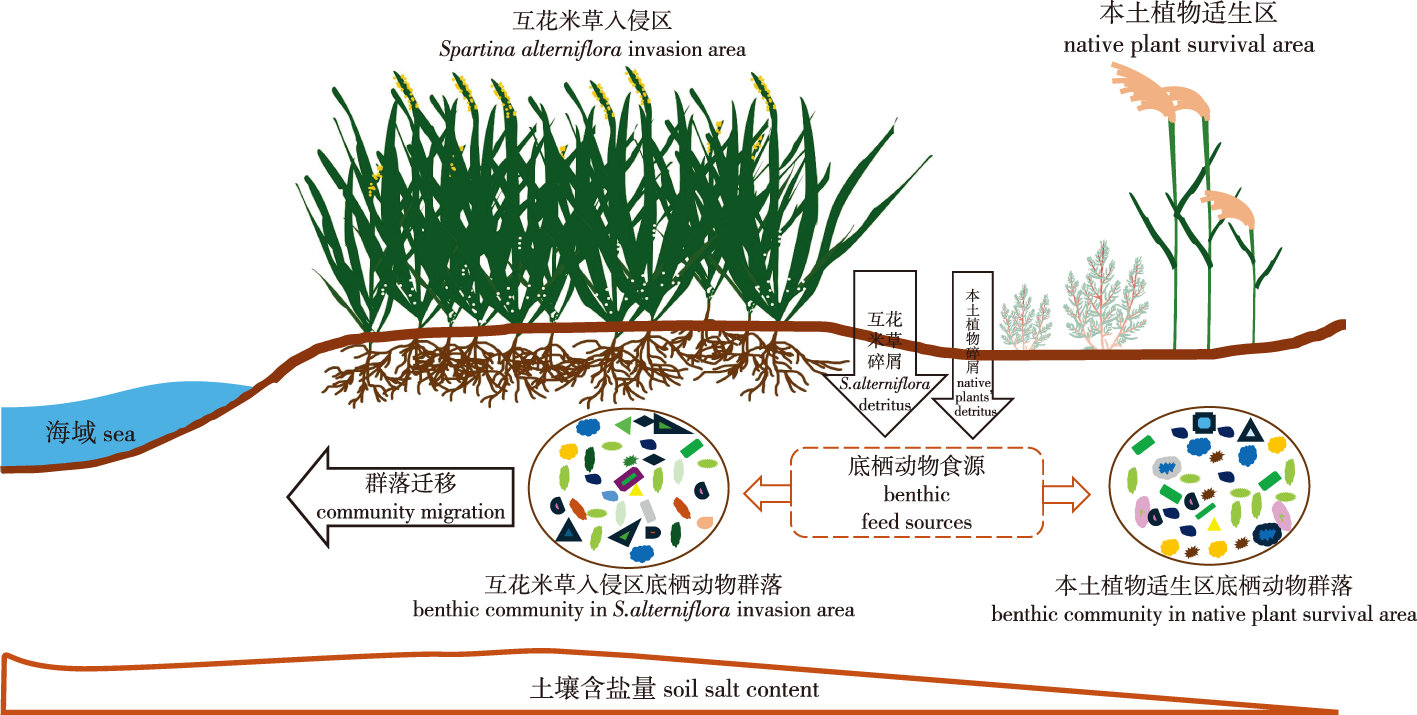
生物入侵是导致全球生物多样性丧失和生态系统功能退化的重要原因,其中互花米草(Spartina alterniflora)是对我国滨海地区影响最大的入侵植物之一,对湿地生态系统结构、功能和鸟类栖息地等产生显著的负面影响。笔者收集了国内外关于互花米草入侵对滨海盐沼湿地鸟类栖息地影响的相关文献,综述了互花米草入侵过程及治理对滨海盐沼湿地鸟类栖息地可用性、食物可得性和生存成本等产生的生态效应。主要结论如下:①互花米草入侵初期,通过有性和无性生殖两种方式在湿地内快速扩张并形成稳定群落,侵占原生植物生存空间;互花米草的干扰导致底栖动物和昆虫(鸟类食源)群落稳定性降低,群落结构被改变,进而影响鸟类栖息环境。②当互花米草形成大面积单优种群落时,密集的植株进一步改变原生植物的群落结构和功能,阻断鸟类的觅食路径,导致鸟类栖息地可用性降低。此外,底栖动物和昆虫的群落结构及食性受互花米草入侵的影响发生改变,鸟类食源被进一步干扰。大多数鸟类在选择栖息地时回避互花米草,仅有少部分鸟类对互花米草产生适应。③互花米草被治理后,鸟类栖息空间逐渐恢复。治理对本土鸟类有利,但对已适应互花米草的鸟类可能带来不利影响。总结认为,目前关于互花米草入侵对鸟类栖息地要素影响的研究已趋于成熟,现阶段互花米草治理工程正在大范围实施,治理工程对鸟类栖息地影响的研究正在成为热点,未来可从不同迁徙习性的鸟类生境可用性等方面监测互花米草治理工程实施后的变化,充实互花米草入侵及治理对滨海盐沼湿地鸟类栖息地影响的研究内容,为滨海盐沼湿地鸟类生物多样性保护提供依据。
Biological invasions are a key cause of global biodiversity loss and the degradation of ecosystem functions. The introduction of Spartina alterniflora into China's coastal regions has adversely affected the structure and functionality of wetland ecosystems, as well as bird habitats. This review collates relevant literature from the China National Knowledge Infrastructure (CNKI) and Web of Science (WOS) databases on the impact of S. alterniflora invasion on avian habitats in coastal salt marsh wetlands. It synthesizes the ecological implications of the S. alterniflora invasion process and management measures for bird habitat availability, food supply, and survival costs in coastal wetlands. The objective is to establish a reference framework for avian diversity conservation and habitat restoration in coastal salt marsh wetlands. The results showed that: (1) During the initial stages of invasion, S. alterniflora forms stable communities and expands rapidly in wetlands through both sexual and asexual reproduction, thereby reducing the living space of native plants. Bird food sources are disrupted by S. alterniflora, leading to reduced community stability and altered structure, which subsequently affects bird habitats. (2) Once S. alterniflora establishes its dominant community, the dense vegetation further disrupts the structure and functions of native plant communities, obstructing bird foraging paths and reducing habitat availability. Moreover, benthic fauna and insect communities are disturbed by S. alterniflora, leading to changes in their community structure and feeding habits, thus further disrupting bird food sources. Most birds tend to avoid S. alterniflora, with only a small proportion able to adapt to it. (3) The management of S. alterniflora can facilitate the habitat restoration of bird habitats. While native birds benefit from control measures, those already adapted to S. alterniflora may experience adverse effects. We conclude that: Research on the effects of S. alterniflora invasion on avian habitat characteristics has made significant progress and the management project of this invasive plant is being implemented on a large scale simultaneously. In the future, research on the impact of treatment projects on bird habitat has become a research hotspot. We can distinguish the changes in the habitat availability of birds with different migratory habits after the implementation of the management of S. alterniflora, to enrich the study content on the impact of S. alterniflora invasion and management on the bird habitats in coastal salt marsh wetlands, and provide a reference for the conservation of bird biodiversity in coastal salt marsh wetlands.
coastal salt marsh wetlands / Spartina alterniflora / biological invasion / bird habitats
| [1] |
|
| [2] |
|
| [3] |
|
| [4] |
|
| [5] |
张燕, 孙勇, 鲁长虎, 等. 盐城国家级珍禽自然保护区互花米草入侵后三种生境中越冬鸟类群落格局[J]. 湿地科学, 2017, 15(3): 433-441.
|
| [6] |
|
| [7] |
徐雅, 张华兵. 20世纪80年代以来盐城滨海湿地互花米草扩张时空轨迹及对景观格局的影响[J]. 自然资源遥感, 2025, 37(2):246-255.
|
| [8] |
陈思明. 互花米草(Spartina alterniflora)在中国沿海的潜在分布及其对气候变化的响应[J]. 生态与农村环境学报, 2021, 37(12):1575-1585.
|
| [9] |
|
| [10] |
|
| [11] |
|
| [12] |
陈柯欣, 丛丕福, 曲丽梅, 等. 黄河三角洲互花米草、碱蓬种群变化及扩散模拟[J]. 北京师范大学学报(自然科学版), 2021, 57(1):128-134.
|
| [13] |
|
| [14] |
|
| [15] |
|
| [16] |
|
| [17] |
|
| [18] |
|
| [19] |
|
| [20] |
陈梦缘, 汪生财, 路琦, 等. 环渤海海岸带水鸟栖息地适宜性评价及影响因素[J]. 生态学杂志, 2024, 43(4):1152-1160.
|
| [21] |
解雪峰, 孙晓敏, 吴涛, 等. 互花米草入侵对滨海湿地生态系统的影响研究进展[J]. 应用生态学报, 2020, 31(6):2119-2128.
|
| [22] |
陈潘, 张燕, 朱晓静, 等. 互花米草入侵对鸟类的生态影响[J]. 生态学报, 2019, 39(7):2282-2290.
|
| [23] |
|
| [24] |
|
| [25] |
许海锋, 董斌, 任春秋, 等. 崇明东滩典型越冬候鸟生境适宜性研究[J]. 湿地科学, 2023, 21(2):259-269.
|
| [26] |
|
| [27] |
|
| [28] |
|
| [29] |
|
| [30] |
|
| [31] |
|
| [32] |
|
| [33] |
韩爽, 张华兵, 刘玉卿, 等. 盐城滨海湿地芦苇群落和互花米草群落对碱蓬群落挤压的时空变化特征[J]. 生态学报, 2024, 44(22):10309-10321.
|
| [34] |
|
| [35] |
艾顺毅, 李加林, 田鹏, 等. 基于Sentinel-2A影像的杭州湾南岸湿地植被特征及其候鸟生境分析[J]. 海洋通报, 2023, 42(1):92-101.
|
| [36] |
|
| [37] |
|
| [38] |
|
| [39] |
赵彩云, 李俊生, 宫璐, 等. 广西北海市滨海湿地互花米草入侵对大型底栖动物的影响[J]. 湿地科学, 2014, 12(6):733-739.
|
| [40] |
姜少玉. 黄河三角洲互花米草入侵对大型底栖动物的生态影响[D]. 烟台: 中国科学院大学(中国科学院烟台海岸带研究所), 2021.
|
| [41] |
|
| [42] |
|
| [43] |
|
| [44] |
|
| [45] |
舒王凯, 杨俊, 秦宇露, 等. 本地种芦苇缓解湿地外来入侵种互花米草的化感作用[J]. 杭州师范大学学报(自然科学版), 2019, 18(5):483-489.
|
| [46] |
|
| [47] |
|
| [48] |
|
| [49] |
|
| [50] |
任璘婧, 李秀珍, 杨世伦, 等. 崇明东滩盐沼植被变化对滩涂湿地促淤消浪功能的影响[J]. 生态学报, 2014, 34(12):3350-3358.
|
| [51] |
|
| [52] |
肖博文. 荣成天鹅湖碳氮磷的分布及鸟粪分解对碳氮磷含量的影响[D]. 呼和浩特: 内蒙古大学, 2015.
|
| [53] |
|
| [54] |
|
| [55] |
|
| [56] |
|
| [57] |
李景霞, 付碧宏. 江苏盐城滨海湿地系统格局变化及其对丹顶鹤生境的影响[J]. 遥感学报, 2021, 25(12):2507-2519.
|
| [58] |
王倩, 史欢欢, 于振林, 等. 盐度及种间相互作用对海三棱藨草、互花米草萌发及生长的影响[J]. 生态学报, 2022, 42(20):8300-8310.
|
| [59] |
丁文慧, 姜俊彦, 李秀珍, 等. 崇明东滩南部盐沼植被空间分布及影响因素分析[J]. 植物生态学报, 2015, 39(7):704-716.
|
| [60] |
潘卉, 陈秀芝, 吴捷, 等. 互花米草入侵对长江口九段沙湿地昆虫功能群组成特征及季节动态的影响[J]. 昆虫学报, 2017, 60(1):67-83.
|
| [61] |
蒋际宝, 赵梅君, 胡佳耀, 等. 盐城国家级珍禽自然保护区不同生境的昆虫群落研究[J]. 上海师范大学学报(自然科学版), 2010, 39(2):181-188.
|
| [62] |
|
| [63] |
|
| [64] |
|
| [65] |
|
| [66] |
|
| [67] |
汪钰明, 高新贻, 谢世君, 等. 互花米草入侵对红树林底栖甲壳动物和鱼类功能群及生态位的影响[J]. 应用生态学报, 2022, 33(11):3016-3026.
|
| [68] |
|
| [69] |
|
| [70] |
|
| [71] |
任武阳, 王成, 刘红玉, 等. 基于鸟类生境需求的植被景观覆盖度多样性:以江苏盐城滨海湿地为例[J]. 生态学杂志, 2019, 38(12):3870-3877.
|
| [72] |
陈浩, 王刚, 王成, 等. 野化放归丹顶鹤活动节律、家域特征和栖息地选择[J]. 生态学报, 2024, 44(4):1526-1538.
|
| [73] |
|
| [74] |
|
| [75] |
|
| [76] |
胡春芳, 李枫, 丛日杰, 等. 崇明东滩斑背大尾莺的巢址特征[J]. 东北林业大学学报, 2012, 40(5):107-111.
|
| [77] |
|
| [78] |
|
| [79] |
|
| [80] |
|
| [81] |
|
| [82] |
王东辉, 张利权, 管玉娟. 基于CA模型的上海九段沙互花米草和芦苇种群扩散动态[J]. 应用生态学报, 2007, 18(12):2807-2813.
|
| [83] |
李振今, 王志勇, 刘晓彤, 等. 利用随机森林和改进的CA-Markov模型探究互花米草治理对黄河三角洲湿地利用及景观格局影响[J]. 生态学报, 2024, 44(18):8366-8382.
|
| [84] |
|
| [85] |
|
| [86] |
|
| [87] |
马强, 吴巍, 汤臣栋, 等. 崇明东滩湿地互花米草治理对鸟类及底栖动物多样性的影响[J]. 南京林业大学学报(自然科学版), 2017, 41(1):9-14.
|
| [88] |
|
| [89] |
|
| [90] |
李飞飞, 高珂晓, 朱金方, 等. 综合物理防控技术对盐城大丰港互花米草的控制效果[J]. 生态学报, 2021, 41(24):9637-9644.
|
| [91] |
莫雪, 吴博, 刘佳凯, 等. 施用咪唑烟酸除草剂去除漳江口红树林中互花米草的短期实验[J]. 湿地科学, 2022, 20(2):277-284.
|
| [92] |
李佳骏, 金双, 李汝佳, 等. 刈割+翻耕治理互花米草后滦南湿地大型底栖动物群落结构变化特征[J]. 湿地科学, 2024, 22(3):349-358.
|
| [93] |
江佳佳, 赵玉杰, 赵佳媛, 等. 盐沼入侵植物互花米草治理后植食性昆虫食物结构的变化[J]. 复旦学报(自然科学版), 2021, 60(4):444-450.
|
| [94] |
|
| [95] |
林秋莲, 顾肖璇, 陈昕韡, 等. 红树植物秋茄替代互花米草的生态修复评估:以浙江温州为例[J]. 生态学杂志, 2020, 39(6):1761-1768.
|
| [96] |
|
| [97] |
|
| [98] |
冯建祥, 宁存鑫, 朱小山, 等. 福建漳江口本土红树植物秋茄替代互花米草生态修复效果定量评价[J]. 海洋与湖沼, 2017, 48(2):266-275.
|
| [99] |
|
/
| 〈 |
|
〉 |