‘美人’梅PmMGST81基因克隆及其对花青素积累的调控功能研究

刘栩, 陈媛媛, 蒙娟, 李子葳, 王桂佳, 孙丽丹

南京林业大学学报(自然科学版) ›› 2026, Vol. 50 ›› Issue (5) : 36-46.

PDF(8500 KB)
PDF(8500 KB)
南京林业大学学报(自然科学版) ›› 2026, Vol. 50 ›› Issue (5) : 36-46. DOI: 10.12302/j.issn.1000-2006.202503025
专题报道Ⅰ:第二十八届中国科协年会———全球气候变化下的林草智能设计育种专题Ⅱ(执行主编 曹福亮 范国强 尹佟明 张怀清)

‘美人’梅PmMGST81基因克隆及其对花青素积累的调控功能研究

作者信息 +

Cloning of PmMGST81 gene and regulatory function study on anthocyanin accumulation in Prunus mume ‘Meiren’

Author information +
文章历史 +

摘要

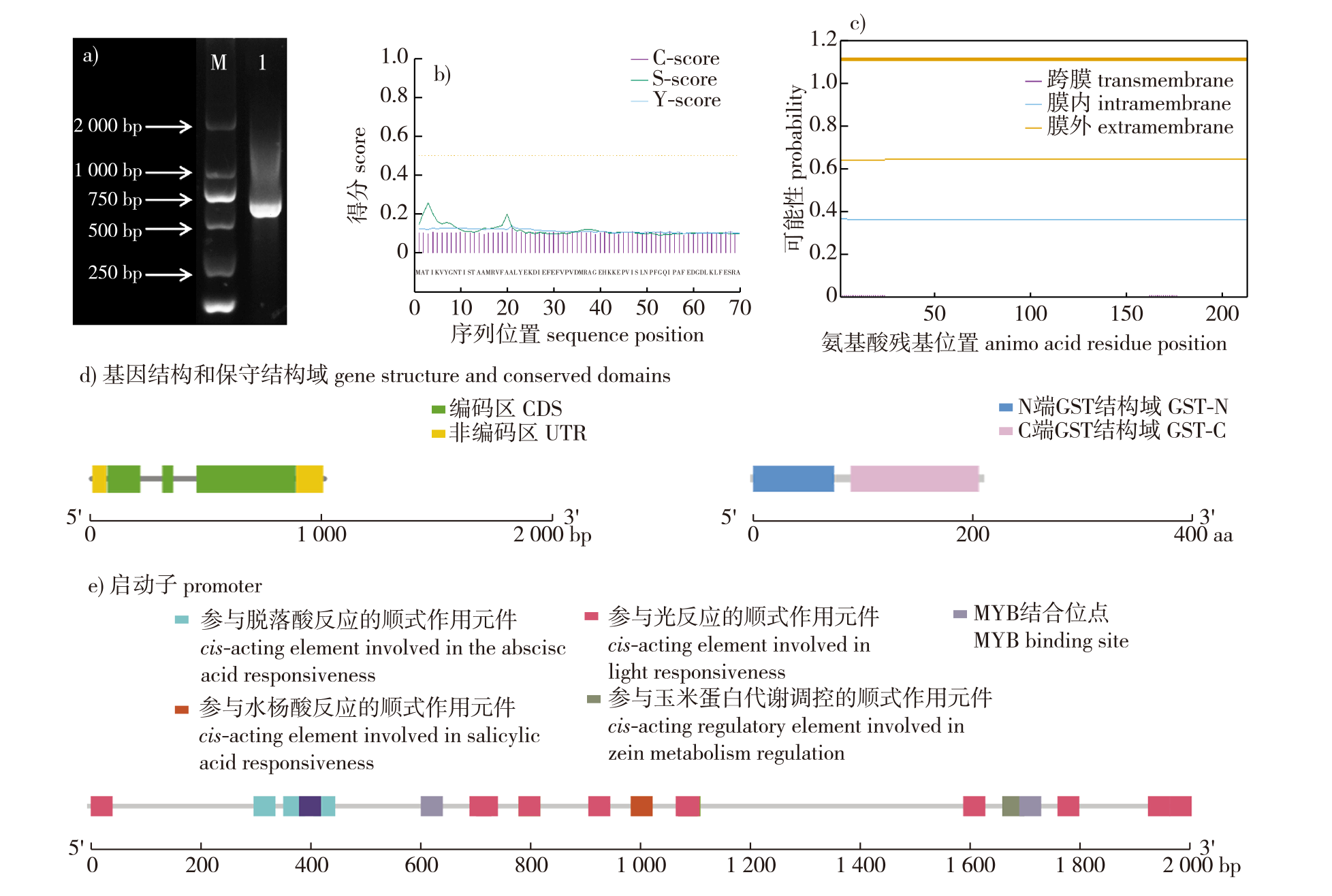
【目的】对‘美人’梅(Prunus mume ‘Meiren’)中谷胱甘肽S-转移酶(glutathione S-transferases,GST)基因家族成员PmMGST81进行克隆和功能研究,旨在解析梅花GST基因在花青素苷积累中的作用,为深入揭示梅花呈色机制奠定理论基础。【方法】以同源序列法克隆PmMGST81基因,对其序列进行生物信息学分析,通过荧光定量PCR(qPCR)、亚细胞定位、烟草的稳定遗传转化验证PmMGST81参与花青素苷积累的功能。【结果】①克隆得到‘美人梅’PmMGST81编码序列(coding sequence,CDS)全长642 bp,上游启动子预测所含顺式作用元件多为光响应元件和激素响应元件,表明其在蔷薇科中与李属物种同源蛋白亲缘关系最近。②qPCR结果表明PmMGST81在‘美人’梅叶片不同发育阶段表达量与花青素苷含量呈显著正相关。③亚细胞定位显示PmMGST81蛋白分布位置是细胞核与细胞质。④PmMGST81过表达烟草株系中花冠着色变深,上游花青素苷合成通路相关结构基因上调表达,花青素苷含量显著增加。【结论】PmMGST81在花青素苷积累过程中起正向调控作用,促进花青素苷的积累从而影响‘美人’梅紫色表型的形成。

Abstract

【Objective】Prunus mume, a renowned traditional ornamental flower in China, is extensively utilized in landscape gardening due to its high aesthetic value. Developing P. mume cultivars with colorful foliage represents a pivotal objective in current genetic improvement programs. Among them, the ‘Meiren’ cultivar group, distinguished by its unique purple-leaf phenotype, serves as an ideal model for investigating the genetic regulation of anthocyanin biosynthesis. Anthocyanin accumulation is the primary determinant of the purple-leaf trait. Although glutathione S-transferases (GSTs) play a crucial role in the anthocyanin transport process, research on GSTs in P. mume remains scarce. This study aimed to clone and functionally characterize PmMGST81, a member of the GST gene family from P. mume ‘Meiren’, to elucidate the role of GST genes in anthocyanin accumulation and lay a theoretical foundation for understanding the coloration mechanism of P. mume.【Method】The PmMGST81 gene was cloned using the homology-based cloning method. Bioinformatics analyses, including prediction of signal peptides and transmembrane domains, gene structure analysis, and prediction of cis-acting elements in the 2 000 bp upstream promoter region, were conducted. Amino acid sequences of homologous proteins in Rosaceae were retrieved for multiple sequence alignment. RNA was extracted from leaves at different developmental stages (S1. apical leaves; S2. middle leaves; S3. basal leaves) of the same annual shoots of P. mume ‘Meiren’and reverse-transcribed into cDNA. The expression patterns of PmMGST81 and structural genes in the anthocyanin synthesis pathway were analyzed by quantitative real time PCR (qPCR) to explore the correlation between the expression of PmMGST81 and anthocyanin content phenotypes. Agrobacterium tumefaciens strains harboring the empty vector plasmid pSuper1300-GFP and the recombinant plasmid PmMGST81-pSuper1300-GFP were injected into Nicotiana benthamiana leaves. Fluorescent signals were observed and photographed using a laser confocal microscope to confirm the subcellular localization of PmMGST81 protein based on the position of GFP green fluorescence.The flower color phenotypes of transgenic tobacco(N. tabacum) plants overexpressing PmMGST81 were observed. Anthocyanins were extracted from tobacco petals, and their contents were determined by spectrophotometry. Five structural genes related to the anthocyanin synthesis pathway in tobacco, namely NtF3'H, NtFLS, NtANS, NtDFR, and NtUFGT, were selected. qPCR was employed to detect their expression levels in the over expressed PmMGST81 lines, verifying the function of PmMGST81 in anthocyanin accumulation through stable genetic transformation of tobacco.【Result】(1) The full-length coding sequence (CDS) of PmMGST81, which was 642 bp and encoded 213 amino acids, was successfully cloned. It was classified as a stable protein, and subcellular localization prediction indicated that it was located in both the cytoplasm and nucleus. The PmMGST81 protein lacked signal peptides and obvious transmembrane structures but contained the typical GST-C and GST-N conserved domains of GST family proteins. The predicted cis-acting elements in the upstream promoter were predominantly light-responsive and hormone-responsive elements, and numerous binding sites for MYB genes were present in the promoter sequence. Sequence alignment of the PmMGST81 protein with homologous proteins from Rosaceae plants revealed that it had the closest genetic relationship with those of Prunus species, indicating its conservation during evolution. (2)qPCR results showed that the expression patterns of structural genes in the anthocyanin synthesis pathway, such as PmMF3'H, generally exhibited a decreasing trend from S1 to S3 in P. mume ‘Meiren’ leaves. The leaf color gradually changed from purple to green during the S1—S3 stages. Similarly, the expression levels of PmMGST81 differed significantly among the three stages, and a significant positive correlation was observed between the expression of PmMGST81 and anthocyanin content. (3)Subcellular localization demonstrated that the PmMGST81 protein was distributed in both the nucleus and cytoplasm. (4)In the transgenic tobacco lines overexpressing PmMGST81, the expression level of PmMGST81 was significantly higher than that in the control group. The corolla color deepened, and the anthocyanin content was significantly increased. Expression analysis of anthocyanin synthesis pathway genes showed that, except for NtFLS, whose expression level did not differ significantly from that of the wild-type, the expression levels of NtF3'H, NtANS, NtDFR, and NtUFGT were upregulated to varying degrees. This indicated that the deepening of tobacco flower color was due to increased anthocyanin accumulation. 【Conclusion】In this study, the GST family gene PmMGST81 (with a CDS length of 642 bp) was cloned from P. mume ‘Meiren’, and its protein was found to be distributed in both the nucleus and cytoplasm. The expression of PmMGST81 at different developmental stages of purple leaves was significantly positively correlated with anthocyanin content. Overexpression of PmMGST81 in tobacco promoted anthocyanin accumulation in the corolla and upregulated the expression of structural genes in the anthocyanin biosynthesis pathway, suggesting that PmMGST81 regulates the purple leaf phenotype of P. mume ‘Meiren’ by positively modulating anthocyanin metabolism.

关键词

‘美人’梅 / 谷胱甘肽S-转移酶 / 基因克隆 / 花青素苷 / 植物表型

Key words

Prunus mume ‘Meiren’ / glutathione S-transferases / gene cloning / anthocyanins / plant phenotyping

引用本文

导出引用
刘栩, 陈媛媛, 蒙娟, 等. ‘美人’梅PmMGST81基因克隆及其对花青素积累的调控功能研究[J]. 南京林业大学学报(自然科学版). 2026, 50(5): 36-46 https://doi.org/10.12302/j.issn.1000-2006.202503025
Liu Xu, Chen Yuanyuan, Meng Juan, et al. Cloning of PmMGST81 gene and regulatory function study on anthocyanin accumulation in Prunus mume ‘Meiren’[J]. Journal of Nanjing Forestry University (Natural Sciences Edition). 2026, 50(5): 36-46 https://doi.org/10.12302/j.issn.1000-2006.202503025
中图分类号: Q943.2;Q786;S685.17   

参考文献

[1]
Martin C, Gerats T. Control of pigment biosynthesis genes during petal development[J]. The Plant Cell, 1993, 5(10):1253-1264.
[2]
Dixon R A, Achnine L, Kota P, et al. The phenylpropanoid pathway and plant defence:a genomics perspective[J]. Molecular Plant Pathology, 2002, 3(5):371-390. DOI:10.1046/j.1364-3703.2002.00131.x.
[3]
Kaur S, Sharma N, Kapoor P, et al. Spotlight on the overlapping routes and partners for anthocyanin transport in plants[J]. Physiologia Plantarum, 2021, 171(4):868-881. DOI:10.1111/ppl.13378.
[4]
Koes R, Verweij W, Quattrocchio F. Flavonoids:a colorful model for the regulation and evolution of biochemical pathways[J]. Trends in Plant Science, 2005, 10(5):236-242. DOI:10.1016/j.tplants.2005.03.002.
[5]
戴思兰, 洪艳. 基于花青素苷合成和呈色机理的观赏植物花色改良分子育种[J]. 中国农业科学, 2016, 49(3):529-542.
Dai S L, Hong Y. Molecular breeding for flower colors modification on ornamental plants based on the mechanism of anthocyanins biosynthesis and coloration[J]. Scientia Agricultura Sinica, 2016, 49(3):529-542.
[6]
蒋宝鑫, 汪庆昊, 杨国霞, 等. 比利时杜鹃花RhDFR基因克隆及分析[J]. 西北植物学报, 2023, 43(1):10-20.
Jiang B X, Wang Q H, Yang G X, et al. Cloning and analysis of RhDFR gene in Rhododendron hybridum Hort[J]. Acta Botanica Boreali-Occidentalia Sinica, 2023, 43(1):10-20. DOI:10.7606/j.issn.1000-4025.2023.01.0010.
[7]
崔祺, 吴昀, 李东泽, 等. 彩叶桂叶片发育过程中叶色表型与色素成分变化[J]. 南京林业大学学报(自然科学版), 2023, 47(2):79-86.
Cui Q, Wu Y, Li D Z, et al. Changes of coloration and pigment compositions during leaf development of Osmanthus fragrans colour group cultivar[J]. Journal of Nanjing Forestry University (Natural Sciences Edition), 2023, 47(2):79-86.
[8]
Zhang H B, Wang L, Deroles S, et al. New insight into the structures and formation of anthocyanic vacuolar inclusions in flower petals[J]. BMC Plant Biology, 2006, 6(1):29. DOI:10.1186/1471-2229-6-29.
[9]
Kovinich N, Kayanja G, Chanoca A, et al. Not all anthocyanins are born equal:distinct patterns induced by stress in Arabidopsis[J]. Planta, 2014, 240(5):931-940. DOI:10.1007/s00425-014-2079-1.
[10]
Zhao J, Dixon R A. MATE transporters facilitate vacuolar uptake of epicatechin 3'-O-glucoside for proanthocyanidin biosynthesis in Medicago truncatula and Arabidopsis[J]. The Plant Cell, 2009, 21(8):2323-2340.
[11]
Braidot E, Zancani M, Petrussa E, et al. Transport and accumulation of flavonoids in grapevine (Vitis vinifera L.)[J]. Plant Signaling & Behavior, 2008, 3(9):626-632. DOI:10.4161/psb.3.9.6686.
[12]
王璐, 戴思兰, 金雪花, 等. 植物花青素苷转运机制的研究进展[J]. 生物工程学报, 2014, 30(6):848-863.
Wang L, Dai S L, Jin X H, et al. Advances in plant anthocyanin transport mechanism[J]. Chinese Journal of Biotechnology, 2014, 30(6):848-863. DOI:10.13345/j.cjb.130515.
[13]
Marinova K, Pourcel L, Weder B, et al. The Arabidopsis MATE transporter TT12 acts as a vacuolar flavonoid/H+-antiporter active in proanthocyanidin-accumulating cells of the seed coat[J]. The Plant Cell, 2007, 19(6):2023-2038. DOI:10.1105/tpc.106.046029.
[14]
Mueller L A, Goodman C D, Silady R A, et al. AN9,a Petunia glutathione S-transferase required for anthocyanin sequestration,is a flavonoid-binding protein[J]. Plant Physiology, 2000, 123(4):1561-1570.
[15]
Marrs K A, Alfenito M R, Lloyd A M, et al. A glutathione S-transferase involved in vacuolar transfer encoded by the maize gene Bronze-2[J]. Nature, 1995, 375(6530):397-400. DOI:10.1038/375397a0.
[16]
Goodman C D, Casati P, Walbot V. A multidrug resistance-associated protein involved in anthocyanin transport in Zea mays[J]. The Plant Cell, 2004, 16(7):1812-1826. DOI:10.1105/tpc.022574.
[17]
Sun L, Fan X C, Zhang Y, et al. Transcriptome analysis of genes involved in anthocyanins biosynthesis and transport in berries of black and white spine grapes (Vitis davidii)[J]. Hereditas, 2016, 153(1):17. DOI:10.1186/s41065-016-0021-1.
[18]
陈秀华, 王臻昱, 李先平, 等. 谷胱甘肽S-转移酶的研究进展[J]. 东北农业大学学报, 2013, 44(1):149-153.
Chen X H, Wang Z Y, Li X P, et al. Research progress on glutathione S-transferases[J]. Journal of Northeast Agricultural University, 2013, 44(1):149-153. DOI:10.19720/j.cnki.issn.1005-9369.2013.01.031.
[19]
Axarli I, Dhavala P, Papageorgiou A C, et al. Crystallographic and functional characterization of the fluorodifen-inducible glutathione transferase from Glycine max reveals an active site topography suited for diphenylether herbicides and a novel L-site[J]. Journal of Molecular Biology, 2009, 385(3):984-1002. DOI:10.1016/j.jmb.2008.10.084.
[20]
McGonigle B, Keeler S J, Lau S C, et al. A genomics approach to the comprehensive analysis of the glutathione S-transferase gene family in soybean and maize[J]. Plant Physiology, 2000, 124(3):1105-1120.
[21]
Sappl P G, Carroll A J, Clifton R, et al. The Arabidopsis glutathione transferase gene family displays complex stress regulation and co-silencing multiple genes results in altered metabolic sensitivity to oxidative stress[J]. The Plant Journal, 2009, 58(1):53-68. DOI:10.1111/j.1365-313X.2008.03761.x.
[22]
Han L L, Zou H Z, Zhou L, et al. Transcriptome-based identification and expression analysis of the glutathione S-transferase (GST) family in tree peony reveals a likely role in anthocyanin transport[J]. Horticultural Plant Journal, 2022, 8(6):787-802. DOI:10.1016/j.hpj.2022.04.001.
[23]
Alfenito M R, Souer E, Goodman C D, et al. Functional complementation of anthocyanin sequestration in the vacuole by widely divergent glutathione S-transferases[J]. The Plant Cell, 1998, 10(7):1135-1149.
[24]
Kitamura S, Shikazono N, Tanaka A. TRANSPARENT TESTA 19 is involved in the accumulation of both anthocyanins and proanthocyanidins in Arabidopsis[J]. The Plant Journal, 2004, 37(1):104-114. DOI:10.1046/j.1365-313X.2003.01943.x.
[25]
Zhang Q, Hao R J, Xu Z D, et al. Isolation and functional characterization of a R2R3-MYB regulator of Prunus mume anthocyanin biosynthetic pathway[J]. Plant Cell,Tissue and Organ Culture (PCTOC), 2017, 131(3):417-429. DOI:10.1007/s11240-017-1294-4.
[26]
Qiu L K, Zheng T C, Liu W C, et al. Integration of transcriptome and metabolome reveals the formation mechanism of red stem in Prunus mume[J]. Frontiers in Plant Science, 2022, 13:884883. DOI:10.3389/fpls.2022.884883.
[27]
陈俊愉, 陈瑞丹. 关于梅花Prunus mume的品种分类体系[J]. 园艺学报, 2007, 34(4):1055-1058.
Chen J Y, Chen R D. On the classification system of Prunus mume cultivars[J]. Acta Horticulturae Sinica, 2007, 34(4):1055-1058. DOI:10.16420/j.issn.0513-353x.2007.04.046.
[28]
陈俊愉, 陈瑞丹. 中国梅花品种群分类新方案并论种间杂交起源品种群之发展优势[J]. 园艺学报, 2009, 36(5):693-700.
Chen J Y, Chen R D. A new system for classifying China Mei cultivar groups,with special reference to developing superiorities of interspecific hybrid originated groups[J]. Acta Horticulturae Sinica, 2009, 36(5):693-700. DOI:10.16420/j.issn.0513-353x.2009.05.011.
[29]
Meng J, Li Z W, Wang H N, et al. Haplotype-resolved genome assembly provides new insights into the genomic origin of purple colour in Prunus mume[J]. Plant Biotechnology Journal, 2025, 23(5):1416-1436. DOI:10.1111/pbi.14595.
[30]
刘桂玲, 李海霞, 郭宾会, 等. 不同提取方法对甘薯花青素含量测定的影响[J]. 中国农学通报, 2007, 23(4):91-94.
Liu G L, Li H X, Guo B H, et al. Effects of different extraction methods on anthocyanin content detection in sweet potato[J]. Chinese Agricultural Science Bulletin, 2007, 23(4):91-94. DOI:10.3969/j.issn.1000-6850.2007.04.021.
[31]
李文建, 沈永宝, 史锋厚, 等. 建兰花色形成的成分检测[J]. 南京林业大学学报(自然科学版), 2019, 43(4):57-62.
Li W J, Shen Y B, Shi F H, et al. Component detection analysis of floral color formation in Cymbidium ensifolium[J]. Journal of Nanjing Forestry University (Natural Sciences Edition), 2019, 43(4):57-62. DOI:10.3969/j.issn.1000-2006.201806041.
[32]
Oakley A. Glutathione transferases:a structural perspective[J]. Drug Metabolism Reviews, 2011, 43(2):138-151. DOI:10.3109/03602532.2011.558093.
[33]
Wagner U, Edwards R, Dixon D P, et al. Probing the diversity of the Arabidopsis glutathione S-transferase gene family[J]. Plant Molecular Biology, 2002, 49(5):515-532. DOI:10.1023/A:1015557300450.
[34]
Edwards T E, Bryan C M, Leibly D J, et al. Structures of a putative ζ-class glutathioneS-transferase from the pathogenic fungus Coccidioides immitis[J]. Acta Crystallographica Section F Structural Biology and Crystallization Communications, 2011, 67(9):1038-1043. DOI:10.1107/s1744309111009493.
[35]
Zhao Y W, Wang C K, Huang X Y, et al. Genome-wide analysis of the glutathione S-transferase (GST) genes and functional identification of MdGSTU12 reveals the involvement in the regulation of anthocyanin accumulation in apple[J]. Genes, 2021, 12(11):1733. DOI:10.3390/genes12111733.
[36]
Cao Y W, Xu L F, Xu H, et al. LhGST is an anthocyanin-related glutathione S-transferase gene in Asiatic hybrid lilies (Lilium spp.)[J]. Plant Cell Reports, 2021, 40(1):85-95. DOI:10.1007/s00299-020-02615-y.
[37]
刘汉婷. ‘红早酥’梨花青苷转运蛋白GSTF12和TT12的功能分析[D]. 杨凌: 西北农林科技大学, 2020.
Liu H T. Functional analysis of anthocyanin transporters GSTF12 and TT12 in ‘Red Zaosu’ Pear[D]. Yangling: Northwest A & F University, 2020.
[38]
于凡迪. 红花草莓花青苷转运相关GST基因家族鉴定及分子模拟分析[D]. 沈阳: 沈阳农业大学, 2021.
Yu F D. Identification of anthocyanin transport related GST gene family and molecular simulation analysis in red-flowered strawberry[D]. Shenyang: Shenyang Agricultural University, 2021.
[39]
Zhao J. Flavonoid transport mechanisms:how to go,and with whom[J]. Trends in Plant Science, 2015, 20(9):576-585. DOI:10.1016/j.tplants.2015.06.007.
[40]
许志钊, 杨秀云, 王祎琛, 等. 黄连木变色期叶片色素变化规律及呈色机理[J]. 南京林业大学学报(自然科学版), 2024, 48(2):97-104.
Xu Z Z, Yang X Y, Wang Y C, et al. Changes in pigment and coloration mechanism of leaves during the discoloration period of Pistacia chinensis[J]. Journal of Nanjing Forestry University (Natural Sciences Edition), 2024, 48(2):97-104. DOI:10.12302/j.issn.1000-2006.202210034.
[41]
Pattanaik S, Kong Q, Zaitlin D, et al. Isolation and functional characterization of a floral tissue-specific R2R3 MYB regulator from tobacco[J]. Planta, 2010, 231(5):1061-1076. DOI:10.1007/s00425-010-1108-y.
[42]
Hu B, Zhao J T, Lai B, et al. LcGST 4 is an anthocyanin-related glutathione S-transferase gene in Litchi chinensis Sonn.[J]. Plant Cell Reports, 2016, 35(4):831-843. DOI:10.1007/s00299-015-1924-4.
[43]
Niu M Y, Bao C J, Chen J H, et al. RsGSTF12 contributes to anthocyanin sequestration in radish (Raphanus sativus L.)[J]. Frontiers in Plant Science, 2022, 13:870202. DOI:10.3389/fpls.2022.870202.
[44]
Xue L, Huang X R, Zhang Z H, et al. An anthocyanin-related glutathione S-transferase,MrGST1,plays an essential role in fruit coloration in Chinese bayberry (Morella rubra)[J]. Frontiers in Plant Science, 2022, 13:903333. DOI:10.3389/fpls.2022.903333.
[45]
Zhao Y, Dong W Q, Zhu Y C, et al. PpGST1,an anthocyanin-related glutathione S-transferase gene,is essential for fruit coloration in peach[J]. Plant Biotechnology Journal, 2020, 18(5):1284-1295. DOI:10.1111/pbi.13291.
[46]
Jiang S H, Chen M, He N B, et al. MdGSTF6,activated by MdMYB1,plays an essential role in anthocyanin accumulation in apple[J]. Horticulture Research, 2019, 6:40. DOI:10.1038/s41438-019-0118-6.
[47]
Luo H F, Dai C, Li Y P, et al. Reduced anthocyanins in petioles codes for a GST anthocyanin transporter that is essential for the foliage and fruit coloration in strawberry[J]. Journal of Experimental Botany, 2018, 69(10):2595-2608.
[48]
薛婷婷. GST调控草莓果实花青素积累的分子机理[D]. 合肥: 安徽农业大学, 2019.
Xue T T. Molecular mechanism of GST regulating anthocyanin accumulation in strawberry fruit[D]. Hefei: Anhui Agricultural University, 2019.
[49]
尹雨钦, 徐欢欢, 唐丽萍, 等. 不结球白菜GST基因家族的全基因组鉴定及花青素相关基因Bc GSTF6的功能分析[J]. 中国农业科学, 2024, 57(16):3234-3249.
Yin Y Q, Xu H H, Tang L P, et al. Genome-wide identification of GST gene family and functional analysis of the BcGSTF6 gene related to anthocyanin in pak choi[J]. Scientia Agricultura Sinica, 2024, 57(16):3234-3249.

基金

园林学院2024年大学生创新创业训练项目(240-GK122401015)
中央高校基本科研业务费专项资金项目(QNTD202306)
林业和草原科技创新青年拔尖人才项目(2020132608)

责任编辑: 吴祝华
PDF(8500 KB)

Accesses

Citation

Detail

段落导航
相关文章

/

〈 〉