ATAC-seq在植物表观基因组学中的应用前景与挑战

张钰佳, 刘刚, 刘保军, 张梦雪, 王澍, 顾爱星

南京林业大学学报(自然科学版) ›› 2026, Vol. 50 ›› Issue (5) : 294-300.

PDF(2422 KB)
PDF(2422 KB)
南京林业大学学报(自然科学版) ›› 2026, Vol. 50 ›› Issue (5) : 294-300. DOI: 10.12302/j.issn.1000-2006.202507026
综合述评

ATAC-seq在植物表观基因组学中的应用前景与挑战

作者信息 +

Application prospects and challenges of ATAC-seq in plant epigenomics

Author information +
文章历史 +

摘要

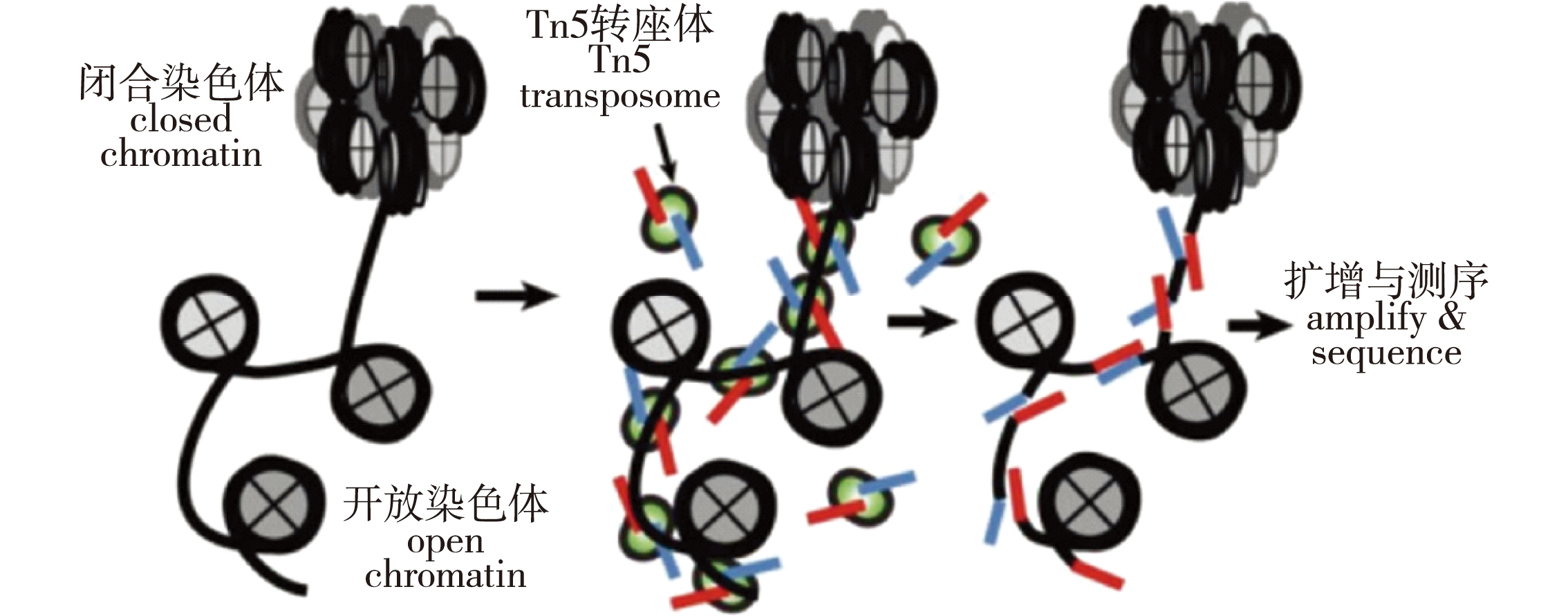
染色质转座酶可及性测定(assay for transposase-accessible chromatin with high-throughput sequencing, ATAC-seq)技术自2013年诞生以来,凭借其超低样本需求、单碱基级别的高分辨率及操作高效性等特点,已成为植物表观遗传研究的核心工具。该技术利用工程化改造的Tn5转座酶,特异性识别并捕获全基因组范围内染色质开放区域,为解析植物发育可塑性、环境适应性及基因精准调控网络提供了全新视角。在植物研究领域中,该技术不仅突破传统方法的局限性,更在基因调控网络解析、作物遗传改良及环境适应性研究中展现出革命性潜力。笔者系统综述ATAC-seq技术的原理及其在植物研究应用中的发展历程,重点从逆境胁迫响应、生长发育调控及分子机制等角度,深入分析其在揭示染色质动态重塑、远程互作网络构建等方向的前沿进展,并探讨该技术在作物遗传改良和功能基因组学研究中的应用潜力。

Abstract

Epigenomics have significantly advanced our understanding of regulatory mechanisms governing plant growth, development, stress responses, and adaptive evolution by elucidating heritable changes in gene expression that occur independently of DNA sequence alterations. Chromatin accessibility, a key component of epigenetic regulation, directly modulates the binding efficiency of transcription factors and other regulatory proteins to DNA, thereby establishing the spatiotemporal specificity of gene expression patterns. The assay for transposase-accessible chromatin with high-throughput sequencing (ATAC-seq) has emerged as the method of choice for mapping open chromatin regions due to its technical advantages including minimal cell input requirements, simplicity in protocol execution, superior signal-to-noise ratio, and genome-wide coverage. This technique utilizes an engineered Tn5 transposase enzyme that preferentially cleaves accessible chromatin regions while simultaneously incorporating sequencing adapters, facilitating the generation of chromatin accessibility maps through high-throughput sequencing. Since its introduction in 2013, ATAC-seq has been employed in studies; however, fewer of these investigations have focused on plant systems, with research efforts predominantly concentrated in limited model species such as Arabidopsis thaliana, rice (Oryza sativa), and maize (Zea mays). This distribution highlights the need for broader and deeper applications within plant sciences to fully realize the potential of this transformative technology. In plant stress research, integrating ATAC-seq with multi-omics approaches including RNA-seq has enabled identification of transcription factors mediating pear responses to Penicillium expansum infection, characterization of a critical promoter deletion linked to reduced cold sensitivity in tomato, elucidation of an MdRAD5B-regulated drought tolerance module in apple, pinpointing of OsbZIP14 as a central regulator during heat stress in rice, and revelation of HSFA1a-mediated enhancer-promoter conformational dynamics in tomato. These studies collectively establish chromatin dynamics as fundamental components in stress signal transduction pathways. Within growth and development research, this methodology has advanced understanding through construction of an epigenetic atlas for wheat spike development, delineation of early regulatory networks in maize embryogenesis, mapping of regulatory interaction modules controlling rice glume morphology, dissection of methylation-accessibility coupling mechanisms associated with poplar growth, and identification of chromosomal spatial organization transitions correlating with flavonoid biosynthesis in peanut, thereby comprehensively illustrating the regulatory influence of chromatin accessibility on organogenesis and yield determination processes. Nevertheless, plant ATAC-seq research faces significant challenges: the presence of cell walls and chloroplasts complicates nuclear isolation, and standardized protocols remain underdeveloped; ATAC-seq data alone cannot directly resolve transcription factor binding or histone modification patterns, whereas multi-omics integration requires substantial financial and technical resources; plant genomes contain abundant repetitive sequences with incomplete annotations, limiting the efficacy of animal-derived analytical tools for peak calling and repeat masking; additionally, insufficient genomic resources and transformation systems in non-model species hinder widespread implementation. Future advancements should prioritize developing efficient plant-specific nuclear extraction methodologies, establishing cost-effective multi-omics frameworks, creating dedicated bioinformatics pipelines, and enhancing genomic tools and transformation platforms for major crops. Overcoming these limitations will position ATAC-seq as a pivotal tool for elucidating chromatin dynamics in regulatory networks underlying complex agronomic traits, thereby advancing crop genetic improvement through novel mechanistic insights and theoretical foundations.

关键词

染色质可及性 / 表观基因组学 / 染色质转座酶可及性测定(ATAC-seq) / 植物

Key words

chromatin accessibility / epigenomics / assay for transposase-accessible chromatin with high-throughput sequencing (ATAC-seq) / plants

引用本文

导出引用
张钰佳, 刘刚, 刘保军, 等. ATAC-seq在植物表观基因组学中的应用前景与挑战[J]. 南京林业大学学报(自然科学版). 2026, 50(5): 294-300 https://doi.org/10.12302/j.issn.1000-2006.202507026
Zhang Yujia, Liu Gang, Liu Baojun, et al. Application prospects and challenges of ATAC-seq in plant epigenomics[J]. Journal of Nanjing Forestry University (Natural Sciences Edition). 2026, 50(5): 294-300 https://doi.org/10.12302/j.issn.1000-2006.202507026
中图分类号: S722;Q78   

参考文献

[1]
Kumar S. Epigenetics and epigenomics for crop improvement:current opinion[J]. Advances in Biotechnology & Microbiology, 2019, 14(1):555879. DOI:10.19080/aibm.2019.14.555879.
[2]
Kumar M, Rani K. Epigenomics in stress tolerance of plants under the climate change[J]. Molecular Biology Reports, 2023, 50(7):6201-6216. DOI:10.1007/s11033-023-08539-6.
[3]
Xue Y, Cao X F, Chen X S, et al. Epigenetics in the modern era of crop improvements[J]. Science China Life Sciences, 2025, 68(6):1570-1609. DOI:10.1007/s11427-024-2784-3.
[4]
Minami K, Semeigazin A, Nakazato K, et al. Euchromatin and heterochromatin:implications for DNA accessibility and transcription[J]. Journal of Molecular Biology, 2026, 438(1):169270. DOI:10.1016/j.jmb.2025.169270.
[5]
陈凌懿, 刘林. 异染色质在多能性维持中的作用和调控机制[J]. 中国科学(生命科学), 2019, 49(9):1054-1068.
Chen L Y, Liu L. Role and regulatory mechanism of heterochromatin in pluripotency maintenance[J]. Scientia Sinica(Vitae), 2019, 49(9):1054-1068. DOI:10.1360/SSV-2019-0160.
[6]
Liu X M, Bie X M, Lin X L, et al. Uncovering the transcriptional regulatory network involved in boosting wheat regeneration and transformation[J]. Nature Plants, 2023, 9(6):908-925. DOI:10.1038/s41477-023-01406-z.
[7]
王子玥, 甄艳, 刘光欣, 等. 染色质转座酶可及性测序及其在木本植物中的应用前景[J]. 南京林业大学学报(自然科学版), 2022, 46(5):1-10.
Wang Z Y, Zhen Y, Liu G X, et al. Assay for transposase-accessible chromatin with high-throughput sequencing and its application prospect in woody plants[J]. Journal of Nanjing Forestry University (Natural Sciences Edition), 2022, 46(5):1-10. DOI:10.12302/j.issn.1000-2006.202205024.
[8]
李占杰, 秦源. 染色质可及性与植物基因表达调控[J]. 植物学报, 2021, 56(6):664-675.
Li Z J, Qin Y. Chromatin accessibility and the gene expression regulation in plants[J]. Bulletin of Botany, 2021, 56(6):664-675. DOI:10.11983/CBB21115.
[9]
Park S, Merino-Urteaga R, Karwacki-neisius V, et al. Native nucleosomes intrinsically encode genome organization principles[J]. Nature, 2025, 643(8071):572-581. DOI:10.1038/s41586-025-08971-7.
[10]
Zhang H Z, Qin Z Y, Yue X T, et al. Proteome-wide profiling of transcriptional machinery on accessible chromatin with biotinylated transposons[J]. Science Advances, 2021, 7(43):eabh1022. DOI:10.1126/sciadv.abh1022.
[11]
Luo L H, Gribskov M, Wang S F. Bibliometric review of ATAC-seq and its application in gene expression[J]. Briefings in Bioinformatics, 2022, 23(3):1-13. DOI:10.1093/bib/bbac061.
[12]
彭建, 张宏权. 染色质结构之美:染色质可及性[J]. 中国生物化学与分子生物学报, 2022, 38(10):1269-1284.
Peng J, Zhang H Q. Beauty of chromatin structure:chromatin accessibility[J]. Chinese Journal of Biochemistry and Molecular Biology, 2022, 38(10):1269-1284. DOI:10.13865/j.cnki.cjbmb.2022.07.1147.
[13]
Klemm S L, Shipony Z, Greenleaf W J. Chromatin accessibility and the regulatory epigenome[J]. Nature Reviews Genetics, 2019, 20(4):207-220. DOI:10.1038/s41576-018-0089-8.
[14]
Huang C R L, Burns K H, Boeke J D. Active transposition in genomes[J]. Annual Review of Genetics, 2012, 46:651-675. DOI:10.1146/annurev-genet-110711-155616.
[15]
吴杰, 全建平, 叶勇, 等. 染色质转座酶可及性测序研究进展[J]. 遗传, 2020, 42(4):333-346.
Wu J, Quan J P, Ye Y, et al. Advances in assay for transposase-accessible chromatin with high-throughput sequencing[J]. Hereditas, 2020, 42(4):333-346. DOI:10.16288/j.yczz.19-279.
[16]
Buenrostro J D, Giresi P G, Zaba L C, et al. Transposition of native chromatin for fast and sensitive epigenomic profiling of open chromatin,DNA-binding proteins and nucleosome position[J]. Nature Methods, 2013, 10(12):1213-1218. DOI:10.1038/nmeth.2688.
[17]
陈俊芳, 吴宪, 杨佳绒, 等. 全球气候变化下干旱及复水对植物和土壤微生物的影响:进展与展望[J]. 生态学杂志, 2023, 42(12):3038-3049.
Chen J F, Wu X, Yang J R, et al. Effects of drought and rewatering on plants and soil microorganisms under climate change:review and perspectives[J]. Chinese Journal of Ecology, 2023, 42(12):3038-3049. DOI:10.13292/j.1000-4890.202312.009.
[18]
Zhang Y, Yu J Y, Wang X, et al. Molecular insights into the complex mechanics of plant epidermal cell walls[J]. Science, 2021, 372(6543):706-711. DOI:10.1126/science.abf2824.
[19]
Sun Y Y, Miao N, Sun T. Detect accessible chromatin using ATAC-sequencing,from principle to applications[J]. Hereditas, 2019, 156(1):29. DOI:10.1186/s41065-019-0105-9.
[20]
Li N N, Jin K R, Bai Y M, et al. Tn5 transposase applied in genomics research[J]. International Journal of Molecular Sciences, 2020, 21(21):8329. DOI:10.3390/ijms21218329.
[21]
Yang Q Y, Zheng Y T, Li X T. Integrative RNA-seq and ATAC-seq analysis unveils antioxidant defense mechanisms in salt-tolerant rice variety Pokkali[J]. BMC Plant Biology, 2025, 25(1):364. DOI:10.1186/s12870-025-06387-z.
[22]
Shen L, Qi Z, Li S, et al. Integration of ATAC-seq and RNA-seq identifies novel candidate genes associated with drought tolerance in Zoysia japonica Steud[PP/OL]. BioRxiv (2023-11-26) [2026-08-04]. https://www.biorxiv.org/content/10.1101/2023.11.26.568709v1.DOI:10.1101/2023.11.26.568709.
[23]
Sun Y H, Dong L, Zhang Y, et al. 3D genome architecture coordinates trans and cis regulation of differentially expressed ear and tassel genes in maize[J]. Genome Biology, 2020, 21(1):143. DOI:10.1186/s13059-020-02063-7.
[24]
Song Y, He J Q, Guo J X, et al. The chromatin remodeller MdRAD5B enhances drought tolerance by coupling MdLHP1-mediated H3K27me3 in apple[J]. Plant Biotechnology Journal, 2024, 22(3):617-634. DOI:10.1111/pbi.14210.
[25]
Shashikant T, Ettensohn C A. Genome-wide analysis of chromatin accessibility using ATAC-seq[J]. Methods in Cell Biology, 2019, 151:219-235. DOI:10.1016/bs.mcb.2018.11.002.
[26]
Farzad N, Enninful A, Bao S Z, et al. Spatially resolved epigenome sequencing via Tn5 transposition and deterministic DNA barcoding in tissue[J]. Nature Protocols, 2024, 19(11):3389-3425. DOI:10.1038/s41596-024-01013-y.
[27]
Cho J S, Blitz I L, Cho K W Y. DNase-seq to study chromatin accessibility in early Xenopus tropicalis embryos[J]. Cold Spring Harbor Protocols, 2019, 2019(4):pdb.prot098335. DOI:10.1101/pdb.prot098335.
[28]
Crawford G E, Davis S, Scacheri P C, et al. DNase-chip:a high-resolution method to identify DNase I hypersensitive sites using tiled microarrays[J]. Nature Methods, 2006, 3(7):503-509. DOI:10.1038/nmeth888.
[29]
Klein D C, Hainer S J. Genomic methods in profiling DNA accessibility and factor localization[J]. Chromosome Research, 2020, 28(1):69-85. DOI:10.1007/s10577-019-09619-9.
[30]
许兰, 任立成. 染色质可及性分析的研究进展[J]. 生物化学与生物物理进展, 2022, 49(8):1462-1470.
Xu L, Ren L C. Research progress of chromatin accessibility analysis[J]. Progress in Biochemistry and Biophysics, 2022, 49(8):1462-1470. DOI:10.16476/j.pibb.2021.0313.
[31]
Chereji R V, Bryson T D, Henikoff S. Quantitative MNase-seq accurately maps nucleosome occupancy levels[J]. Genome Biology, 2019, 20(1):198. DOI:10.1186/s13059-019-1815-z.
[32]
Wu J G, Zhang Y L, Li F F, et al. Plant virology in the 21st century in China:recent advances and future directions[J]. Journal of Integrative Plant Biology, 2024, 66(3):579-622. DOI:10.1111/jipb.13580.
[33]
Liang X Y, Li J F, Yang Y Q, et al. Designing salt stress-resilient crops:current progress and future challenges[J]. Journal of Integrative Plant Biology, 2024, 66(3):303-329. DOI:10.1111/jipb.13599.
[34]
Zhang H, Lang Z B, Zhu J K, et al. Tackling abiotic stress in plants:recent insights and trends[J]. Stress Biology, 2025, 5(1):8. DOI:10.1007/s44154-025-00216-x.
[35]
Zhou Y L, Zhao L N, Yue S Y, et al. Assay for transposase accessible-chromatin with high throughput sequencing (ATAC-seq) analysis the molecular responses of postharvest pear during Penicillium expansum infection[J]. Postharvest Biology and Technology, 2024, 209:112733. DOI:10.1016/j.postharvbio.2023.112733.
[36]
Guo M Y, Yang F J, Zhu L J, et al. Loss of cold tolerance is conferred by absence of the WRKY34 promoter fragment during tomato evolution[J]. Nature Communications, 2024, 15(1):6667. DOI:10.1038/s41467-024-51036-y.
[37]
Wang S C, He J Q, Deng M T, et al. Integrating ATAC-seq and RNA-seq reveals the dynamics of chromatin accessibility and gene expression in apple response to drought[J]. International Journal of Molecular Sciences, 2022, 23(19):11191. DOI:10.3390/ijms231911191.
[38]
Qiu F X, Zheng Y J, Lin Y, et al. Integrated ATAC-seq and RNA-seq data analysis to reveal OsbZIP14 function in rice in response to heat stress[J]. International Journal of Molecular Sciences, 2023, 24(6):5619. DOI:10.3390/ijms24065619.
[39]
Huang Y, An J, Sircar S, et al. HSFA1a modulates plant heat stress responses and alters the 3D chromatin organization of enhancer-promoter interactions[J]. Nature Communications, 2023, 14(1):469. DOI:10.1038/s41467-023-36227-3.
[40]
Chen G Q, Liu Z, Li S D, et al. Characterization of chromatin accessibility and gene expression reveal the key genes involved in cotton fiber elongation[J]. Physiologia Plantarum, 2023, 175(4):e13972. DOI:10.1111/ppl.13972.
[41]
Wallner E S, Tonn N, Shi D B, et al. OBERON3 and SUPPRESSOR of MAX2 1-LIKE proteins form a regulatory module driving phloem development[J]. Nature Communications, 2023, 14(1):2128. DOI:10.1038/s41467-023-37790-5.
[42]
李玉珠, 余江弟, 丁菲菲, 等. 植物遗传转化中体细胞再生的分子机制及应用研究进展[J]. 草业学报, 2024, 33(2):198-211.
Li Y Z, Yu J D, Ding F F, et al. Progress in studies of molecular mechanisms and applications of somatic cell regeneration during genetic transformation[J]. Acta Prataculturae Sinica, 2024, 33(2):198-211. DOI:10.11686/cyxb2023147.
[43]
Zheng G M, Wu J W, Li J, et al. The chromatin accessibility landscape during early maize seed development[J]. The Plant Journal, 2025, 121(6):e70073. DOI:10.1111/tpj.70073.
[44]
Chen S T, Li F Q, OuYang W Z, et al. Time-course transcriptome and chromatin accessibility analyses reveal the dynamic transcriptional regulation shaping spikelet hull size[J]. Plant Journal, 2025, 122(1):e70141. DOI:10.1111/tpj.70141.
[45]
Prajapati H K, Eriksson P R, Elizalde P A, et al. The yeast genome is globally accessible in living cells[J]. Nature Structural & Molecular Biology, 2025, 32(2):247-256. DOI:10.1038/s41594-024-01318-2.
[46]
Liu Y T, Gao X, Liu H J, et al. Constraint of accessible chromatins maps regulatory loci involved in maize speciation and domestication[J]. Nature Communications, 2025, 16(1):2477. DOI:10.1038/s41467-025-57932-1.
[47]
Tan Z D, Peng Y, Xiong Y, et al. Comprehensive transcriptional variability analysis reveals gene networks regulating seed oil content of Brassica napus[J]. Genome Biology, 2022, 23(1):233. DOI:10.1186/s13059-022-02801-z.
[48]
He Y L, Zhou J X, Lv C F, et al. Binding of PtoRAP2.12 to demethylated and accessible chromatin regions in the PtoGntK promoter stimulates growth of poplar[J]. New Phytologist, 2025, 245(1):232-248. DOI:10.1111/nph.20228.
[49]
Zhang X G, Pandey M K, Wang J P, et al. Chromatin spatial organization of wild type and mutant peanuts reveals high-resolution genomic architecture and interaction alterations[J]. Genome Biology, 2021, 22(1):315. DOI:10.1186/s13059-021-02520-x.
[50]
Zhou G Z, Yin H Y, Chen F, et al. The genome of Areca catechu provides insights into sex determination of monoecious plants[J]. New Phytologist, 2022, 236(6):2327-2343. DOI:10.1111/nph.18471.
[51]
Li D W, Shu X D, Zhu P, et al. Chromatin accessibility dynamics during cell fate reprogramming[J]. Embo Reports, 2021, 22(2):e51644. DOI:10.15252/embr.202051644.

基金

新疆维吾尔自治区农业农村厅新疆棉花产业技术体系项目(XJARS-3-202610)
新疆维吾尔自治区重点研发计划(2024B02003-1)
新疆维吾尔自治区“天山英才”培养计划(2023SNGGGCC016)
新疆农业大学研究生科研创新项目(XJAUGRI2025007)

责任编辑: 吴祝华
PDF(2422 KB)

Accesses

Citation

Detail

段落导航
相关文章

/

〈 〉