SPL转录因子在植物逆境胁迫应答中的分子机制

陈赢男, 赵文然, 尹佟明

南京林业大学学报(自然科学版) ›› 2026, Vol. 50 ›› Issue (4) : 15-26.

PDF(1607 KB)
PDF(1607 KB)
南京林业大学学报(自然科学版) ›› 2026, Vol. 50 ›› Issue (4) : 15-26. DOI: 10.12302/j.issn.1000-2006.202507040
第二十八届中国科协年会———全球气候变化下的林草智能设计育种专题(执行主编 曹福亮 范国强 尹佟明 张怀清)
特邀专论

SPL转录因子在植物逆境胁迫应答中的分子机制

作者信息 +

Molecular mechanisms of SPL transcription factors in plant stress responses

Author information +
文章历史 +

摘要

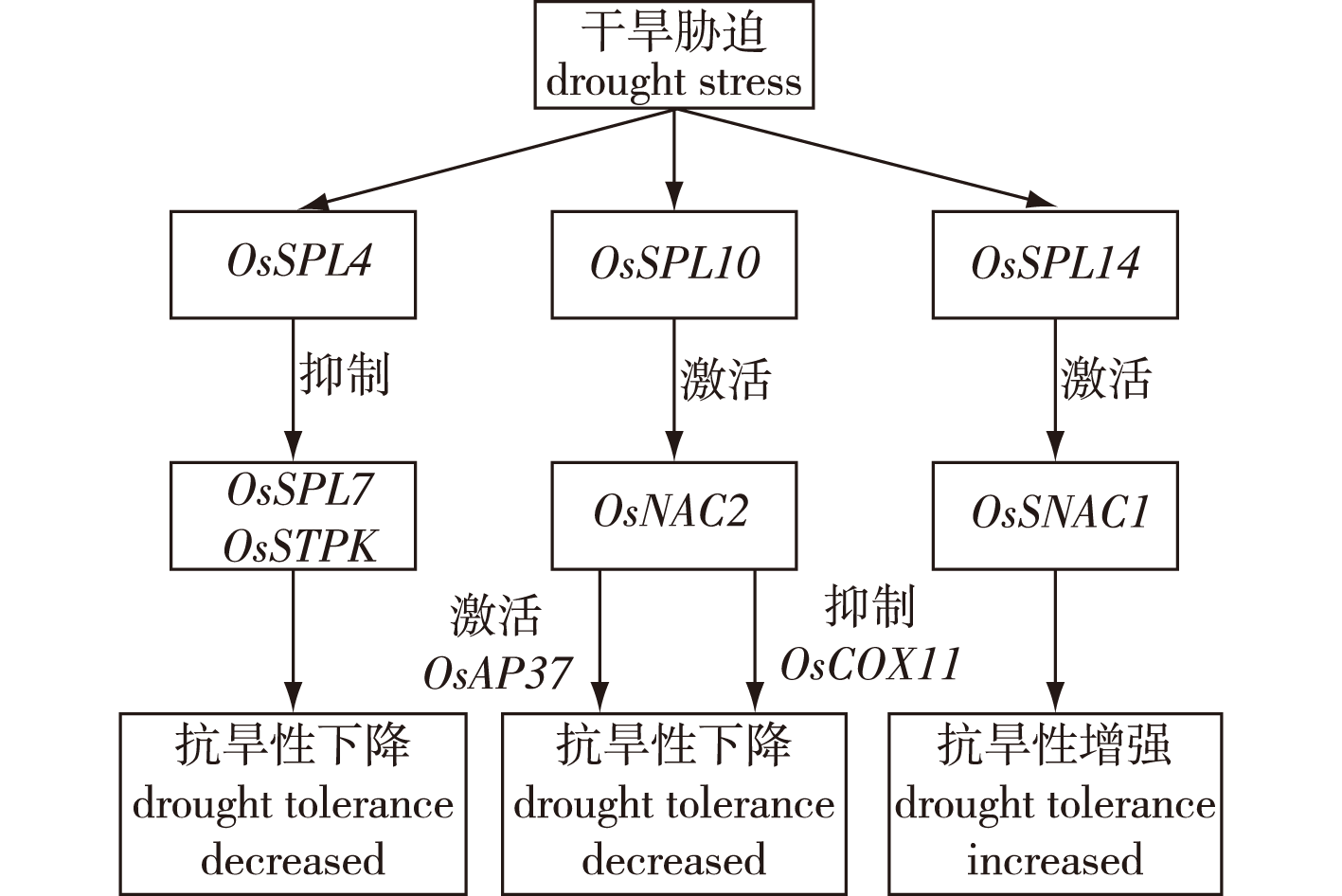
SPL(SQUAMOSA promoter binding protein-like)是植物特有的一类重要转录因子,广泛参与植物生长发育、代谢调控及逆境响应等生物学过程。近年来,SPL基因家族在植物逆境胁迫响应中的功能研究取得了显著进展。笔者系统梳理和总结SPL转录因子在植物响应非生物胁迫(如干旱、盐碱、重金属及温度胁迫等)和生物胁迫(如病原菌和虫害)中的调控作用及分子机制。在非生物胁迫中,SPL基因通过调控活性氧稳态(如OsSPL14-SNAC1通路)、蜡质合成(如AtSPL13-CER1)、离子平衡(如AtSPL7-miR398级联)及冷响应通路(如AtSPL9-CBF2)等途径增强植物适应性;在生物胁迫中,SPL成员(如OsSPL10-JAmybAtSPL6-RPS4)通过协调激素信号(JA/SA)和免疫反应调控抗病性与抗虫性。此外,还探讨SPL基因在作物抗逆遗传改良中的潜在应用价值,并针对木本植物中SPL功能研究的不足,提出未来应加强比较功能分析和进化机制探索的建议。本研究可为解析木本植物和草本非模式植物SPL基因响应逆境胁迫的调控通路提供线索,同时为深入理解SPL转录因子的功能多样性及其在分子育种中的应用提供理论依据。

Abstract

SPL (SQUAMOSA promoter binding protein-like) proteins are a class of plant-specific transcription factors that play essential roles in a wide range of biological processes, including plant growth and development, phase transition, metabolic regulation, and responses to environmental stimuli. In recent years, with the rapid development of functional genomics and molecular biology techniques, significant progress has been achieved in elucidating the functions of SPL genes, particularly in plant stress responses. However, a comprehensive understanding of their regulatory mechanisms under diverse stress conditions remains incomplete. This review systematically summarizes the regulatory roles and molecular mechanisms of SPL transcription factors in plant responses to both abiotic and biotic stresses. Under abiotic stress conditions, SPL genes enhance plant adaptability through multiple regulatory pathways. These include the modulation of reactive oxygen species (ROS) homeostasis (e.g. the OsSPL14-SNAC1 pathway), regulation of cuticular wax biosynthesis (e.g. AtSPL13-CER1), maintenance of ion homeostasis (e.g. the AtSPL7-miR398 cascade), and participation in cold response signaling (e.g. AtSPL9-CBF2). Through these pathways, SPL transcription factors coordinate physiological and biochemical processes to improve plant tolerance to drought, salinity, heavy metal stress, and low-temperature conditions. In response to biotic stress, SPL members function as key regulators of plant immunity against pathogens and insect pests. They modulate disease resistance by integrating hormone signaling pathways, particularly jasmonic acid (JA) and salicylic acid (SA), and by regulating downstream defense-related genes. For example, OsSPL10-JAmyb and AtSPL6-RPS4 regulatory modules play important roles in coordinating immune responses and enhancing resistance. In addition, SPL genes are involved in the regulation of secondary metabolism, which contributes to plant defense. Furthermore, this review discusses the potential applications of SPL genes in crop genetic improvement, particularly in enhancing stress resistance, optimizing plant architecture, and improving yield stability through genetic engineering and genome editing approaches. Considering limited studies on SPL gene functions in woody plants, future research should focus on comparative functional analyses and the exploration of evolutionary mechanisms, including gene duplication and functional divergence. Overall, this review provides a comprehensive overview of SPL transcription factors in plant stress responses, offering insights into their regulatory networks and functional diversity, and providing a theoretical basis for their application in molecular breeding of stress-resistant plants.
关键词

SPL转录因子 / 非生物胁迫 / 生物胁迫 / 分子机制

Key words

SQUAMOSA promoter binding protein-like(SPL) transcription factor / abiotic stress / biotic stress / molecular mechanism

引用本文

导出引用
陈赢男, 赵文然, 尹佟明. SPL转录因子在植物逆境胁迫应答中的分子机制[J]. 南京林业大学学报(自然科学版). 2026, 50(4): 15-26 https://doi.org/10.12302/j.issn.1000-2006.202507040
Chen Yingnan, Zhao Wenran, Yin Tongming. Molecular mechanisms of SPL transcription factors in plant stress responses[J]. Journal of Nanjing Forestry University (Natural Sciences Edition). 2026, 50(4): 15-26 https://doi.org/10.12302/j.issn.1000-2006.202507040
中图分类号: S72;Q75   

参考文献

[1]
Klein J, Saedler H, Huijser P. A new family of DNA binding proteins includes putative transcriptional regulators of the[J]. MGG Molecular & General Genetics, 1996, 250(1):7. DOI:10.1007/s004380050046.
[2]
Cardon G H, Höhmann S, Nettesheim K, et al. Functional analysis of the Arabidopsis thaliana SBP-box gene SPL3 a novel gene involved in the floral transition[J]. The Plant Journal, 1997, 12(2):367-377. DOI:10.1046/j.1365-313X.1997.12020367.x.
[3]
Birkenbihl R P, Jach G, Saedler H, et al. Functional dissection of the plant-specific SBP-domain:overlap of the DNA-binding and nuclear localization domains[J]. Journal of Molecular Biology, 2005, 352(3):585-596. DOI:10.1016/j.jmb.2005.07.013.
[4]
Liang X W, Nazarenus T J, Stone J M. Identification of a consensus DNA-binding site for the Arabidopsis thaliana SBP domain transcription factor,AtSPL14,and binding kinetics by surface plasmon resonance[J]. Biochemistry, 2008, 47(12):3645-3653.
[5]
Wu G, Park M Y, Conway S R, et al. The sequential action of miR156 and miR172 regulates developmental timing in Arabidopsis[J]. Cell, 2009, 138(4):750-759. DOI:10.1016/j.cell.2009.06.031.
[6]
Hu T Q, Manuela D, Xu M L. Squamosa promoter binding protein-like 9 and 13 repress BLADE-on-petiole 1 and 2 directly to promote adult leaf morphology in Arabidopsis[J]. Journal of Experimental Botany, 2023, 74(6):1926-1939. DOI:10.1093/jxb/erad017.
[7]
Cardon G, Höhmann S, Klein J, et al. Molecular characterisation of the Arabidopsis SBP-box genes[J]. Gene, 1999, 237(1):91-104. DOI:10.1016/S0378-1119(99)00308-X.
[8]
Hultquist J F, Dorweiler J E. Feminized tassels of maize mop1 and Ts1 mutants exhibit altered levels of miR156 and specific SBP-box genes[J]. Planta, 2008, 229(1):99-113. DOI:10.1007/s00425-008-0813-2.
[9]
Li C L, Lu S F. Molecular characterization of the SPL gene family in Populus trichocarpa[J]. BMC Plant Biology, 2014, 14(1):131. DOI:10.1186/1471-2229-14-131.
[10]
Cai C P, Guo W Z, Zhang B H. Genome-wide identification and characterization of SPL transcription factor family and their evolution and expression profiling analysis in cotton[J]. Scientific Reports, 2018, 8:762. DOI:10.1038/s41598-017-18673-4.
[11]
Li S K, Li L, Jiang Y, et al. SQUAMOSA promoter binding protein-like (SPL) gene family:TRANSCRIPTOME-wide identification,phylogenetic relationship,expression patterns and network interaction analysis in Panax ginseng C.A.Meyer[J]. Plants, 2020, 9(3):354. DOI:10.3390/plants9030354.
[12]
Guo A Y, Zhu Q H, Gu X C, et al. Genome-wide identification and evolutionary analysis of the plant specific SBP-box transcription factor family[J]. Gene, 2008, 418(1/2):1-8. DOI:10.1016/j.gene.2008.03.016.
[13]
Zhang S D, Ling L Z. Diversification of SQUAMOSA promoter binding protein-like (SPL) genes by changes of miR156/529 binding sites in land plants[J]. Plant Gene, 2018, 14:55-63. DOI:10.1016/j.plgene.2018.04.007.
[14]
Wang H, Wang H Y. The miR156/SPL module,a regulatory hub and versatile toolbox,gears up crops for enhanced agronomic traits[J]. Molecular Plant, 2015, 8(5):677-688. DOI:10.1016/j.molp.2015.01.008.
[15]
Zheng C F, Ye M X, Sang M M, et al. A regulatory network for miR156-SPL module in Arabidopsis thaliana[J]. International Journal of Molecular Sciences, 2019, 20(24):6166. DOI:10.3390/ijms20246166.
[16]
Giaume F, Fornara F. SPL transcription factors prevent inflorescence reversion in rice[J]. Molecular Plant, 2021, 14(7):1041-1043. DOI:10.1016/j.molp.2021.06.009.
[17]
Xie K B, Wu C Q, Xiong L Z. Genomic organization,differential expression,and interaction of SQUAMOSA promoter-binding-like transcription factors and microRNA156 in rice[J]. Plant Physiology, 2006, 142(1):280-293. DOI:10.1104/pp.106.084475.
[18]
曾慧玲. 转录因子OsSPL4在水稻干旱胁迫响应中的分子作用机理研究[D]. 福州: 福建农林大学, 2023.
Zeng H L. Molecular mechanism of transcription factor OsSPL4 in response to drought stress in rice[D]. Fuzhou: Fujian Agriculture and Forestry University, 2023.
[19]
Li Y X, Han S C, Sun X M, et al. Variations in OsSPL10 confer drought tolerance by directly regulating OsNAC2 expression and ROS production in rice[J]. Journal of Integrative Plant Biology, 2023, 65(4):918-933. DOI:10.1111/jipb.13414.
[20]
Mao C J, Ding J L, Zhang B, et al. OsNAC2 positively affects salt-induced cell death and binds to the OsAP37 and OsCOX11 promoters[J]. The Plant Journal, 2018, 94(3):454-468. DOI:10.1111/tpj.13867.
[21]
Jiao Y Q, Wang Y H, Xue D W, et al. Regulation of OsSPL14 by OsmiR156 defines ideal plant architecture in rice[J]. Nature Genetics, 2010, 42(6):541-544. DOI:10.1038/ng.591.
[22]
Chen F H, Zhang H M, Li H, et al. IPA1 improves drought tolerance by activating SNAC1 in rice[J]. BMC Plant Biology, 2023, 23(1):55. DOI:10.1186/s12870-023-04062-9.
[23]
You J, Zong W, Li X K, et al. The SNAC1-targeted gene OsSRO1c modulates stomatal closure and oxidative stress tolerance by regulating hydrogen peroxide in rice[J]. Journal of Experimental Botany, 2013, 64(2):569-583. DOI:10.1093/jxb/ers349.
[24]
Gou J Y, Felippes F F, Liu C J, et al. Negative regulation of anthocyanin biosynthesis in Arabidopsis by a miR156-targeted SPL transcription factor[J]. The Plant Cell, 2011, 23(4):1512-1522.
[25]
Cui L G, Shan J X, Shi M, et al. The miR156-SPL9-DFR pathway coordinates the relationship between development and abiotic stress tolerance in plants[J]. The Plant Journal, 2014, 80(6):1108-1117. DOI:10.1111/tpj.12712.
[26]
Huang H D, Zheng M L, Jenks M A, et al. Squamosa promoter binding protein-like 13 (spl13) together with spl9 redundantly regulates wax biosynthesis under drought stress[J]. Journal of Experimental Botany, 2024, 75(16):4978-4992. DOI:10.1093/jxb/erae202.
[27]
Li R J, Li L M, Liu X L, et al. Diurnal regulation of plant epidermal wax synthesis through antagonistic roles of the transcription factors SPL9 and DEWAX[J]. The Plant Cell, 2019, 31(11):2711-2733. DOI:10.1105/tpc.19.00233.
[28]
Wang Y Z, Ruan Q, Zhu X L, et al. Identification of Alfalfa SPL gene family and expression analysis under biotic and abiotic stresses[J]. Scientific Reports, 2023, 13:84. DOI:10.1038/s41598-022-26911-7.
[29]
Arshad M, Feyissa B A, Amyot L, et al. MicroRNA156 improves drought stress tolerance in alfalfa (Medicago sativa) by silencing SPL13[J]. Plant Science, 2017, 258:122-136. DOI:10.1016/j.plantsci.2017.01.018.
[30]
Feyissa B A, Arshad M, Gruber M Y, et al. The interplay between miR156/SPL13 and DFR/WD40-1 regulate drought tolerance in alfalfa[J]. BMC Plant Biology, 2019, 19(1):434. DOI:10.1186/s12870-019-2059-5.
[31]
Feyissa B A, Renaud J, Nasrollahi V, et al. Transcriptome-IPMS analysis reveals a tissue-dependent miR156/SPL13 regulatory mechanism in alfalfa drought tolerance[J]. BMC Genomics, 2020, 21(1):721. DOI:10.1186/s12864-020-07118-4.
[32]
Jia M R, Meng X B, Song X G, et al. Chilling-induced phosphorylation of IPA1 by OsSAPK6 activates chilling tolerance responses in rice[J]. Cell Discovery, 2022, 8:71. DOI:10.1038/s41421-022-00413-2.
[33]
Ma Y, Xue H, Zhang F, et al. The miR156/SPL module regulates apple salt stress tolerance by activating MdWRKY100 expression[J]. Plant Biotechnology Journal, 2021, 19(2):311-323. DOI:10.1111/pbi.13464.
[34]
Li Q M, Yang Q Q, Dong S, et al. Transcription factors CpSPL5 and CpSPL8 negatively regulate salt tolerance in Codonopsis pilosula by inhibiting SOS pathway[J]. The Plant Journal, 2025, 121(2):e17205. DOI:10.1111/tpj.17205.
[35]
Yamasaki H, Hayashi M, Fukazawa M, et al. SQUAMOSA promoter binding protein-like 7 is a central regulator for copper homeostasis in Arabidopsis[J]. The Plant Cell, 2009, 21(1):347-361.
[36]
Garcia-Molina A, Xing S P, Huijser P. A conserved kin17 curved dna-binding domain protein assembles with Squamosa promoter-binding protein-like 7 to adapt Arabidopsis growth and development to limiting copper availability[J]. Plant Physiology, 2014, 164(2):828-840. DOI:10.1104/pp.113.228239.
[37]
Garcia-Molina A, Xing S P, Huijser P. Functional characterisation of Arabidopsis SPL 7 conserved protein domains suggests novel regulatory mechanisms in the Cu deficiency response[J]. BMC Plant Biology, 2014, 14(1):231. DOI:10.1186/s12870-014-0231-5.
[38]
Chen W W, Jin J F, Lou H Q, et al. LeSPL-CNR negatively regulates Cd acquisition through repressing nitrate reductase-mediated nitric oxide production in tomato[J]. Planta, 2018, 248(4):893-907. DOI:10.1007/s00425-018-2949-z.
[39]
Zhu H H, Wang J Y, Jiang D, et al. The miR157-SPL-CNR module acts upstream of bHLH101 to negatively regulate iron deficiency responses in tomato[J]. Journal of Integrative Plant Biology, 2022, 64(5):1059-1075. DOI:10.1111/jipb.13251.
[40]
Kim J J, Lee J H, Kim W, et al. The microRNA156-Squamosa promoter binding protein-like 3 module regulates ambient temperature-tesponsive flowering via flowering locust in Arabidopsis[J]. Plant Physiology, 2012, 159(1):461-478.
[41]
Zhao J L, Shi M, Yu J, et al. SPL9 mediates freezing tolerance by directly regulating the expression of CBF2 in Arabidopsis thaliana[J]. BMC Plant Biology, 2022, 22(1):59. DOI:10.1186/s12870-022-03445-8.
[42]
Zhou M Q, Tang W. MicroRNA156 amplifies transcription factor-associated cold stress tolerance in plant cells[J]. Molecular Genetics and Genomics, 2019, 294(2):379-393. DOI:10.1007/s00438-018-1516-4.
[43]
Gou J Q, Debnath S, Sun L, et al. From model to crop:functional characterization of SPL8 in M.truncatula led to genetic improvement of biomass yield and abiotic stress tolerance in alfalfa[J]. Plant Biotechnology Journal, 2018, 16(4):951-962. DOI:10.1111/pbi.12841.
[44]
Hanly A, Karagiannis J, Lu Q S M, et al. Characterization of the role of SPL9 in drought stress tolerance in Medicago sativa[J]. International Journal of Molecular Sciences, 2020, 21(17):6003. DOI:10.3390/ijms21176003.
[45]
Li S X, Cheng Z H, Li Z B, et al. MeSPL9 attenuates drought resistance by regulating JA signaling and protectant metabolite contents in cassava[J]. Theoretical and Applied Genetics, 2022, 135(3):817-832. DOI:10.1007/s00122-021-04000-z.
[46]
Zhao Y, He J Q, Liu M M, et al. The SPL transcription factor TaSPL6 negatively regulates drought stress response in wheat[J]. Plant Physiology and Biochemistry, 2024, 206:108264. DOI:10.1016/j.plaphy.2023.108264.
[47]
Munns R. Comparative physiology of salt and water stress[J]. Plant,Cell & Environment, 2002, 25(2):239-250. DOI:10.1046/j.0016-8025.2001.00808.x.
[48]
Min X Y, Luo K, Liu W X, et al. Molecular characterization of the miR156/MsSPL model in regulating the compound leaf development and abiotic stress response in alfalfa[J]. Genes, 2022, 13(2):331. DOI:10.3390/genes13020331.
[49]
Ning K, Chen S, Huang H J, et al. Molecular characterization and expression analysis of the SPL gene family with BpSPL9 transgenic lines found to confer tolerance to abiotic stress in Betula platyphylla Suk[J]. Plant Cell,Tissue and Organ Culture (PCTOC), 2017, 130(3):469-481. DOI:10.1007/s11240-017-1226-3.
[50]
Wang J W, Ye Y J, Xu M, et al. Roles of the SPL gene family and miR156 in the salt stress responses of tamarisk (Tamarix chinensis)[J]. BMC Plant Biology, 2019, 19(1):370. DOI:10.1186/s12870-019-1977-6.
[51]
Lan T, Zheng Y L, Su Z L, et al. OsSPL10,a SBP-box gene,plays a dual role in salt tolerance and trichome formation in rice (Oryza sativa L.)[J]. G3 Genes Genomes Genetics, 2019, 9(12):4107-4114. DOI:10.1534/g3.119.400700.
[52]
Zhang H, Jia S G, Zhang M X, et al. Deciphering the regulatory network of miR156 in plant architecture and abiotic stress resistance of alfalfa (Medicago sativa) by transcriptome sequencing[J]. Industrial Crops and Products, 2022, 189:115828. DOI:10.1016/j.indcrop.2022.115828.
[53]
Hou H M, Jia H, Yan Q, et al. Overexpression of a SBP-box gene (VpSBP16) from Chinese wild Vitis species in Arabidopsis improves salinity and drought stress tolerance[J]. International Journal of Molecular Sciences, 2018, 19(4):940. DOI:10.3390/ijms19040940.
[54]
Lin S W, Yang J, Liu Y R, et al. MsSPL12 is a positive regulator in alfalfa (Medicago sativa L.) salt tolerance[J]. Plant Cell Reports, 2024, 43(4):101. DOI:10.1007/s00299-024-03175-1.
[55]
Pilon M, Abdel-Ghany S E, Cohu C M, et al. Copper cofactor delivery in plant cells[J]. Current Opinion in Plant Biology, 2006, 9(3):256-263. DOI:10.1016/j.pbi.2006.03.007.
[56]
Kropat J, Tottey S, Birkenbihl R P, et al. A regulator of nutritional copper signaling in Chlamydomonas is an SBP domain protein that recognizes the GTAC core of copper response element[J]. Proceedings of the National Academy of Sciences of the United States of America, 2005, 102(51):18730-18735. DOI:10.1073/pnas.0507693102.
[57]
Bernal M, Casero D, Singh V, et al. Transcriptome sequencing identifies SPL7-regulated copper acquisition genes FRO4/FRO5 and the copper dependence of iron homeostasis in Arabidopsis[J]. The Plant Cell, 2012, 24(2):738-761. DOI:10.1105/tpc.111.090431.
[58]
Garcia-Molina A, Andrés-Colás N, Perea-García A, et al. The Arabidopsis COPT6 transport protein functions in copper distribution under copper-deficient conditions[J]. Plant and Cell Physiology, 2013, 54(8):1378-1390. DOI:10.1093/pcp/pct088.
[59]
Yamasaki H, Abdel-Ghany S E, Cohu C M, et al. Regulation of copper homeostasis by micro-RNA in Arabidopsis[J]. Journal of Biological Chemistry, 2007, 282(22):16369-16378. DOI:10.1074/jbc.M700138200.
[60]
Yan J P, Chia J C, Sheng H J, et al. Arabidopsis pollen fertility requires the transcription factors CITF1 and SPL7 that regulate copper delivery to anthers and jasmonic acid synthesis[J]. The Plant Cell, 2018, 29(12):3012-3029. DOI:10.1105/tpc.17.00363.
[61]
Sommer F, Kropat J, Malasarn D, et al. The CRR1 nutritional copper sensor in Chlamydomonas contains two distinct metal-responsive domains[J]. The Plant Cell, 2010, 22(12):4098-4113.
[62]
Masson C, Menaa F, Pinon-Lataillade G, et al. Global genome repair is required to activate KIN17,a UVC-responsive gene involved in DNA replication[J]. Proceedings of the National Academy of Sciences of the United States of America, 2003, 100(2):616-621. DOI:10.1073/pnas.0236176100.
[63]
Perea-García A, Andrés-Bordería A, Huijser P, et al. The copper-microRNA pathway is integrated with developmental and environmental stress responses in Arabidopsis thaliana[J]. International Journal of Molecular Sciences, 2021, 22(17):9547. DOI:10.3390/ijms22179547.
[64]
Lu S F, Yang C M, Chiang V L. Conservation and diversity of microRNA-associated copper-regulatory networks in Populus trichocarpa[J]. Journal of Integrative Plant Biology, 2011, 53(11):879-891. DOI:10.1111/j.1744-7909.2011.01080.x.
[65]
He L S, Peng X, Cao H P, et al. The NtSPL gene family in Nicotiana tabacum:genome-wide investigation and expression analysis in response to cadmium stress[J]. Genes, 2023, 14(1):183. DOI:10.3390/genes14010183.
[66]
Liu W H, Yang Y, Hu Y Y, et al. Overexpression of SQUAMOSA promoter binding protein-like 4a (NtSPL4a) alleviates Cd toxicity in Nicotiana tabacum[J]. Plant Physiology and Biochemistry, 2024, 210:108656. DOI:10.1016/j.plaphy.2024.108656.
[67]
Manning K, Tör M, Poole M, et al. A naturally occurring epigenetic mutation in a gene encoding an SBP-box transcription factor inhibits tomato fruit ripening[J]. Nature Genetics, 2006, 38(8):948-952. DOI:10.1038/ng1841.
[68]
Chao L M, Liu Y Q, Chen D Y, et al. Arabidopsis transcription factors SPL1 and SPL12 confer plant thermotolerance at reproductive stage[J]. Molecular Plant, 2017, 10(5):735-748. DOI:10.1016/j.molp.2017.03.010.
[69]
Stief A, Altmann S, Hoffmann K, et al. Arabidopsis miR156 regulates tolerance to recurring environmental stress through SPL transcription factors[J]. The Plant Cell, 2014, 26(4):1792-1807.
[70]
Matthews C, Arshad M, Hannoufa A. Alfalfa response to heat stress is modulated by microRNA156[J]. Physiologia Plantarum, 2019, 165(4):830-842. DOI:10.1111/ppl.12787.
[71]
Stone J M, Liang X W, Nekl E R, et al. Arabidopsis AtSPL14,a plant-specific SBP-domain transcription factor,participates in plant development and sensitivity to fumonisin B1[J]. The Plant Journal, 2005, 41(5):744-754. DOI:10.1111/j.1365-313X.2005.02334.x.
[72]
Padmanabhan M S, Ma S S, Burch-Smith T M, et al. Novel positive regulatory role for the SPL6 transcription factor in the N TIR-NB-LRR receptor-mediated plant innate immunity[J]. PLoS Pathogens, 2013, 9(3):e1003235. DOI:10.1371/journal.ppat.1003235.
[73]
Yin H B, Hong G J, Li L Y, et al. MiR156/SPL9 regulates reactive oxygen species accumulation and immune response in Arabidopsis thaliana[J]. Phytopathology©, 2019, 109(4):632-642. DOI:10.1094/phyto-08-18-0306-r.
[74]
Sun T, Zhou Q, Zhou Z, et al. Squint positively regulates resistance to the pathogen Botrytis cinerea via miR156-SPL9 module in Arabidopsis[J]. Plant and Cell Physiology, 2022, 63(10):1414-1432. DOI:10.1093/pcp/pcac042.
[75]
Mao Y B, Liu Y Q, Chen D Y, et al. Jasmonate response decay and defense metabolite accumulation contributes to age-regulated dynamics of plant insect resistance[J]. Nature Communications, 2017, 8:13925. DOI:10.1038/ncomms13925.
[76]
Chini A, Fonseca S, Fernández G, et al. The JAZ family of repressors is the missing link in jasmonate signalling[J]. Nature, 2007, 448(7154):666-671. DOI:10.1038/nature06006.
[77]
Hu L X, Qi P, Peper A, et al. Distinct function of SPL genes in age-related resistance in Arabidopsis[J]. PLoS Pathogens, 2023, 19(3):e1011218. DOI:10.1371/journal.ppat.1011218.
[78]
曹妮, 陈渊, 季芝娟, 等. 水稻抗稻瘟病分子机制研究进展[J]. 中国水稻科学, 2019, 33(6):489-498.
Cao N, Chen Y, Ji Z J, et al. Recent progress in molecular mechanism of rice blast resistance[J]. Chinese Journal of Rice Science, 2019, 33(6):489-498. DOI:10.16819/j.1001-7216.2019.8126.
[79]
Wang J, Zhou L, Shi H, et al. A single transcription factor promotes both yield and immunity in rice[J]. Science, 2018, 361(6406):1026-1028. DOI:10.1126/science.aat7675.
[80]
Zhang L L, Huang Y Y, Zheng Y P, et al. Osa-miR535 targets SQUAMOSA promoter binding protein-like 4 to regulate blast disease resistance in rice[J]. The Plant Journal, 2022, 110(1):166-178. DOI:10.1111/tpj.15663.
[81]
Zhong Z F, Zhong L J, Zhu X, et al. Transcription factor OsSPL10 interacts with OsJAmyb to regulate blast resistance in rice[J]. The Crop Journal, 2024, 12(1):301-307. DOI:10.1016/j.cj.2023.10.015.
[82]
Liu M M, Shi Z Y, Zhang X H, et al. Inducible overexpression of ideal plant architecture1 improves both yield and disease resistance in rice[J]. Nature Plants, 2019, 5(4):389-400. DOI:10.1038/s41477-019-0383-2.
[83]
Yao S Z, Yang Z R, Yang R X, et al. Transcriptional regulation of miR528 by OsSPL9 orchestrates antiviral response in rice[J]. Molecular Plant, 2019, 12(8):1114-1122. DOI:10.1016/j.molp.2019.04.010.
[84]
Yao S Z, Kang J R, Guo G, et al. The key micronutrient copper orchestrates broad-spectrum virus resistance in rice[J]. Science Advances, 2022, 8(26):eabm0660. DOI:10.1126/sciadv.abm0660.
[85]
Kim J Y, Oh J E, Noh Y S, et al. Epigenetic control of juvenile-to-adult phase transition by the Arabidopsis SAGA-like complex[J]. The Plant Journal, 2015, 83(3):537-545. DOI:10.1111/tpj.12908.
[86]
Li J, Wang Z, Hu Y G, et al. Polycomb group proteins RING1A and RING1B regulate the vegetative phase transition in Arabidopsis[J]. Frontiers in Plant Science, 2017, 8:867. DOI:10.3389/fpls.2017.00867.
[87]
Hyun Y, Richter R, Vincent C, et al. Multi-layered regulation of SPL15 and cooperation with SOC1 integrate endogenous flowering pathways at the Arabidopsis shoot meristem[J]. Developmental Cell, 2016, 37(3):254-266. DOI:10.1016/j.devcel.2016.04.001.

基金

国家自然科学基金面上项目(32471900)
农业生物育种国家科技重大专项(2022ZD0401501)

责任编辑: 吴祝华
PDF(1607 KB)

Accesses

Citation

Detail

段落导航
相关文章

/