小黑杨单倍体细胞系CBF基因家族全基因组鉴定与低温胁迫表达模式分析

陈熹, 贾宝鹏, 靳婷婷, 李卓龙, Haroon Rasheed, 杨梦, 曲冠证, 黄海娇

南京林业大学学报(自然科学版) ›› 2026, Vol. 50 ›› Issue (4) : 97-104.

PDF(2228 KB)
PDF(2228 KB)
南京林业大学学报(自然科学版) ›› 2026, Vol. 50 ›› Issue (4) : 97-104. DOI: 10.12302/j.issn.1000-2006.202508043
第二十八届中国科协年会———全球气候变化下的林草智能设计育种专题(执行主编 曹福亮 范国强 尹佟明 张怀清)
专题报道Ⅰ

小黑杨单倍体细胞系CBF基因家族全基因组鉴定与低温胁迫表达模式分析

作者信息 +

Identification and expression analysis of CBF family genes in the monoploid cell line of Populus × xiaohei under cold stress

Author information +
文章历史 +

摘要

【目的】小黑杨(Populus × xiaohei)单倍体细胞系Qu-1由二倍体小黑杨花药离体培养获得,兼具悬浮细胞系的特点及单倍体优势,用于基因功能及次生代谢产物分析。对Qu-1细胞系CBF家族进行全基因组鉴定,分析其在低温胁迫下的表达模式,探究相关生理指标变化,为小黑杨Qu-1细胞系作为木本植物模式细胞系的应用及基因功能研究提供参考。【方法】对Qu-1细胞系CBF基因家族进行鉴定和生物信息学分析,采用qRT-PCR技术探究低温胁迫下PsnCBFs基因的表达模式,并开展Qu-1细胞系低温胁迫下相关生理指标的测定。【结果】①在Qu-1细胞系全基因组中共鉴定出6个PsnCBFs成员,进化分析显示可分为3大类群;②6条基因非均匀地分布在不同染色体上;③ PsnCBFs启动子含有多种与非生物胁迫响应相关的顺式作用元件;④低温胁迫对PsnCBFs的表达模式影响显著,与对照相比,各成员基因随着胁迫时间的延长,呈现不同的趋势;⑤生理指标分析表明,在低温条件下活性氧会随着胁迫时间的延长而积累,同时Qu-1细胞系通过提高保护酶(POD)的活性,在一定程度内降低活性氧的伤害。【结论】小黑杨单倍体Qu-1细胞系CBF基因家族与其他物种结构相似,低温胁迫对PsnCBFs相对表达量影响显著。

Abstract

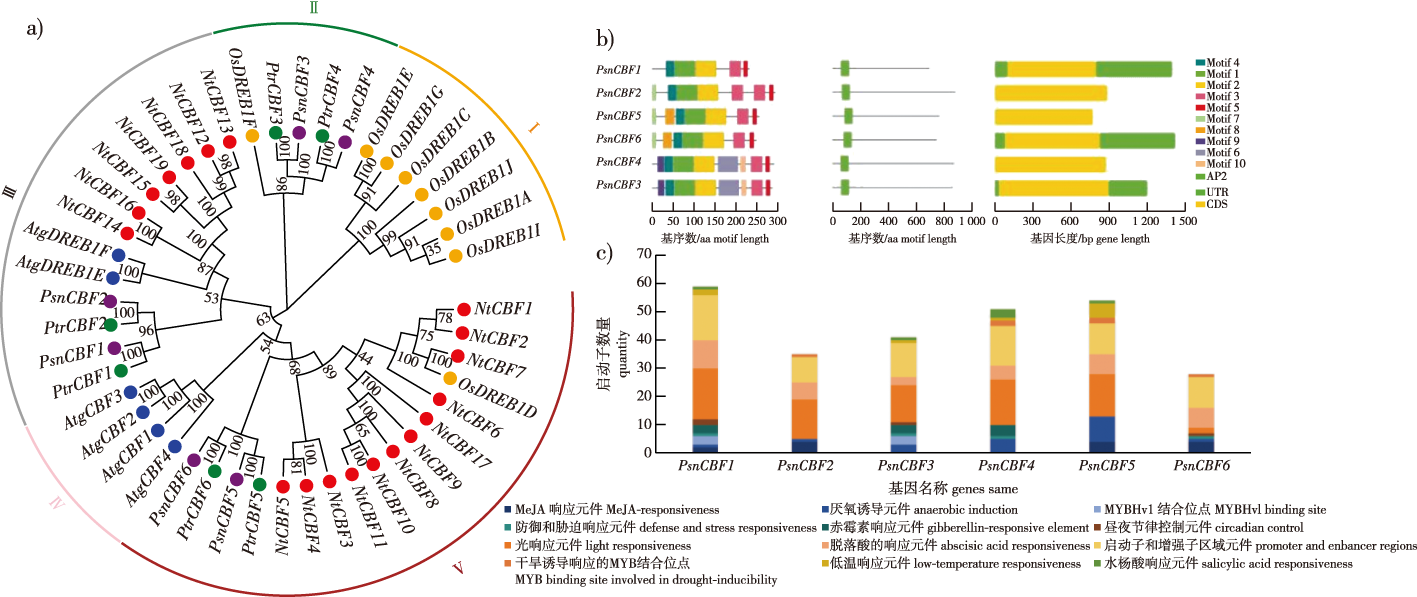
【Objective】The haploid cell line ‘Qu-1’, derived from in vitro anther culture of the diploid hybrid poplar Populus × xiaohei, possesses the dual advantages of a suspension culture system and haploid genomics. This unique biological material offers significant potential for functional gene studies and secondary metabolite analysis in woody plants, facilitating genetic manipulation and omics-based research due to its single gene copy number. The C-repeat Binding Factor (CBF) gene family, also known as the DREB1 subfamily, plays a pivotal role as a master transcriptional regulator in plant cold acclimation pathways. This study aims to conduct a systematic, genome-wide identification and characterization of the CBF gene family in the Qu-1 cell line. Furthermore, we investigated the dynamic expression patterns of the identified PsnCBF genes under a controlled low-temperature stress and elucidate the concomitant physiological alterations. The findings are expected to provide fundamental insights into the molecular mechanisms of cold response in poplar at the cellular level and to evaluate the robustness of the Qu-1 cell line as a model system for functional genomics research in perennial woody species.【Method】A genome-wide identification of CBF genes was performed on the Qu-1 cell line genome. The identification was based on hidden Markov model (HMM) profiles of the AP2/ERF DNA-binding domain and specific amino acid signatures characteristic of CBF proteins. The identified PsnCBF genes were subjected to comprehensive bioinformatic analyses. Multiple sequence alignments and phylogenetic tree construction were carried out using MEGA 11.0 software with the neighbor-joining method, and bootstrap analysis with 1 000 replicates was performed to assess node reliability. The chromosomal locations were mapped using TBtools software. Gene structure (intron/exon) diagrams were generated based on alignment of the coding sequences with their corresponding genomic sequences. Conserved protein motifs were analyzed using the MEME suite. Putative cis-acting regulatory elements within the 2 000 bp promoter region upstream of the translational start site of each PsnCBF gene were predicted using the PlantCARE database. For expression analysis, Qu-1 suspension cells in the logarithmic growth phase were subjected to a low-temperature treatment at 4℃. Cells were harvested at 0, 1, 3, 6, 12 and 24 hours post-treatment. Total RNA was extracted using a modified CTAB method, followed by DNase I treatment to remove genomic DNA contamination. First-strand cDNA was synthesized using a reverse transcription kit. Quantitative real-time PCR (qRT-PCR) was performed on a Bio-Rad CFX96 system using SYBR Green master mix. The PsnActin gene served as an internal reference for normalization of gene expression data. The relative expression levels were calculated using the 2-ΔΔCt method, with three biological replicates and three technical replicates for each sample. Parallel physiological assays were conducted. The activities of key antioxidant enzymes, including peroxidase (POD), were determined using commercial assay kits following the manufacturer’s instructions.【Result】(1) A total of six non-redundant CBF genes, designated as PsnCBF1 to PsnCBF6, were identified in the Qu-1 cell line genome. Phylogenetic analysis classified these PsnCBFs into three distinct subgroups (Group Ⅰ, Ⅱ and Ⅲ), with members from Arabidopsis thaliana and other Populus species clustering accordingly, suggesting evolutionary conservation and potential functional divergence. (2) Chromosomal localization revealed that the six PsnCBF genes were unevenly distributed across four different chromosomes of Populus × xiaohei. No tandem duplication events were detected among these genes. (3) Promoter analysis indicated that all PsnCBF promoters contained multiple cis-elements associated with abiotic stress responses and hormone signaling. Key elements identified included ABA-responsive elements (ABRE), low-temperature-responsive elements (LTRE/DRE/CRT), MYB and MYC recognition sites involved in drought and cold stress, and MeJA-responsive elements (CGTCA-motif and TGACG-motif). (4) The qRT-PCR analysis revealed that low-temperature stress significantly influenced the expression patterns of all six PsnCBF genes, but with distinct kinetic profiles among members. Compared to the untreated control (0 hour), PsnCBF1, PsnCBF3, and PsnCBF5 exhibited a rapid and strong induction, with transcript levels peaking sharply at three to six hours after treatment before gradually declining. In contrast, PsnCBF2 and PsnCBF4 showed a more sustained and moderate up-regulation throughout the 24-hours treatment period. PsnCBF6 displayed a delayed response, with significant induction observed only after 12 hours of stress. (5) Physiological analyses demonstrated that low-temperature treatment induced a time-dependent accumulation of H2O2 and O2- in Qu-1 cells, which was visually confirmed by intensified DAB and NBT staining. Electrolyte leakage increased progressively, indicating enhanced membrane damage over time. In response to this oxidative burst, the activities of antioxidant enzymes were markedly altered. POD activity exhibited the most pronounced and consistent increase, rising steadily from three hours onwards and reaching a level approximately 3.2-fold higher than the control at 24 hours.【Conclusion】The CBF gene family identified in the haploid Populus × xiaohei Qu-1 cell line shares conserved structural features with its counterparts in other plant species, confirming its identity within this critical transcription factor family. Low-temperature stress exerts a significant and complex impact on the relative expression levels of PsnCBFs, with members displaying divergent temporal induction patterns, which suggests potential functional specialization or differential regulation within the cold-response network. At the physiological level, the Qu-1 cell line experiences low-temperature-induced oxidative stress, as evidenced by ROS accumulation and membrane damage. However, it actively mobilizes a defense response, primarily through a substantial and sustained enhancement of POD activity, to mitigate oxidative injury within a certain stress duration window. These coordinated molecular and physiological responses demonstrate that the Qu-1 haploid cell line retains intact and functional cold-signaling and stress-adaptation pathways. This study provides a comprehensive molecular and physiological profile of the cold response in a poplar cell line, thereby strongly supporting the utility of the Populus × xiaohei Qu-1 haploid cell line as a valid and efficient model system for dissecting gene function, particularly for abiotic stress tolerance mechanisms in woody plants.

关键词

小黑杨 / 细胞系 / CBF转录因子 / 生物信息学分析 / 表达分析

Key words

Populus × xiaohei / cell lines / CBF transcription factor / bioinformatics analysis / expression analysis

引用本文

导出引用
陈熹, 贾宝鹏, 靳婷婷, . 小黑杨单倍体细胞系CBF基因家族全基因组鉴定与低温胁迫表达模式分析[J]. 南京林业大学学报(自然科学版). 2026, 50(4): 97-104 https://doi.org/10.12302/j.issn.1000-2006.202508043
Chen Xi, Jia Baopeng, Jin Tingting, et al. Identification and expression analysis of CBF family genes in the monoploid cell line of Populus × xiaohei under cold stress[J]. Journal of Nanjing Forestry University (Natural Sciences Edition). 2026, 50(4): 97-104 https://doi.org/10.12302/j.issn.1000-2006.202508043
中图分类号: S718;Q943.2   

参考文献

[1]
李丽丽, 曹磊, 王际宇, 等. 植物冷信号枢纽CBF转录因子转录调控研究进展[J]. 河南农业大学学报, 2022, 56(6):891-900.
Li L L, Cao L, Wang J Y, et al. Research progress on the transcriptional regulation of CBF,the cold signal hub in plant[J]. Journal of Henan Agricultural University, 2022, 56(6):891-900. DOI:10.16445/j.cnki.1000-2340.20221103.001.
[2]
王娟, 李德全. 逆境条件下植物体内渗透调节物质的积累与活性氧代谢[J]. 植物学通报, 2001, 18(4):459-465.
Wang J, Li D Q. The accumulation of plant osmoticum and activated oxygen metabolism under stress[J]. Chinese Bulletin of Botany, 2001, 18(4):459-465. DOI:10.3969/j.issn.1674-3466.2001.04.010.
[3]
Hannah M A, Heyer A G, Hincha D K. A global survey of gene regulation during cold acclimation in Arabidopsis thaliana[J]. PLoS Genetics, 2005, 1(2):e26. DOI:10.1371/journal.pgen.0010026.
[4]
陈思琪, 孙敬爽, 麻文俊, 等. 植物低温胁迫调控机制研究进展[J]. 中国农学通报, 2022, 38(17):51-61.
Chen S Q, Sun J S, Ma W J, et al. Regulation mechanism of low temperature stress on plants:research progress[J]. Chinese Agricultural Science Bulletin, 2022, 38(17):51-61.
[5]
田一粟, 姜明, 张启宇. 植物抗寒基因及ICE-CBF-COR信号转导研究进展[J]. 农业工程, 2023, 13(5):131-137.
Tian Y S, Jiang M, Zhang Q Y. Progress on cold resistance genes and ICE-CBF-COR signaling in plants[J]. Agricultural Engineering, 2023, 13(5):131-137. DOI:10.19998/j.cnki.2095-1795.2023.05.024.
[6]
Mizoi J, Shinozaki K, Yamaguchi-Shinozaki K. AP2/ERF family transcription factors in plant abiotic stress responses[J]. Biochimica et Biophysica Acta (BBA)-Gene Regulatory Mechanisms, 2012, 1819(2):86-96. DOI:10.1016/j.bbagrm.2011.08.004.
[7]
陈金焕, 夏新莉, 尹伟伦. 植物DREB转录因子及其转基因研究进展[J]. 分子植物育种, 2007, 5(S1):29-35.
Chen J H, Xia X L, Yin W L. Advances on plant DREB transcription factors and their genetic transfor-mation[J]. Molecular Plant Breeding, 2007, 5(S1):29-35.
[8]
张翔. 白桦CBFs转录因子响应低温胁迫的分子机制研究[D]. 哈尔滨: 东北林业大学, 2023.
Zhang X. Molecular mechanism of CBFS transcription factors in the response to low temperature stress in Betula platyphylla Suk[D]. Harbin: Northeast Forestry University, 2023.
[9]
Fan M L, Zhou R, Liu Q H, et al. CBF transcription factors involved in the cold response of Camellia japonica(Naidong)[J]. PeerJ, 2021, 9:e12155. DOI:10.7717/peerj.12155.
[10]
Nguyen H C, Cao P B, San Clemente H, et al. Special trends in CBF and DREB2 groups in Eucalyptus gunnii vs Eucalyptus grandis suggest that CBF are master players in the trade-off between growth and stress resistance[J]. Physiologia Plantarum, 2017, 159(4):445-467. DOI:10.1111/ppl.12529.
[11]
Guan Y L, Liu S Q, Wu W H, et al. Genome-wide identification and cold stress-induced expression analysis of the CBF gene family in Liriodendron chinense[J]. Journal of Forestry Research, 2021, 32(6):2531-2543. DOI:10.1007/s11676-020-01275-8.
[12]
Haake V, Cook D, Riechmann J L, et al. Transcription factor CBF4 is a regulator of drought adaptation in Arabidopsis[J]. Plant Physiology, 2002, 130(2):639-648.
[13]
左壮. 不同浓度硝态氮诱导小黑杨根系基因差异表达的转录组学研究[D]. 哈尔滨: 东北林业大学, 2020.
Zuo Z. Transcriptomic Study on Differential expressed genes of Populus × Xiaohei T.S.Hwang et Liang roots induced by different concentrations of nitrate nitrogen[D]. Harbin: Northeast Forestry University, 2020.
[14]
吴丽萍. ‘冬枣’花药培养体系优化和再生植株鉴定研究[D]. 北京: 北京林业大学, 2013.
Wu L P. Optimization of anther culture system and identification of regenerated plants of ‘Dongzao’ (Zizyphus jujuba mill.)[D]. Beijing: Beijing Forestry University, 2013.
[15]
杜志钊, 陆瑞菊, 黄剑华. 以单倍体材料为转化受体的植物转基因研究进展[J]. 核农学报, 2010, 24(2):302-306,313.
Du Z Z, Lu R J, Huang J H. Advances on plants transgenic research by using haploid materials as target[J]. Journal of Nuclear Agricultural Sciences, 2010, 24(2):302-306,313.
[16]
刘炎. 小黑杨单倍体愈伤悬浮培养体系建立及遗传转化PsnCYCD1;1研究[D]. 哈尔滨: 东北林业大学, 2021.
Liu Y. Establishment of suspension culture system for haploid callus of Populus simonii × P.nigra and its genetic transformation into PsnCYCD1;1[D]. Harbin: Northeast Forestry University, 2021.
[17]
刘彩霞. 小黑杨单倍体悬浮细胞筛选体系的建立及应用研究[D]. 哈尔滨: 东北林业大学, 2021.
Liu C X. Establishment and application of haploid suspension cell screening system from Populus simonii × P.nigra[D]. Harbin: Northeast Forestry University, 2021.
[18]
Chen C J, Chen H, Zhang Y, et al. TBtools:an integrative toolkit developed for interactive analyses of big biological data[J]. Molecular Plant, 2020, 13(8):1194-1202. DOI:10.1016/j.molp.2020.06.009.
[19]
Larkin M A, Blackshields G, Brown N P, et al. Clustal W and clustal X version 2.0[J]. Bioinformatics, 2007, 23(21):2947-2948. DOI:10.1093/bioinformatics/btm404.
[20]
董超. 过表达DREB响应干旱和温度胁迫的META分析及草莓DREB全基因组分析[D]. 南京: 南京农业大学, 2019.
Dong C. Meta analysis of overexpression of dreb in response to drought and temperature stress and whole genome analysis of dreb in strawberries[D]. Nanjing: Nanjing Agricultural University, 2019.
[21]
徐铭皓, 王舰, 李伟, 等. 马铃薯CBF基因的克隆和植物表达载体构建[J/OL]. 分子植物育种, 2024:1-21.(2024-05-10).https://kns.cnki.net/kcms/detail/46.1068.S.20240509.1529.007.html.
Xu M H, Wang J, Li W, et al. Cloning of CBF gene from potato and construction of plant expression vector[J/OL]. Molecular Plant Breeding, 2024:1-21.(2024-05-10).https://kns.cnki.net/kcms/detail/46.1068.S.20240509.1529.007.html.
[22]
张达巍. 白桦低温转录组及AP2/ERF基因家族分析[D]. 哈尔滨: 东北林业大学, 2020.
Zhang D W. Transcriptome analysis on cold tolerance and genome-wide analysis of the AP2/ERF gene family in birch[D]. Harbin: Northeast Forestry University, 2020.
[23]
贾会霞, 李建波, 孙佩, 等. 胡杨CBF基因家族的鉴定及表达特性分析[J]. 分子植物育种, 2017, 15(2):492-500.
Jia H X, Li J B, Sun P, et al. Genome-wide identification and expression analysis of the CBF gene family in Populus euphratica[J]. Molecular Plant Breeding, 2017, 15(2):492-500. DOI:10.13271/j.mpb.015.000492.
[24]
胡子昂, 罗平, 辛静静, 等. 蝴蝶兰DREB基因家族鉴定及非生物胁迫表达分析[J]. 农业生物技术学报, 2024, 32(8):1715-1728.
Hu Z A, Luo P, Xin J J, et al. Identification of DREB gene family in Phalaenopsis aphrodite and its expression analysis under abiotic stresses[J]. Journal of Agricultural Biotechnology, 2024, 32(8):1715-1728. DOI:10.3969/j.issn.1674-7968.2024.08.001.
[25]
Cao Y F, Wang J J, Guo L, et al. Identification,characterization and expression analysis of transcription factor (CBF) genes in rice (Oryza sativa L.)[J]. Frontiers of Agriculture in China, 2008, 2(3):253-261. DOI:10.1007/s11703-008-0052-0.
[26]
丁咚, 陈亚娟, 崔进荣, 等. 毛果杨CBF/DREB1基因家族生物信息学分析[J]. 西南农业学报, 2018, 31(3):457-461.
Ding D, Chen Y J, Cui J R, et al. Bioinformatics analysis of CBF/DREB1 family in Populus trichocarpa[J]. Southwest China Journal of Agricultural Sciences, 2018, 31(3):457-461. DOI:10.16213/j.cnki.scjas.2018.3.005.
[27]
Jeffares D C, Penkett C J, Bähler J. Rapidly regulated genes are intron poor[J]. Trends in Genetics, 2008, 24(8):375-378. DOI:10.1016/j.tig.2008.05.006.
[28]
Giri J, Dansana P K, Kothari K S, et al. SAPs as novel regulators of abiotic stress response in plants[J]. BioEssays, 2013, 35(7):639-648. DOI:10.1002/bies.201200181.
[29]
乌凤章, 王贺新, 徐国辉, 等. 木本植物低温胁迫生理及分子机制研究进展[J]. 林业科学, 2015, 51(7):116-128.
Wu F Z, Wang H X, Xu G H, et al. Research progress on the physiological and molecular mechanisms of woody plants under low temperature stress[J]. Scientia Silvae Sinicae, 2015, 51(7):116-128. DOI:10.11707/j.1001-7488.20150713.
[30]
Peláez-Vico M Á, Fichman Y, Zandalinas S I, et al. ROS and redox regulation of cell-to-cell and systemic signaling in plants during stress[J]. Free Radical Biology and Medicine, 2022, 193:354-362. DOI:10.1016/j.freeradbiomed.2022.10.305.
[31]
Jiang L, Yang H. Prometryne-induced oxidative stress and impact on antioxidant enzymes in wheat[J]. Ecotoxicology and Environmental Safety, 2009, 72(6):1687-1693. DOI:10.1016/j.ecoenv.2009.04.025.

基金

中央高校基本科研业务费专项基金资助(2572023CT19-04)

责任编辑: 吴祝华
PDF(2228 KB)

Accesses

Citation

Detail

段落导航
相关文章

/