菌根真菌对土壤有机碳动态的影响机制研究进展

姜姜, 张馨宇, 管鑫, 张文奇, 王志宇

南京林业大学学报(自然科学版) ›› 2026, Vol. 50 ›› Issue (5) : 1-9.

PDF(5877 KB)
PDF(5877 KB)
南京林业大学学报(自然科学版) ›› 2026, Vol. 50 ›› Issue (5) : 1-9. DOI: 10.12302/j.issn.1000-2006.202512025
特邀专论

菌根真菌对土壤有机碳动态的影响机制研究进展

作者信息 +

Research progress on the mechanisms of mycorrhizal fungi regulating soil organic carbon dynamics

Author information +
文章历史 +

摘要

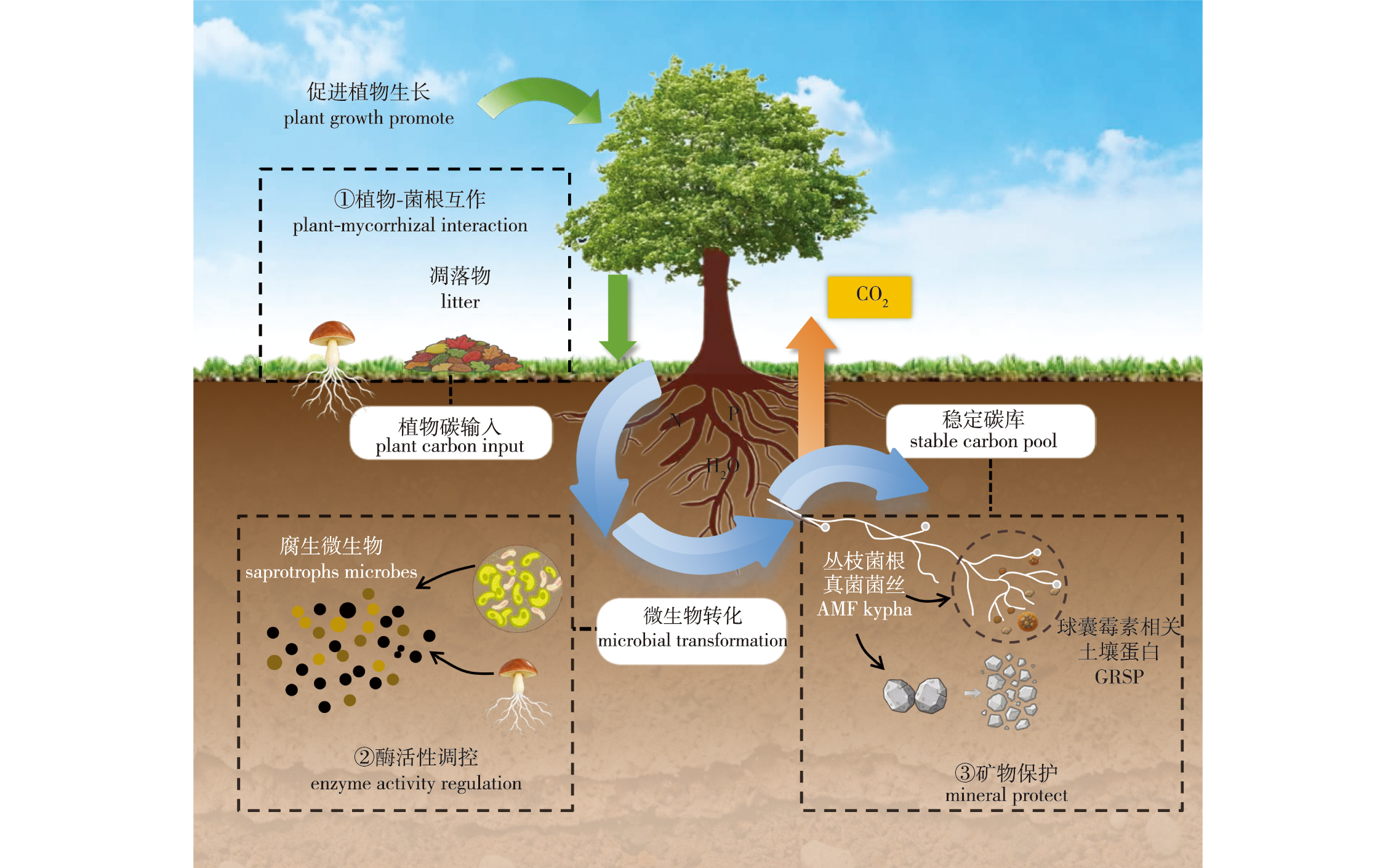
菌根真菌作为植物与土壤之间养分和碳流动的重要通道,能够通过调控植物碳输入、根际微生物过程、土壤团聚体形成及有机碳分解与稳定等过程深刻影响土壤有机碳动态,系统梳理其作用机制对于深化陆地生态系统碳循环认识、提升土壤碳汇管理与气候变化应对能力具有重要意义。笔者基于近年来菌根真菌与土壤有机碳关系的主要研究成果,系统梳理菌根真菌调控土壤有机碳输入、分解、转化与稳定的研究进展,提出菌根真菌通过植物-菌根互作、酶活性调控、矿物保护3条核心途径影响土壤有机碳动态的研究框架。菌根真菌对土壤有机碳的净效应取决于这3条途径的作用方向及相对强弱,但现有研究在定量区分各途径相对贡献方面仍显不足。未来应重点结合稳定同位素示踪、分子标记和模型模拟等,定量解析菌根真菌生物量周转、残体形成、微生物碳利用效率及矿物结合态有机碳形成过程,并将菌根过程纳入生态系统碳循环模型,从而提升对土壤碳汇形成机制及其全球变化响应的预测能力。

Abstract

As a critical pathway mediating nutrient and carbon fluxes between plants and soil, mycorrhizal fungi can profoundly regulate soil organic carbon (SOC) dynamics by modulating plant carbon inputs, rhizosphere microbial processes, soil aggregate formation, and the decomposition and stabilization of organic carbon. A systematic synthesis of these regulatory mechanisms is therefore of great significance for deepening the understanding of terrestrial ecosystem carbon cycling, and for optimizing soil carbon sink management and climate change mitigation strategies. Based on recent advances in research on the relationships between mycorrhizal fungi and SOC, this review systematically summarized the roles of mycorrhizal fungi in regulating the input, decomposition, transformation, and stabilization of SOC, and proposed a conceptual framework in which mycorrhizal fungi affect SOC dynamics through three core pathways: plant-mycorrhizal interactions, enzymatic activity regulation, and mineral protection. The net effect of mycorrhizal fungi on SOC stocks depends on the functional direction and relative strength of these three pathways; however, their relative contributions remain difficult to disentangle quantitatively in current studies. Future investigations should integrate stable isotope tracing, molecular biomarkers, and model simulation approaches to quantitatively elucidate the processes of mycorrhizal fungal biomass turnover, necromass formation, microbial carbon use efficiency, and the formation of mineral-associated organic carbon, and should further incorporate mycorrhizal processes into ecosystem carbon cycle models. These efforts will improve the predictive capacity for the mechanisms underlying soil carbon sink formation and their responses to global environmental change.
关键词

菌根真菌 / 土壤有机碳 / 分泌物 / 植物-菌根互作 / 酶活性调控 / 矿物保护

Key words

mycorrhizal fungi / soil organic carbon / exudates / plant-mycorrihizal interaction / enzyme activity regulation / mineral protection

引用本文

导出引用
姜姜, 张馨宇, 管鑫, 等. 菌根真菌对土壤有机碳动态的影响机制研究进展[J]. 南京林业大学学报(自然科学版). 2026, 50(5): 1-9 https://doi.org/10.12302/j.issn.1000-2006.202512025
Jiang Jiang, Zhang Xinyu, Guan Xin, et al. Research progress on the mechanisms of mycorrhizal fungi regulating soil organic carbon dynamics[J]. Journal of Nanjing Forestry University (Natural Sciences Edition). 2026, 50(5): 1-9 https://doi.org/10.12302/j.issn.1000-2006.202512025
中图分类号: S714   

参考文献

[1]
Jackson R B, Lajtha K, Crow S E, et al. The ecology of soil carbon:pools,vulnerabilities,and biotic and abiotic controls[J]. Annual Review of Ecology,Evolution,and Systematics, 2017, 48:419-445. DOI:10.1146/annurev-ecolsys-112414-054234.
[2]
Lal R. Soil carbon sequestration impacts on global climate change and food security[J]. Science, 2004, 304(5677):1623-1627. DOI:10.1126/science.1097396.
[3]
Liang C, Schimel J P, Jastrow J D. The importance of anabolism in microbial control over soil carbon storage[J]. Nature Microbiology, 2017, 2:17105. DOI:10.1038/nmicrobiol.2017.105.
[4]
Yang Y, Dou Y X, Wang B R, et al. Increasing contribution of microbial residues to soil organic carbon in grassland restoration chronosequence[J]. Soil Biology and Biochemistry, 2022, 170:108688. DOI:10.1016/j.soilbio.2022.108688.
[5]
Zhang X H, Jin X, Li J W, et al. Common mycorrhizal networks facilitate plant disease resistance by altering rhizosphere microbiome assembly[J]. Cell Host & Microbe, 2025, 33(10):1765-1778.e7. DOI:10.1016/j.chom.2025.08.016.
[6]
Hestrin R, Hammer E C, Mueller C W, et al. Synergies between mycorrhizal fungi and soil microbial communities increase plant nitrogen acquisition[J]. Communications Biology, 2019, 2:233. DOI:10.1038/s42003-019-0481-8.
[7]
Soudzilovskaia N A, Van Bodegom P M, Terrer C, et al. Global mycorrhizal plant distribution linked to terrestrial carbon stocks[J]. Nature Communications, 2019, 10:5077. DOI:10.1038/s41467-019-13019-2.
[8]
Genre A, Lanfranco L, Perotto S, et al. Unique and common traits in mycorrhizal symbioses[J]. Nature Reviews Microbiology, 2020, 18(11):649-660. DOI:10.1038/s41579-020-0402-3.
[9]
van Zelm E, Zhang Y X, Testerink C. Salt tolerance mechanisms of plants[J]. Annual Review of Plant Biology, 2020, 71:403-433. DOI:10.1146/annure-arplant-050718-100005.
[10]
Hicks Pries C E, Lankau R, Ingham G A, et al. Differences in soil organic matter between EcM- and AM-dominated forests depend on tree and fungal identity[J]. Ecology, 2023, 104(3):e3929. DOI:10.1002/ecy.3929.
[11]
Wu F, Zheng X, Cao M M, et al. Nitrogen addition does not change AMF colonization but alters AMF composition in a Chinese fir (Cunninghamia lanceolata) plantation[J]. Forests, 2022, 13(7):979. DOI:10.3390/f13070979.
[12]
Hobbie E A, Hobbie J E. Natural abundance of 15N in nitrogen-limited forests and tundra can estimate nitrogen cycling through mycorrhizal fungi:a review[J]. Ecosystems, 2008, 11(5):815-830. DOI:10.1007/s10021-008-9159-7.
[13]
Shah S, Khan Y, Wang M M, et al. Arbuscular mycorrhizal fungi as mediators of nitrogen,phosphorus,and carbon:implications for plant growth and development[J]. Journal of Plant Nutrition, 2026, 49(4):687-707. DOI:10.1080/01904167.2025.2563296.
[14]
Zhang E T, Wang Y, Crowther T W, et al. Mycorrhiza increases plant diversity and soil carbon storage in grasslands[J]. Proceedings of the National Academy of Sciences of the United States of America, 2025, 122(7):e2412556122. DOI:10.1073/pnas.2412556122.
[15]
Xu Y J, Chen Z, Li X Y, et al. Mycorrhizal fungi alter root exudation to cultivate a beneficial microbiome for plant growth[J]. Functional Ecology, 2023, 37(3):664-675. DOI:10.1111/1365-2435.14249.
[16]
Guan X, Jiang J, Classen A T, et al. Disentangling the contribution of mycorrhizal fungi to soil organic carbon storage[J]. Soil Biology and Biochemistry, 2025, 209:109900. DOI:10.1016/j.soilbio.2025.109900.
[17]
Choreño-Parra E M, Treseder K K. Mycorrhizal fungi modify decomposition:a meta-analysis[J]. The New Phytologist, 2024, 242(6):2763-2774. DOI:10.1111/nph.19748.
[18]
Treseder K K, Allen E B, Egerton-Warburton L M, et al. Arbuscular mycorrhizal fungi as mediators of ecosystem responses to nitrogen deposition:a trait-based predictive framework[J]. Journal of Ecology, 2018, 106(2):480-489. DOI:10.1111/1365-2745.12919.
[19]
Li Y L, Wang X Y, Chen X Y, et al. Functions of arbuscular mycorrhizal fungi in regulating endangered species Heptacodium miconioides growth and drought stress tolerance[J]. Plant Cell Reports, 2023, 42(12):1967-1986. DOI:10.1007/s00299-023-03076-9.
[20]
李欢, 李晓林, 向丹. 丛枝菌根真菌对羊草凋落物降解作用的研究[J]. 生态环境学报, 2010, 19(7):1569-1573.
Li H, Li X L, Xiang D. Role of arbuscular mycorrhzizal fungi in Leymus chinensis litter decomposition[J]. Ecology and Environment, 2010, 19(7):1569-1573. DOI:10.3969/j.issn.1674-5906.2010.07.010.
[21]
祝嘉新, 雷梅, 黄智军, 等. 不同种类丛枝菌根真菌接种对杉木幼苗氮磷养分吸收和流失的影响[J]. 生态学报, 2025, 45(17):8474-8484.
Zhu J X, Lei M, Huang Z J, et al. Effects of different types of arbuscular mycorrhizal fungi inoculation on nitrogen and phosphorus nutrient uptake and losses of Cunninghamia lanceolata seedlings[J]. Acta Ecologica Sinica, 2025, 45(17):8474-8484. DOI:10.20103/j.stxb.202409032109.
[22]
Krishna M P, Mohan M. Litter decomposition in forest ecosystems:a review[J]. Energy,Ecology and Environment, 2017, 2(4):236-249. DOI:10.1007/s40974-017-0064-9.
[23]
Wan B B, Kuzyakov Y, Chen X Y, et al. Rhizosphere-detritusphere interactions stabilize soil carbon depending on plant litter traits[J]. Soil Biology and Biochemistry, 2025, 209:109875. DOI:10.1016/j.soilbio.2025.109875.
[24]
Ward E, Polussa A, Bradford M. The functional role of ericoid mycorrhizal plants and fungi on soil organic matter dynamics in forests[Z]. AGU Fall Meeting Abstracts. Chicago, IL. 2022: B23D-01
[25]
Wu Y T, Deng M F, Huang J S, et al. Global patterns in mycorrhizal mediation of soil carbon storage,stability,and nitrogen demand:a Meta-analysis[J]. Soil Biology and Biochemistry, 2022, 166:108578. DOI:10.1016/j.soilbio.2022.108578.
[26]
Huang H, Liu S J, Du Y, et al. Carbon allocation mediated by arbuscular mycorrhizal fungi alters the soil microbial community under various phosphorus levels[J]. Fungal Ecology, 2023, 62:101227. DOI:10.1016/j.funeco.2023.101227.
[27]
Hobbie J E, Hobbie E A. 15N in symbiotic fungi and plants estimates nitrogen and carbon flux rates in Arctic tundra[J]. Ecology, 2006, 87(4):816-822. DOI:10.1890/0012-9658(2006)87[816:nisfap]2.0.co;2.
[28]
Drigo B, Pijl A S, Duyts H, et al. Shifting carbon flow from roots into associated microbial communities in response to elevated atmospheric CO2[J]. Proceedings of the National Academy of Sciences of the United States of America, 2010, 107(24):10938-10942. DOI:10.1073/pnas.0912421107.
[29]
Allen M F, Kitajima K. Net primary production of ectomycorrhizas in a California forest[J]. Fungal Ecology, 2014, 10:81-90. DOI:10.1016/j.funeco.2014.01.007.
[30]
Ouimette A P, Ollinger S V, Lepine L C, et al. Accounting for carbon flux to mycorrhizal fungi may resolve discrepancies in forest carbon budgets[J]. Ecosystems, 2020, 23(4):715-729. DOI:10.1007/s10021-019-00440-3.
[31]
Zhou L Y, Zhou X H, He Y H, et al. Global systematic review with meta-analysis shows that warming effects on terrestrial plant biomass allocation are influenced by precipitation and mycorrhizal association[J]. Nature Communications, 2022, 13:4914. DOI:10.1038/s41467-022-32671-9.
[32]
Gill A L, Finzi A C. Belowground carbon flux links biogeochemical cycles and resource-use efficiency at the global scale[J]. Ecology Letters, 2016, 19(12):1419-1428. DOI:10.1111/ele.12690.
[33]
Wallander H, Johansson U, Sterkenburg E, et al. Production of ectomycorrhizal Mycelium peaks during canopy closure in Norway spruce forests[J]. The New Phytologist, 2010, 187(4):1124-1134. DOI:10.1111/j.1469-8137.2010.03324.x.
[34]
Lekberg Y, Rosendahl S, Michelsen A, et al. Seasonal carbon allocation to arbuscular mycorrhizal fungi assessed by microscopic examination,stable isotope probing and fatty acid analysis[J]. Plant and Soil, 2013, 368(1):547-555. DOI:10.1007/s11104-012-1534-7.
[35]
Brzostek E R, Dragoni D, Brown Z A, et al. Mycorrhizal type determines the magnitude and direction of root-induced changes in decomposition in a temperate forest[J]. The New Phytologist, 2015, 206(4):1274-1282. DOI:10.1111/nph.13303.
[36]
Cotrufo M F, Wallenstein M D, Boot C M, et al. The microbial efficiency-matrix stabilization (MEMS) framework integrates plant litter decomposition with soil organic matter stabilization:do labile plant inputs form stable soil organic matter?[J]. Global Change Biology, 2013, 19(4):988-995. DOI:10.1111/gcb.12113.
[37]
Lilleskov E A, Kuyper T W, Bidartondo M I, et al. Atmospheric nitrogen deposition impacts on the structure and function of forest mycorrhizal communities:a review[J]. Environmental Pollution, 2019, 246:148-162. DOI:10.1016/j.envpol.2018.11.074.
[38]
Hawkins H J, Cargill R I M, Van Nuland M E, et al. Mycorrhizal Mycelium as a global carbon pool[J]. Current Biology, 2023, 33(11):R560-R573. DOI:10.1016/j.cub.2023.02.027.
[39]
Ahmed N, Li J, Li Y Q, et al. Symbiotic synergy:how arbuscular mycorrhizal fungi enhance nutrient uptake,stress tolerance,and soil health through molecular mechanisms and hormonal regulation[J]. IMA Fungus, 2025, 16:e144989. DOI:10.3897/imafungus.16.144989.
[40]
Sasse J, Martinoia E, Northen T. Feed your friends:do plant exudates shape the root microbiome?[J]. Trends in Plant Science, 2018, 23(1):25-41. DOI:10.1016/j.tplants.2017.09.003.
[41]
梁天豪, 熊德成, 刘源豪, 等. 不同菌根类型树种的根系分泌物特征及其根际效应研究进展[J]. 植物生态学报, 2025, 49(7):1038-1052.
Liang T H, Xiong D C, Liu Y H, et al. Research progress on root exudates and rhizosphere effects of tree species associated with different mycorrhizal types[J]. Chinese Journal of Plant Ecology, 2025, 49(7):1038-1052. DOI:10.17521/cjpe.2024.0196.
[42]
余书捷, 沈蓉, 林敦梅. 外生菌根真菌对森林土壤有机质形成和分解的影响研究进展[J]. 应用生态学报, 2025, 36(3):943-949.
Yu S J, Shen R, Lin D M. Research advances in the impacts of ectomycorrhizal fungi on the formation and decomposition of soil organic matter in forests[J]. Chinese Journal of Applied Ecology, 2025, 36(3):943-949. DOI:10.13287/j.1001-9332.202503.034.
[43]
Netherway T, Bengtsson J, Buegger F, et al. Pervasive associations between dark septate endophytic fungi with tree root and soil microbiomes across Europe[J]. Nature Communications, 2024, 15:159. DOI:10.1038/s41467-023-44172-4.
[44]
Kohler A, Kuo A L, Nagy L G, et al. Convergent losses of decay mechanisms and rapid turnover of symbiosis genes in mycorrhizal mutualists[J]. Nature Genetics, 2015, 47(4):410-415. DOI:10.1038/ng.3223.
[45]
Shi J C, Wang X L, Wang E T. Mycorrhizal symbiosis in plant growth and stress adaptation:from genes to ecosystems[J]. Annual Review of Plant Biology, 2023, 74:569-607. DOI:10.1146/annurev-arplant-061722-090342.
[46]
Lindahl B D, Tunlid A. Ectomycorrhizal fungi-potential organic matter decomposers,yet not saprotrophs[J]. New Phytologist, 2015, 205(4):1443-1447. DOI:10.1111/nph.13201.
[47]
Shi K L, Sun Y Z, Zeng D H, et al. Oxidative enzymes underlie tree species effects on soil organic carbon stocks:a common garden test with eight tree species[J]. Soil Biology and Biochemistry, 2025, 202:109715. DOI:10.1016/j.soilbio.2025.109715.
[48]
贺小龙, 黄蓓, 樊启政, 等. 细菌降解木质素与转化机制研究进展[J]. 浙江大学学报(农业与生命科学版), 2025, 51(4):572-585.
He X L, Huang B, Fan Q Z, et al. Advances in bacterial lignin degradation and transformation mechanisms[J]. Journal of Zhejiang University (Agriculture & Life Sciences), 2025, 51(4):572-585. DOI:10.3785/j.issn.1008-9209.2024.05.071.
[49]
Lehmann J, Kleber M. The contentious nature of soil organic matter[J]. Nature, 2015, 528(7580):60-68. DOI:10.1038/nature16069.
[50]
Georgiou K, Jackson R B, Vindušková O, et al. Global stocks and capacity of mineral-associated soil organic carbon[J]. Nature Communications, 2022, 13:3797. DOI:10.1038/s41467-022-31540-9.
[51]
王振宇, 万晓华, 黄志群. 亚热带森林根系和菌根真菌调控凋落叶分解和主场效应[J]. 生态学报, 2023, 43(23):9805-9813.
Wang Z Y, Wan X H, Huang Z Q. Roots and associated mycorrhizal fungi regulate leaf litter decomposition and home-field advantage in subtropical forests[J]. Acta Ecologica Sinica, 2023, 43(23):9805-9813. DOI:10.20103/j.stxb.202210192964.
[52]
Wang G W, Jin Z X, George T S, et al. Arbuscular mycorrhizal fungi enhance plant phosphorus uptake through stimulating hyphosphere soil microbiome functional profiles for phosphorus turnover[J]. The New Phytologist, 2023, 238(6):2578-2593. DOI:10.1111/nph.18772.
[53]
Zhang L, Zhou J C, George T S, et al. Arbuscular mycorrhizal fungi conducting the hyphosphere bacterial orchestra[J]. Trends in Plant Science, 2022, 27(4):402-411. DOI:10.1016/j.tplants.2021.10.008.
[54]
Pantigoso H A, Ossowicki A, Stringlis I A, et al. Hub metabolites at the root-microbiome interface:unlocking plant drought resilience[J]. Trends in Plant Science, 2025, 30(9):1046-1059. DOI:10.1016/j.tplants.2025.04.007.
[55]
Duan S L, Feng G, Limpens E, et al. Cross-Kingdom nutrient exchange in the plant-arbuscular mycorrhizal fungus-bacterium continuum[J]. Nature Reviews Microbiology, 2024, 22(12):773-790. DOI:10.1038/s41579-024-01073-7.
[56]
Xu H W, Shao H B, Lu Y. Arbuscular mycorrhiza fungi and related soil microbial activity drive carbon mineralization in the maize rhizosphere[J]. Ecotoxicology and Environmental Safety, 2019, 182:109476. DOI:10.1016/j.ecoenv.2019.109476.
[57]
Gadgil R L, Gadgil P D. Mycorrhiza and litter decomposition[J]. Nature, 1971, 233(5315):133. DOI:10.1038/233133a0.
[58]
陈保冬, 付伟, 伍松林, 等. 菌根真菌在陆地生态系统碳循环中的作用[J]. 植物生态学报, 2024, 48(1):1-20.
Chen B D, Fu W, Wu S L, et al. Involvements of mycorrhizal fungi in terrestrial ecosystem carbon cycling[J]. Chinese Journal of Plant Ecology, 2024, 48(1):1-20. DOI:10.17521/cjpe.2023.0075.
[59]
Averill C, Turner B L, Finzi A C. Mycorrhiza-mediated competition between plants and decomposers drives soil carbon storage[J]. Nature, 2014, 505(7484):543-545. DOI:10.1038/nature12901.
[60]
Fierer N, Craine J M, McLauchlan K, et al. Litter quality and the temperature sensitivity of decomposition[J]. Ecology, 2005, 86(2):320-326. DOI:10.1890/04-1254.
[61]
Blagodatskaya Е, Kuzyakov Y. Mechanisms of real and apparent priming effects and their dependence on soil microbial biomass and community structure:critical review[J]. Biology and Fertility of Soils, 2008, 45(2):115-131. DOI:10.1007/s00374-008-0334-y.
[62]
Zhou Z H, Ren C J, Wang C K, et al. Global turnover of soil mineral-associated and particulate organic carbon[J]. Nature Communications, 2024, 15:5329. DOI:10.1038/s41467-024-49743-7.
[63]
薛志婧, 李霄云, 焦磊, 等. 土壤矿质结合态有机碳形成及稳定机制的研究进展[J]. 水土保持学报, 2023, 37(5):12-23.
Xue Z J, Li X Y, Jiao L, et al. Advance in the formation and stabilization mechanisms of soil mineral-associated organic carbon[J]. Journal of Soil and Water Conservation, 2023, 37(5):12-23. DOI:10.13870/j.cnki.stbcxb.2023.05.002.
[64]
Jeewani P H, Luo Y, Yu G H, et al. Arbuscular mycorrhizal fungi and goethite promote carbon sequestration via hyphal-aggregate mineral interactions[J]. Soil Biology and Biochemistry, 2021, 162:108417. DOI:10.1016/j.soilbio.2021.108417.
[65]
Staddon P L, Ramsey C B, Ostle N, et al. Rapid turnover of hyphae of mycorrhizal fungi determined by AMS microanalysis of 14C[J]. Science, 2003, 300(5622):1138-1140. DOI:10.1126/science.1084269.
[66]
Wu S L, Fu W, Rillig M C, et al. Soil organic matter dynamics mediated by arbuscular mycorrhizal fungi:an updated conceptual framework[J]. The New Phytologist, 2024, 242(4):1417-1425. DOI:10.1111/nph.19178.
[67]
Li Z B, Lu X C, Li G J, et al. Continuable weathering of silicate minerals driven by fungal plowing[J]. Geophysical Research Letters, 2024, 51(22):e2024GL111197. DOI:10.1029/2024gl111197.
[68]
Kleber M, Eusterhues K, Keiluweit M, et al. Mineral-organic associations:formation,properties,and relevance in soil environments[M]//Advances in Agronomy. Amsterdam: Elsevier, 2015:1-140. DOI:10.1016/bs.agron.2014.10.005.
[69]
van Schöll L, Hoffland E, van Breemen N. Organic anion exudation by ectomycorrhizal fungi and Pinus sylvestris in response to nutrient deficiencies[J]. The New Phytologist, 2006, 170(1):153-163. DOI:10.1111/j.1469-8137.2006.01649.x.
[70]
Ternan J L, Elmes A, Williams A G, et al. Aggregate stability of soils in central Spain and the role of land management[J]. Earth Surface Processes and Landforms, 1996, 21(2):181-193. DOI:10.1002/(sici)1096-9837(199602)21:2<181::aid-esp622>3.0.co;2-7.
[71]
吴一超, 张铭, 高春辉, 等. 土壤生物膜与退化土壤修复[J]. 科学通报, 2025, 70(28):4820-4830.
Wu Y C, Zhang M, Gao C H, et al. Soil biofilm and restoration of degraded soil[J]. Chinese Science Bulletin, 2025, 70(28):4820-4830.
[72]
Wright S F, Upadhyaya A. Extraction of an abundant and unusual protein from soil and comparison with hyphal protein of arbuscular mycorrhizal fungi[J]. Soil Science, 1996, 161(9):575-586. DOI:10.1097/00010694-199609000-00003.
[73]
Amelung W, Zhang X, Flach K W, et al. Amino sugars in native grassland soils along a climosequence in north America[J]. Soil Science Society of America Journal, 1999, 63(1):86-92. DOI:10.2136/sssaj1999.03615995006300010014x.
[74]
Wang Q T, Ding J X, Zhang Z L, et al. Rhizosphere as a hotspot for microbial necromass deposition into the soil carbon pool[J]. Journal of Ecology, 2025, 113(1):168-179. DOI:10.1111/1365-2745.14448.
[75]
Fu H R, Chen H, Ma Z B, et al. Fungal necromass carbon dominates global soil organic carbon storage[J]. Global Change Biology, 2025, 31(8):e70413. DOI:10.1111/gcb.70413.
[76]
Camenzind T, Rillig M C. Extraradical arbuscular mycorrhizal fungal hyphae in an organic tropical montane forest soil[J]. Soil Biology and Biochemistry, 2013, 64:96-102. DOI:10.1016/j.soilbio.2013.04.011.
[77]
Rúa M A, Moore B, Hergott N, et al. Ectomycorrhizal fungal communities and enzymatic activities vary across an ecotone between a forest and field[J]. Journal of Fungi, 2015, 1(2):185-210. DOI:10.3390/jof1020185.
[78]
Verbruggen E, Veresoglou S D, Anderson I C, et al. Arbuscular mycorrhizal fungi-short-term liability but long-term benefits for soil carbon storage?[J]. New Phytologist, 2013, 197(2):366-368. DOI:10.1111/nph.12079.
[79]
Clemmensen K E, Bahr A, Ovaskainen O, et al. Roots and associated fungi drive long-term carbon sequestration in boreal forest[J]. Science, 2013, 339(6127):1615-1618. DOI:10.1126/science.1231923.
[80]
Six J, Conant R T, Paul E A, et al. Stabilization mechanisms of soil organic matter:implications for C-saturation of soils[J]. Plant and Soil, 2002, 241(2):155-176. DOI:10.1023/A:1016125726789.
[81]
班明江, 赵诺, 彭思利, 等. 丛枝和外生菌根森林土壤微生物残体碳对有机碳贡献的整合分析[J]. 生态学报, 2024, 44(24):11254-11264.
Ban M J, Zhao N, Peng S L, et al. Meta-analysis of the contributions of microbial necromass carbon on soil organic carbon in arbuscular mycorrhizae-dominated and ectomycorrhizae-dominated forests[J]. Acta Ecologica Sinica, 2024, 44(24):11254-11264. DOI:10.20103/j.stxb.202405301251.
[82]
Smith G R, Wan J. Resource-ratio theory predicts mycorrhizal control of litter decomposition[J]. The New Phytologist, 2019, 223(3):1595-1606. DOI:10.1111/nph.15884.
[83]
Fanin N, Mooshammer M, Sauvadet M, et al. Soil enzymes in response to climate warming:mechanisms and feedbacks[J]. Functional Ecology, 2022, 36(6):1378-1395. DOI:10.1111/1365-2435.14027.
[84]
Ma X M, Zhu B, Nie Y X, et al. Root and mycorrhizal strategies for nutrient acquisition in forests under nitrogen deposition:a meta-analysis[J]. Soil Biology and Biochemistry, 2021, 163:108418. DOI:10.1016/j.soilbio.2021.108418.
[85]
Guo Y, Bi Y L, Li P N, et al. Role of an arbuscular mycorrhizal fungus in vegetation restoration as indicated by bacterial diversity and microbial metabolic limitation in soil underlying moss biocrusts[J]. International Biodeterioration & Biodegradation, 2024, 188:105728. DOI:10.1016/j.ibiod.2023.105728.

基金

国家自然科学基金项目(031010361)

责任编辑: 孟苗婧
PDF(5877 KB)

Accesses

Citation

Detail

段落导航
相关文章

/

〈 〉