The effect of water fertilizer coupling on carbon storage of S86 triploid Populus tomentosa plantation

ZHU Jingwei, JIA Liming, Gulimire Yilihamu, QU Guanbo, SUN Yiming, XU Kexin, ZHOU Ou, WANG Yafei

Journal of Nanjing Forestry University (Natural Sciences Edition) ›› 2025, Vol. 49 ›› Issue (6) : 151-161.

PDF(1894 KB)
PDF(1894 KB)
Journal of Nanjing Forestry University (Natural Sciences Edition) ›› 2025, Vol. 49 ›› Issue (6) : 151-161. DOI: 10.12302/j.issn.1000-2006.202403008

The effect of water fertilizer coupling on carbon storage of S86 triploid Populus tomentosa plantation

Author information +
History +

Abstract

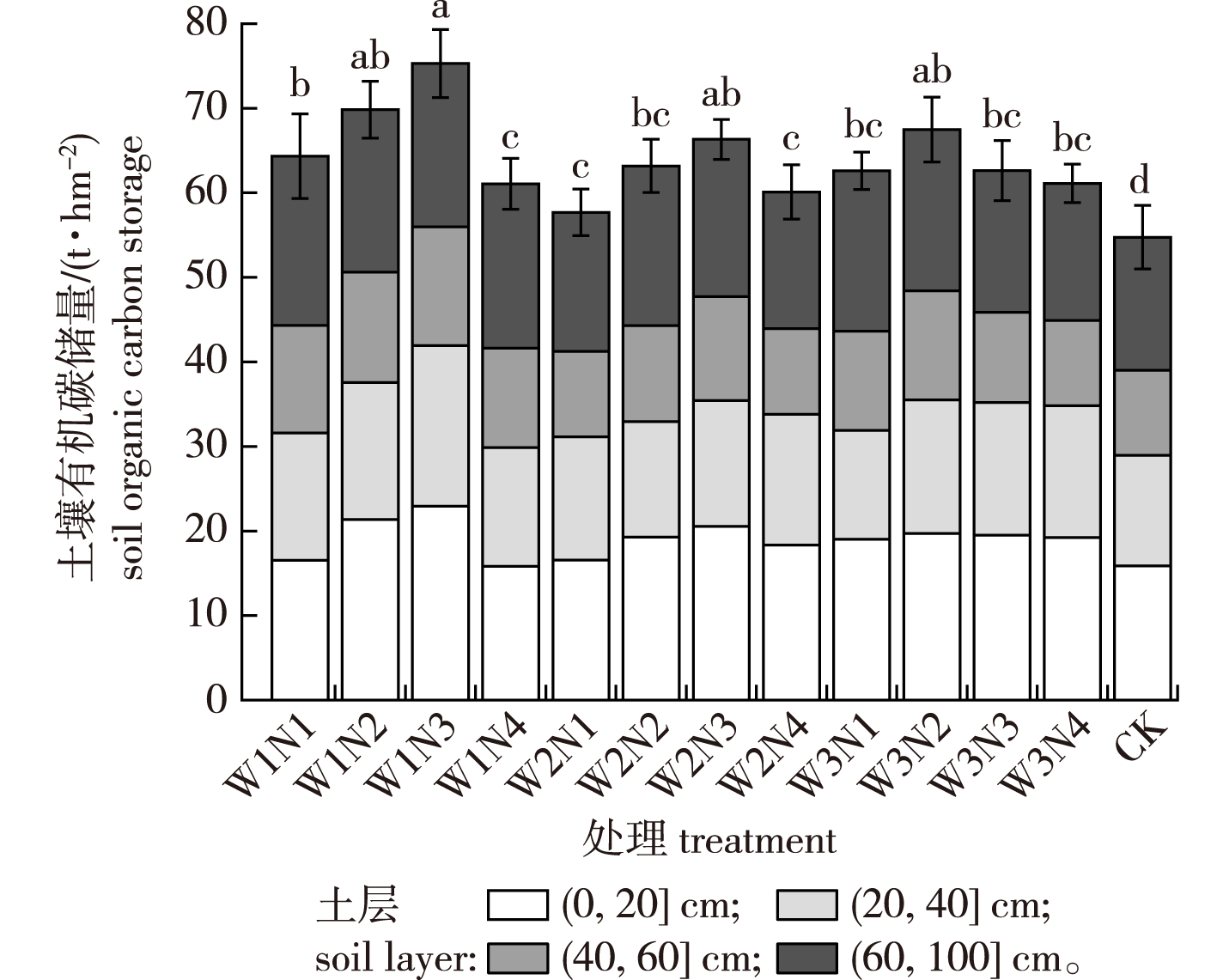
【Objective】This study aims to explore the changes in carbon storage and its allocation patterns in poplar (Populus spp.) plantation ecosystems under different water-fertilizer coupling treatments in the sandy areas of the Yellow River flood plain in north China. The findings will provide a scientific basis for enhancing the carbon sequestration capacity of poplar plantations and optimizing their management techniques.【Method】The study focused on six-year-old triploid P. tomentosa (S86) plantations under different water-fertilizer coupling treatments at the State-owned Old Town Forest Farm in Gaotang, Shandong. Thirteen treatments were established, including three irrigation levels (initiated when soil water potential at 20 cm below the dripper reached -20, -33, and -45 kPa, denoted as W1, W2, and W3, respectively), four nitrogen application levels [120, 190, 260, and 0 kg/(hm2·a), denoted as N1, N2, N3, and N4], and a control (CK). Partial biomass of the arbor layer was obtained using the harvest method, and regression equations were established to estimate the total tree layer biomass. The biomass of the shrub-herb layer and litter layer was measured via the harvest method. Soil samples were collected from (0, 20],(20, 40],(40, 60],(60,100]cm depths. Carbon content in plants and soil was determined, and carbon density and carbon storage were estimated based on carbon content and biomass. Carbon emissions from irrigation and fertilization in forest management were calculated to derive the net ecosystem carbon storage.【Result】After six years of water-fertilizer coupling treatments, the carbon storage in the tree and shrub-herb layers under the W1N1 treatment was significantly higher than that of CK (P<0.05), reaching 51.58 t/hm2. The shrub-herb layer accounted for 0.15%-0.22% of the total ecosystem carbon storage. The litter layer contributed 0.37%-0.46% of the ecosystem carbon storage, with no significant differences among treatments. Soil organic carbon storage varied significantly (P<0.05), with the highest under W1N3 (75.28 t/hm2) and the lowest under CK (54.74 t/hm2). The ecosystem carbon storage under W1N1 (116.61 t/hm2), W1N2 (116.58 t/hm2), and W1N3 (121.63 t/hm2) treatments was significantly higher than that of CK (P<0.05). The combined carbon storage of the arbor layer and soil layers exceeded 99%, indicating that these layers are the largest carbon pools in poplar plantation ecosystems. After deducting forestry carbon emissions, the net ecosystem carbon storage under W2N1, W2N2, W2N3, and W3N3 treatments decreased compared with that of CK but remained significantly higher than that of CK.【Conclusion】Compared to CK, high-water irrigation coupled with any fertilization treatment significantly increases the carbon storage and net carbon storage of poplar plantations in the sandy areas of the North China Plain. These treatments have the greatest impact on carbon storage, facilitating rapid and stable accumulation in the ecosystem. This study recommends optimizing water and fertilizer management for Populus tomentosa plantations in the sandy areas of the North China Plain, with an irrigation threshold of -20 kPa combined with nitrogen fertilization.
Key words

water-fertilizer coupling / poplar plantation / ecosystem carbon storage / forestry carbon emissions

Cite this article

Download Citations
ZHU Jingwei , JIA Liming , Gulimire Yilihamu , et al . The effect of water fertilizer coupling on carbon storage of S86 triploid Populus tomentosa plantation[J]. Journal of Nanjing Forestry University (Natural Sciences Edition). 2025, 49(6): 151-161 https://doi.org/10.12302/j.issn.1000-2006.202403008

References

[1]
FANG J Y, GUO Z D, HU H F, et al. Forest biomass carbon sinks in east Asia,with special reference to the relative contributions of forest expansion and forest growth[J]. Global Change Biology, 2014, 20(6):2019-2030.DOI: 10.1111/gcb.12512.
[2]
CARVALHAIS N, FORKEL M, KHOMIK M, et al. Global covariation of carbon turnover times with climate in terrestrial ecosystems[J]. Nature, 2014, 514(7521):213-217.DOI: 10.1038/nature13731.
[3]
PIAO S L, FANG J Y, CIAIS P, et al. The carbon balance of terrestrial ecosystems in China[J]. Nature, 2009, 458(7241):1009-1013.DOI: 10.1038/nature07944.
[4]
李平, 肖玉, 杨洋, 等. 天津平原杨树人工林生态系统碳储量[J]. 生态学杂志, 2014, 33(3):567-574.
Abstract
森林生态系统是最重要的陆地生态系统碳库,人工林生态系统碳储量在森林碳储量中所占比重越来越大。本研究选取天津平原地区不同林龄杨树人工林,通过野外调查和室内分析,估算了杨树人工林乔木、草本、凋落物和土壤碳储量。结果表明:人工杨树幼龄林、中龄林和成熟林的乔木生物量分别为43.65、56.18和121.59 t&middot;hm<sup>-2</sup>,乔木各组分生物量所占比例在幼龄林和中龄林中表现为干>根>枝>叶,在成熟林中表现为干>枝>根>叶。3个林龄段杨树人工林的草本层生物量分别为4.60、2.92和1.58 t&middot;hm<sup>-2</sup>,凋落物生物量分别为0.46、0.35和0.66 t&middot;hm<sup>-2</sup>。人工杨树幼龄林、中龄林和成熟林生态系统碳储量分别为84.34、121.03和121.72 t C&middot;hm<sup>-2</sup>,其中群落碳储量分别占25.85%、22.25%和46.58%,土壤碳储量分别占74.15%、77.75%和53.42%。群落碳储量中乔木碳储量分别为20.04、25.78和55.95 t C&middot;hm<sup>-2</sup>;草本碳储量分别为1.63、1.05和0.57 t C&middot;hm<sup>-2</sup>;凋落物碳储量分别为0.14、0.10和0.19 t C&middot;hm<sup>-2</sup>。3个林龄段杨树人工林土壤有机碳储量(0~100 cm)依次为62.53、94.10和65.03 t C&middot;hm<sup>-2</sup>,其中0~30 cm土壤有机碳储量所占比例分别为33.91%、37.64%和44.16%,随林龄的增加而增加。结果表明,杨树人工林生态系统碳储量随林龄的增加显著增加,而目前天津杨树人工林以幼龄林为主,未来天津杨树人工林存在巨大的碳储存空间。&nbsp;
LI P, XIAO Y, YANG Y, et al. Ecosystem carbon storage in poplar plantations of different stand ages in Tianjin plain[J]. Chinese Journal of Ecology, 2014, 33(3):567-574.DOI: 10.13292/j.1000-4890.2014.0043.
[5]
林鑫宇. 杨树人工林树种组成对土壤碳组分的影响[D]. 南京: 南京林业大学, 2021.DOI: 10.27242/d.cnki.gnjlu.2021.000272.
LIN X Y. The influence of tree species composition on soil carbon composition in poplar plantations. Nanjing:Nanjing Forestry University, 2021.DOI: 10.27242/d.cnki.gnjlu.2021.000272.
[6]
程传鹏, 徐明洁, 刘慧峰. 间伐对亚热带马尾松人工林碳动态及碳固定经济价值的影响[J]. 生态环境学报, 2022, 31(8):1499-1509.
Abstract
森林兼具资源与环境双重属性,在调控全球碳循环、减缓气候变暖、促进社会经济可持续发展方面起着重要作用。碳交易背景下,对人工林实施间伐管理将对生态系统碳动态及碳固定经济价值产生显著的影响。为研究间伐对人工林碳动态及碳固定经济价值的影响,准确掌握人工林森林生态系统碳动态组分对间伐的响应,以亚热带马尾松(Pinus massoniana Lamb.)人工林为研究对象,于2014年12月&#x02014;2016年12月开展间伐30%(密度)后生态系统碳动态组分野外观测与模拟以及在3种碳价格(1200元、150美元和34.38元)情境下碳固定经济价值评估。结果表明:间伐后森林生态系统碳汇功能显著降低,间伐后第一年甚至由碳汇转变为微弱的碳源,林下植被碳排放及伐桩呼吸碳排放升高是导致这一结果的主要原因;随后其碳汇功能迅速恢复,间伐后第二年恢复至70.0%,乔木层碳排放降低和林下植被碳排放及伐桩呼吸碳排放升高在这一过程中发挥了重要作用。间伐对森林环境因素、土壤养分、植物竞争关系等的影响,显著改变了亚热带人工马尾松林生态系统碳动态组分,并共同影响了生态系统碳动态和碳固定能力。碳价格显著影响生态系统碳固定经济价值,在上述3种碳价格情境下第一年和第二年间伐后生态系统碳固定经济价值分别减少7647.27、5869.28、219.09 yuan&#x02219;hm<sup>-2</sup>和1623.75、1246.23、46.53 yuan&#x02219;hm<sup>-2</sup>,计算间伐获得木材经济收益则可弥补因碳汇功能降低导致的碳固定经济价值损失。研究结果对于细化研究生态系统碳动态实测方法和综合评估生态系统碳固定经济价值具有重要作用,也对完善碳交易市场提出了更高的要求。
CHENG C P, XU M J, LIU H F. Effects of thinning on carbon dynamics and economic value of carbon fixation in subtropical Pinus massoniana plantation[J]. Ecology and Environmental Sciences, 2022, 31(8):1499-1509.DOI: 10.16258/j.cnki.1674-5906.2022.08.001.
[7]
MADEIRA M V, FABIÃO A, PEREIRA J S, et al. Changes in carbon stocks in Eucalyptus globulus Labill.plantations induced by different water and nutrient availability[J]. Forest Ecology and Management, 2002, 171(1/2):75-85.DOI: 10.1016/S0378-1127(02)00462-0.
[8]
REHMAN I U, AHMAD MALIK M, RASHID I, et al. Silicon fertilization increases carbon sequestration by augmenting PhytOC production in wheat[J]. Journal of Soil Science and Plant Nutrition, 2023, 23(1):1149-1155.DOI: 10.1007/s42729-022-01110-5.
[9]
LI Z C, XU X W, PAN G X, et al. Irrigation regime affected SOC content rather than plow layer thickness of rice paddies:a county level survey from a river basin in lower Yangtze Valley,China[J]. Agricultural Water Management, 2016, 172:31-39.DOI: 10.1016/j.agwat.2016.04.009.
[10]
司婧, 贾黎明, 韦艳葵, 等. 地下滴灌对杨树速生丰产林碳储量的影响[J]. 北京林业大学学报, 2012, 34(1):14-18.
SI J, JIA L M, WEI Y K, et al. Carbon storage in fast-growing and high-yield poplar plantations under subsurface drip irrigation[J]. Journal of Beijing Forestry University, 2012, 34(1):14-18.DOI: 10.13332/j.1000-1522.2012.01.019.
[11]
李久生, 李益农, 栗岩峰, 等. 现代灌溉水肥精量调控原理与应用[J]. 中国水利水电科学研究院学报, 2018, 16(5):373-384.
LI J S, LI Y N, LI Y F, et al. Principle and application of precise regulating water and fertilizers for modernized irrigation technologies[J]. Journal of China Institute of Water Resources and Hydropower Research, 2018, 16(5):373-384.DOI: 10.13244/j.cnki.jiwhr.2018.05.006.
[12]
XUE J M, KIMBERLEY M O, MCKINLEY R B. Impact of nitrogen input from biosolids application on carbon sequestration in a Pinus radiata forest[J]. Forest Ecosystems, 2022,9:100020.DOI: 10.1016/j.fecs.2022.100020.
[13]
方升佐. 中国杨树人工林培育技术研究进展[J]. 应用生态学报, 2008, 19(10):2308-2316.
FANG S Z. Silviculture of poplar plantation in China:a review[J]. Chinese Journal of Applied Ecology, 2008, 19(10):2308-2316.
[14]
DIMITRIOU I, MOLA-YUDEGO B. Poplar and willow plantations on agricultural land in Sweden:area,yield,groundwater quality and soil organic carbon[J]. Forest Ecology and Management, 2017, 383:99-107.DOI: 10.1016/j.foreco.2016.08.022.
[15]
BERGANTE S, BARBETTI R, COALOA D, et al. Nitrogen fertilization of ‘I-214' poplar trees with urea and different slow-release fertilizers:yield,economic and environmental aspects[J]. Biomass and Bioenergy, 2023,173:106806.DOI: 10.1016/j.biombioe.2023.106806.
[16]
VAN DEN DRIESSCHE R, THOMAS B R, KAMELCHUK D P. Effects of N, NP,and NPKS fertilizers applied to four-year old hybrid poplar plantations[J]. New Forests, 2008, 35(3):221-233.DOI: 10.1007/s11056-007-9073-4.
[17]
杨红青, 王亚飞, 贾黎明. 短轮伐期毛白杨S86纸浆林生长对沟灌水肥耦合的响应[J]. 北京林业大学学报, 2023, 45(3):68-78.
YANG H Q, WANG Y F, JIA L M. Response of pulp plantation growth of Populus tomentosa S86 in short rotation period to coupling of water and fertilizer in furrow irrigation[J]. Journal of Beijing Forestry University, 2023, 45(3):68-78.DOI: 10.12171/j.1000-1522.20210465.
[18]
刘峰, 席本野, 戴腾飞, 等. 水肥耦合对毛白杨林分土壤氮、细根分布及生物量的影响[J]. 北京林业大学学报, 2020, 42(1):75-83.
LIU F, XI B Y, DAI T F, et al. Effects of water and fertilizer coupling on soil nitrogen,fine root distribution and biomass of Populus tomentosa[J]. Journal of Beijing Forestry University, 2020, 42(1):75-83.DOI: 10.12171/j.1000-1522.20190222.
[19]
YAN Z X, ZHANG W Y, WANG Q S, et al. Changes in soil organic carbon stocks from reducing irrigation can be offset by applying organic fertilizer in the north China Plain[J]. Agricultural Water Management, 2022,266:107539.DOI: 10.1016/j.agwat.2022.107539.
[20]
XI B Y, BLOOMBERG M, WATT M S, et al. Modeling growth response to soil water availability simulated by HYDRUS for a mature triploid Populus tomentosa plantation located on the north China plain[J]. Agricultural Water Management, 2016, 176:243-254.DOI: 10.1016/j.agwat.2016.06.017.
[21]
王烨. 毛白杨速生纸浆林地下滴灌施肥效应研究[D]. 北京: 北京林业大学, 2015.
WANG Y. Study on the fertilization effect of underground drip irrigation in fast-growing pulp forests of Populus tomentosa[D]. Beijing: Beijing Forestry University, 2015.
[22]
BRONSON K F, BOOKER J D, BORDOVSKY J P, et al. Site-specific irrigation and nitrogen management for cotton production in the southern high Plains[J]. Agronomy Journal, 2006, 98(1):212-219.DOI: 10.2134/agronj2005.0149.
Upland cotton (Gossypium hirsutum L.) production in the Southern High Plains is usually limited by water and N. The most prevalent means of irrigation in this region is center‐pivot, and injection and/or ground application of liquid urea ammonium nitrate is the most common N management. The declining Ogallala aquifer has led to interest in variable‐rate or variable‐speed irrigation using center pivots. Variability in yields, soil properties, and elevation within the typical 48‐ha center‐pivot fields suggests that N fertilizer use efficiency might be improved by variable‐rate N applications. We conducted a 3‐yr experiment on a 14‐ha area within a 48‐ha center pivot in a terminated‐rye (Secale cereale L.) conservation tillage cotton system. The objectives were to assess lint yield response to irrigation level for different landscape positions and to compare the effects of variable‐rate N, blanket‐rate N, and zero N on lint yields at varying irrigation levels and landscape positions. Lint yield response to irrigation was linear in 2002 and 2003. Increased rainfall in 2004 limited irrigation response. Contrary to our hypothesis, cotton lint yield response to irrigation was not less in the bottomslope than in the sideslopes. Nitrogen fertilizer resulted in greater lint yields in all 3 yr, but the magnitude of the response was less than that of irrigation in 2002 and 2003. Nitrogen response did not interact with landscape position or with irrigation rate. Variable‐rate N resulted in more consistent lint yield response than did blanket‐rate N in all years. However, when the costs of implementing variable‐rate management were considered, the dollar returns to N fertilizer were favorable for variable‐rate fertilization in only 1 of 3 yr.
[23]
RAMNIWAS, KAUSHIK R A, PAREEK S, et al. Effect of drip fertigation scheduling on fertilizer use efficiency,leaf nutrient status,yield and quality of ‘shweta' guava (Psidium guajava L.) under meadow orcharding[J]. National Academy Science Letters, 2013, 36(5):483-488.DOI: 10.1007/s40009-013-0162-y.
[24]
DONG W Y, QIN J, LI J Y, et al. Interactions between soil water content and fertilizer on growth characteristics and biomass yield of Chinese white poplar (Populus tomentosa Carr.) seedlings[J]. Soil Science and Plant Nutrition, 2011, 57(2):303-312.DOI: 10.1080/00380768.2010.549445.
[25]
YAN X L, DAI T F, ZHAO D H, et al. Combined surface drip irrigation and fertigation significantly increase biomass and carbon storage in a Populus × euramericana cv. Guariento plantation[J]. Journal of Forest Research, 2016, 21(6):280-290.DOI: 10.1007/s10310-016-0540-7.
[26]
TRENTINI C P, VILLAGRA M, GÓMEZ PÁMIES D, et al. Effect of nitrogen addition and litter removal on understory vegetation,soil mesofauna,and litter decomposition in loblolly pine plantations in subtropical Argentina[J]. Forest Ecology and Management, 2018, 429:133-142.DOI: 10.1016/j.foreco.2018.07.012.
[27]
HART S C, MASSICOTTE H B, RUTHERFORD P M, et al. Early response of understory vegetation to wood ash fertilization in the sub boreal climatic zone of British Columbia[J]. The Forestry Chronicle, 2019, 95(2):135-142.DOI: 10.5558/tfc2019-020.
[28]
JACOBSON S, HÖGBOM L, RING E. Long-term responses of understory vegetation in boreal Scots pine stands after nitrogen fertilization[J]. Scandinavian Journal of Forest Research, 2020, 35(3/4):139-146.DOI: 10.1080/02827581.2020.1761996.
[29]
王芳, 张军辉, 谷越, 等. 氮添加对树木光合速率影响的meta分析[J]. 生态学杂志, 2017, 36(6):1539-1547.
Abstract
探究氮添加对森林植物生理生态特征及生长的影响可以为探讨全球变化背景下中国森林动态变化机制及保护和管理提供依据。本文对32篇有关氮添加对植物光合作用的文献进行整合分析发现,氮添加整体上促进了树木的光合作用(10.24%),其中对温带森林树木的促进(11.45%)高于热带森林(10.32%);氮添加对阔叶树种光合速率的提高(12.16%)高于针叶树种(6.24%)。氮添加对树木光合作用的影响存在阈值效应,当氮添加量小于25 kg&middot;hm<sup>-2</sup>&middot;a<sup>-1</sup>时,光合速率略微提高(6.28%),但不显著;而随氮添加量继续增加,光合速率提高,在25~50和50~100 kg&middot;hm<sup>-2</sup>&middot;a<sup>-1</sup>氮添加条件下分别提高了13.50%和13.09%;当氮添加量超过100 kg&middot;hm<sup>-2</sup>&middot;a<sup>-1</sup>时,植物光合速率的提高则不显著。施氮时间少于5年时,氮添加显著提高植物光合速率(13.01%);施氮时间超过5年时,反而抑制植物光合速率(-20.63%);这种抑制作用在施氮时间持续10年以后则不显著。氮添加影响植物的光合速率可能是过多的氮使植物体内养分失衡(叶片N增多,P、K、Ca、Mg离子减少),而且叶绿素含量与光合酶合成和活性也随之发生变化的结果。
WANG F, ZHANG J H, GU Y, et al. Meta-analysis of the effects of nitrogen addition on photosynthesis of forests[J]. Chinese Journal of Ecology, 2017, 36(6):1539-1547.DOI: 10.13292/j.1000-4890.201706.031.
Studies on the effect of nitrogen addition on the eco-physiological traits and growth of forests are of great importance, providing basic information for assessing the mechanism of forest dynamics. Here, we conducted a metaanalysis upon 32 studies to reveal the response of tree photosynthesis to N addition. We found that tree photosynthetic rate increased as a whole (10.24%), and the influence of N addition on temperate trees (11.45%) was higher than that on tropical trees (10.32%); broadleaved tree species was more sensitive to N addition than conifers. The responses ratio of tree photosynthetic rate varied with N addition level and experimental duration. When the nitrogen addition level was less than 25 kg&middot;hm<sup>-2</sup>&middot;a<sup>-1</sup>, tree photosynthetic rate increased (6.28%) insignificantly. The tree photosynthetic rate increased with the nitrogen addition level, with increments of 13.50% and 13.09% at 25-50 and 50-100 kg&middot;hm<sup>-2</sup>&middot;a<sup>-1</sup>, respectively. However, the tree photosynthetic rate increased insignificantly when the nitrogen level was more than 100 kg&middot;hm<sup>-2</sup>&middot;a<sup>-1</sup>. Generally, the photosynthetic rate was improved significantly in the experiment less than 5 years, but inhibited in the experiment longer than 5 years. The inhibition effect became insignificant in the experiment longer than 10 years. Excess nitrogen addition would lead to nutritional imbalance in plants (increased foliar N and decreased foliar P, K, Ca and Mg), which may contribute to the changes of photosynthetic pigments and enzyme activities.
[30]
李媛良, 汪思龙, 颜绍馗. 杉木人工林剔除林下植被对凋落层养分循环的短期影响[J]. 应用生态学报, 2011, 22(10):2560-2566.
LI Y L, WANG S L, YAN S K. Short-term effects of understory vegetation removal on nutrient cycling in litter layer of Chinese fir plantation[J]. Chinese Journal of Applied Ecology, 2011, 22(10):2560-2566.DOI: 10.13287/j.1001-9332.2011.0363.
[31]
刘海英, 王增, 徐耀文, 等. 不同林分密度毛竹林生态系统碳储量特征[J]. 中国农学通报, 2022, 38(35):17-21.
Abstract
为了解毛竹林生态系统碳储量特征和碳库分配格局,以浙江钱江源森林生态系统定位观测研究站庙山坞林场为例,对5种林分密度毛竹林碳储量进行了分析和比较。5种林分密度的毛竹林土壤有机碳含量随着土层深度的增加均表现逐渐减少的变化趋势;毛竹林系统中土壤层碳储量均为各个林分类型中密度最高的组分,范围为127.65~166.65 t/ hm<sup>2</sup>;乔木层碳储量为15.59~31.59 t/ hm<sup>2</sup>,林分Ⅳ和Ⅴ的乔木层碳储量显著高于其他林分(P&lt;0.05);五种林分灌草层和凋落物层碳储量均较少。随着林分密度的增加,毛竹林乔木层、土壤层和总系统碳储量也均增加。随着林分密度增加,毛竹林系统碳储量也逐渐增加,和其他森林生态系统相比,毛竹林生态系统碳储量仍略低,在不影响经济效益的情况下,建议再增加种植密度。
LIU H Y, WANG Z, XU Y W, et al. Characteristics of carbon storage in Phyllostulis pubescens ecosystem with different stand densities[J]. Chinese Agricultural Science Bulletin, 2022, 38(35):17-21.DOI: 10.11924/j.issn.1000-6850.casb2021-1217.
[32]
李银坤, 陈敏鹏, 梅旭荣, 等. 土壤水分和氮添加对华北平原高产农田有机碳矿化的影响[J]. 生态学报, 2014, 34(14):4037-4046.
LI Y K, CHEN M P, MEI X R, et al. Effects of soil moisture and nitrogen addition on organic carbon mineralization in a high-yield cropland soil of the North China Plain[J]. Acta Ecologica Sinica, 2014, 34(14):4037-4046.DOI: 10.5846/stxb201212041741.
[33]
赵加瑞, 王益权, 刘军, 等. 灌溉水质与土壤有机质累积的关系[J]. 生态环境, 2008, 17(3):1240-1243.
ZHAO J R, WANG Y Q, LIU J, et al. Effect of irrigation water quality on soil organic matter accumulation[J]. Ecology and Environment, 2008, 17(3):1240-1243.DOI: 10.16258/j.cnki.1674-5906.2008.03.040.
[34]
GILLABEL J, DENEF K, BRENNER J, et al. Carbon sequestration and soil aggregation in center-pivot irrigated and dryland cultivated farming systems[J]. Soil Science Society of America Journal, 2007, 71(3):1020-1028.DOI: 10.2136/sssaj2006.0215.
Although irrigation is considered a beneficiary management for increasing soil organic C (SOC) stocks in (semi)arid environments, our understanding of the impact of irrigation on soil organic matter (SOM) dynamics in the field remains limited. We investigated the effect of irrigation on soil C storage in relation to soil aggregation by measuring C stocks of bulk soil and different aggreagate fractions in the top 20‐cm layer of center‐pivot irrigated vs. dryland farming systems in semiarid southwestern Nebraska. The irrigated fields (IRR) showed increased C inputs and larger SOC stocks than the dryland cultivated fields (DRY). Fractionation of bulk soil samples into non‐microaggregate‐associated particulate organic matter (free POM) and microaggregate‐associated POM, silt, and clay fractions indicated that the larger bulk SOC stock under IRR was explained solely by an increase in microaggregate‐associated C storage Wet sieving of bulk soil showed that microaggregation was remarkably low under DRY and did not increase under IRR, suggesting that the protection of microaggregates inside macroaggregates was no prerequisite for C sequestration under IRR. The results of this study confirm the potential of irrigation to increase soil C stocks through preferential sequestration of C inside microaggregates, but question our understanding of the mechanisms underlying this preferential sequestration.
[35]
王建楠. 氮磷添加对不同林龄水杉林生态化学计量的影响[D]. 北京: 中国林业科学研究院, 2020.
WANG J N. The effect of nitrogen and phosphorus addition on the ecological stoichiometry of Chinese fir forests of different ages[D]. Beijing: Chinese Academy of Forestry, 2020.
[36]
ZAK D R, HOLMES W E, BURTON A J, et al. Simulated atmospheric NO3- deposition increases soil organic matter by slowing decomposition[J]. Ecological Applications, 2008, 18(8):2016-2027.DOI: 10.1890/07-1743.1.
[37]
李明华, 唐学君, 肖舜祯. 不同施肥强度和更新方式对杉木人工林碳固存的影响[J]. 江西科学, 2019, 37(01):44-48.
LI M H, TANG X J, XIAO S Z. The effects of different fertilization intensities and regeneration methods on carbon sequestration in Chinese fir plantations[J]. Jiangxi Science, 2019, 37 (01): 44-48. DOI:10.13990/j.issn1001-3679.2019.01.011.
[38]
CHEN H, LI D J, GURMESA G A, et al. Effects of nitrogen deposition on carbon cycle in terrestrial ecosystems of China:a meta-analysis[J]. Environmental Pollution, 2015, 206:352-360.DOI: 10.1016/j.envpol.2015.07.033.
[39]
陈钦程. 施肥对华北落叶松人工林土壤与植株氮磷钾的影响[D]. 杨凌: 西北农林科技大学, 2015.
CHEN Q C. Effects of fertilization on soil and plant nitrogen, phosphorus, and potassium in north China larch artificial forest[D]. Yangling: Northwest A & F University, 2015.
[40]
敦宇, 许嘉文, 白雪山, 等. 地下水灌溉对华北平原农田土壤碳库转化影响[J]. 环境科学研究, 2021, 34(5):1187-1195.
DUN Y, XU J W, BAI X S, et al. Impact of groundwater irrigation on farmland soil carbon pool transformation in the north China plain[J]. Environmental Science Research, 2021, 34 (5): 1187-1195. DOI:10.13198/j.issn.1001-6929.2021.01.13.
[41]
李妙宇, 上官周平, 邓蕾. 黄土高原地区生态系统碳储量空间分布及其影响因素[J]. 生态学报, 2021, 41(17):6786-6799.
LI M Y, SHANGGUAN Z P, DENG L. Spatial distribution of carbon storages in the terrestrial ecosystems and its influencing factors on the Loess Plateau[J]. Acta Ecologica Sinica, 2021, 41(17):6786-6799.DOI: 10.5846/stxb202010132609.
[42]
黄钰辉, 甘先华, 张卫强, 等. 南亚热带杉木林皆伐迹地幼龄针阔混交林生态系统碳储量[J]. 生态科学, 2017, 36(4):137-145.
HUANG Y H, GAN X H, ZHANG W Q, et al. Carbon storage of young coniferous and broad-leaved mixed forests in clear cut areas of south Asian tropical Chinese fir forests[J]. Ecological Science, 2017, 36 (4): 137-145.DOI:10.14108/j.cnki.1008-8873.2017.04.019.
[43]
卢立华, 郭文福, 蔡道雄, 等. 马尾松与红椎纯林及混交林生态系统碳储量研究[J]. 中南林业科技大学学报, 2019, 39(7):78-84.
LU L H, GUO W F, CAI D X, et al. Study on carbon storage of monoculture and mixed plantation of Pinus massoniana and Castanopsis hystrix[J]. Journal of Central South University of Forestry & Technology, 2019, 39(7):78-84.DOI: 10.14067/j.cnki.1673-923x.2019.07.011.
[44]
YANG L, LIN Y B, KONG J J, et al. Effects of fertilization and dry-season irrigation on the timber production and carbon storage in subtropical Eucalyptus plantations[J]. Industrial Crops and Products, 2023,192:116143.DOI: 10.1016/j.indcrop.2022.116143.
[45]
JOHNSON D W. Effects of forest management on soil carbon storage[J]. Water,Air,and Soil Pollution, 1992, 64(1):83-120.DOI: 10.1007/BF00477097.
[46]
周玉荣, 于振良, 赵士洞. 我国主要森林生态系统碳贮量和碳平衡[J]. 植物生态学报, 2000, 24(5):518-522.
Abstract
在广泛收集资料的基础上,估算了我国主要森林生态系统的碳贮量和碳平衡通量,分析了它们的区域特征。主要结果如下:1)我国森林生态系统的平均碳密度是258.83t&middot;hm<sup>-2</sup>,基本趋势是随纬度的增加而增加;其中植被的平均碳密度是57.07t&middot;hm<sup>-2</sup>,随纬度的增加而减小;土壤碳密度约是植被碳密度的3.4倍,其区域特点与植被碳密度呈相反趋势,随纬度升高而增加;凋落物层平均碳密度是8.21t&middot;hm<sup>-2</sup>,随水热因子的改善而减小。2)森林生态系统有机碳库包括植被、土壤和凋落物层3个部分,采用林业部调查规划设计院1989~1993年最新统计的我国森林资源清查资料,估算我国主要森林生态系统碳贮量为281.16&times;10<sup>8</sup>t,其中植被碳库、土壤碳库、凋落物层碳库分别为62.00&times;10<sup>8</sup>t、210.23&times;10<sup>8</sup>t、8.92&times;10<sup>8</sup>t。落叶阔叶林、暖性针叶林、常绿落叶阔叶林、云冷杉(Picea-Abies)林、落叶松(Larix)林占森林总碳贮量的87%,是我国森林主要的碳库。3)我国森林生态系统在与大气的气体交换中表现为碳汇,年通量为4.80&times;10<sup>8</sup>t&middot;a<sup>-1</sup>,基本规律是从热带向寒带,碳汇功能下降,这取决于系统碳收支的各个通量之间的动态平衡;阔叶林的固碳能力大于针叶林。我国森林生态系统可以吸收生物物质、化石燃料燃烧和人口呼吸释放总碳量(9.87&times;10<sup>8</sup>t&middot;a<sup>-1</sup>)的48.7%。
ZHOU Y R, YU Z L, ZHAO S D. Carbon storage and budget of major Chinese forest types[J]. Acta Phytoecologica Sinica, 2000, 24(5):518-522.DOI: 10.1007/s11769-000-0028-3.
[47]
IBRAHIM L, PROE M F, CAMERON A D. Interactive effects of nitrogen and water availabilities on gas exchange and whole-plant carbon allocation in poplar[J]. Tree Physiology, 1998, 18(7):481-487.DOI: 10.1093/treephys/18.7.481.
Cuttings of balsam spire hybrid poplar (Populus trichocarpa var. Hastata Henry x Populus balsamifera var. Michauxii (Dode) Farwell) were grown in sand culture and irrigated every 2 (W) or 10 (w) days with a solution containing either 3.0 (N) or 0.5 (n) mol nitrogen m(-3) for 90 days. Trees in the WN (control) and wn treatments had stable leaf nitrogen concentrations averaging 19.4 and 8.4 mg g(-1), respectively, over the course of the experiment. Trees in the Wn and wN treatments had a similar leaf nitrogen concentration, which increased from 12.0 to 15.8 mg g(-1) during the experiment. By the final harvest, mean stomatal conductances of trees in the wN and wn treatments were less than those of trees in the Wn and WN treatments (1.8 versus 4.6 mm s(-1)). Compared to the WN treatment, biomass at the final harvest was reduced by 61, 72 and 75% in the Wn, wN and wn treatments, respectively. At the final harvest, WN trees had a mean total leaf area of 4750 +/- 380 cm(2) tree(-1) and carried 164 +/- 8 leaves tree(-1) with a specific leaf area of 181 +/- 16 cm(2) g(-1), whereas Wn trees had a smaller mean total leaf area (1310 +/- 30 cm(2) tree(-1)), because of the production of fewer leaves (41 +/- 6) with a smaller specific leaf area (154 +/- 2 cm(2) g(-1)). A greater proportion of biomass was allocated to roots in Wn trees than in WN trees, but component nitrogen concentrations adjusted such that there was no Wn treatment effect on nitrogen allocation. Compared with WN trees, rates of photosynthesis and respiration per unit weight of tissue of Wn trees decreased by 28 and 31%, respectively, but the rate of photosynthesis per unit leaf nitrogen remained unaltered. The wN and Wn trees had similar leaf nitrogen concentrations; however, compared with the Wn treatment, the wN treatment decreased mean total leaf area (750 +/- 50 cm(2) tree(-1)), number of leaves per tree (29 +/- 2) and specific leaf area (140 +/- 6 cm(2) g(-1)), but increased the allocation of biomass and nitrogen to roots. Net photosynthetic rate per unit leaf nitrogen was 45% lower in the wN treatment than in the other treatments. Rates of net photosynthesis and respiration per unit weight of tissue were 48 and 33% less, respectively, in wN trees than in Wn trees.
[48]
张婷, 邹显花, 李林鑫, 等. 根系获取资源过程中的代谢成本权衡策略研究进展[J]. 西北林学院学报, 2023, 38(4):149-155.
ZHANG T, ZOU X H, LI L X, et al. Research progress on the cost and benefit of root acquisition metabolism from plant resources[J]. Journal of Northwest Forestry University, 2023, 38(4):149-155.DOI:10.3969/j.issn.1001-7461.2023.04.19.
[49]
张婷, 熊有才. 干旱条件下不同倍体春小麦根系碳消耗及其与产量形成的关系[J]. 湖北农业科学, 2013, 52(5):1004-1006,1011.
ZHANG T, XIONG Y C. Root carbon consumption of spring wheat with different ploidy under drought conditions and its relationship to yield[J]. Hubei Agricultural Sciences, 2013, 52(5):1004-1006,1011.DOI: 10.14088/j.cnki.issn0439-8114.2013.05.050.
[50]
FENG X, FAN Q B, QU J J, et al. Characteristics of carbon sources and sinks and their relationships with climate factors during the desertification reversal process in Yulin,China[J]. Frontiers in Forests and Global Change, 2023,6:1288449.DOI: 10.3389/ffgc.2023.1288449.
[51]
LYU F C, SONG Y K, YAN X D. Evaluating carbon sink potential of forest ecosystems under different climate change scenarios in Yunnan,southwest China[J]. Remote Sensing, 2023, 15(5):1442.DOI: 10.3390/rs15051442.
[52]
BENNETT A C, KNAUER J, BENNETT L T, et al. Variable influence of photosynthetic thermal acclimation on future carbon uptake in Australian wooded ecosystems under climate change[J]. Global Change Biology, 2024, 30(1):e17021.DOI: 10.1111/gcb.17021.
PDF(1894 KB)

Accesses

Citation

Detail

Sections
Recommended
The full text is translated into English by AI, aiming to facilitate reading and comprehension. The core content is subject to the explanation in Chinese.

/