Early diagnostic indicator screening after the infection of Pinus massoniana by Bursaphelenchus xylophilus

ZHENG Zhe, LI Yue, CHEN Fengmao, LI Min, WANG Mengyao, WANG Lichao

Journal of Nanjing Forestry University (Natural Sciences Edition) ›› 2025, Vol. 49 ›› Issue (6) : 81-88.

PDF(3617 KB)
PDF(3617 KB)
Journal of Nanjing Forestry University (Natural Sciences Edition) ›› 2025, Vol. 49 ›› Issue (6) : 81-88. DOI: 10.12302/j.issn.1000-2006.202406056

Early diagnostic indicator screening after the infection of Pinus massoniana by Bursaphelenchus xylophilus

Author information +
History +

Abstract

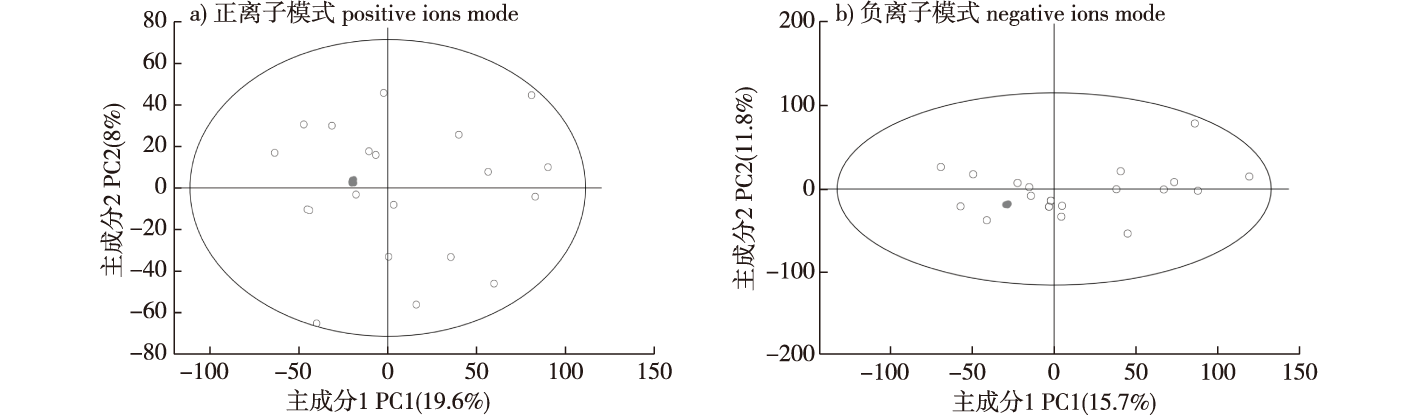
【Objective】This study aims to identify suitable metabolites for the early diagnosis of pine wilt disease (PWD). To achieve this, the metabolome of stem segments from Pinus massoniana infected by different nematodes was analyzed, with the goal of improving the prevention and control of PWD.【Method】With four-year-old P. massoniana trees with similar growth characteristics were inoculated with three different nematode species, each with varying pathogenicity. These included the highly virulent Bursaphelenchus xylophilus (nematode strain FCBX), the highly virulent B. mucronatus (nematode strain BM7), and the non-virulent B. mucronatus (nematode strain FCBM). These nematodes were isolated and cultured in the Forest Pathology Laboratory of Nanjing Forestry University. Inoculation of P. massoniana trees with these nematodes were conducted under controlled conditions to assess their virulence. A sterile water control group (CK) was also included. Three days after injection, the metabolome of stem segments from P. massoniana was analyzed using ultra-high-performance liquid chromatography-tandem mass spectrometry (UPLC-MS/MS). Principal component analysis (PCA) was used to ensure quality control of the metabolomic data. Metabolites with specific expression following B. xylophilus inoculation were identified through a combination of P-values and variable importance in projection (VIP) scores. Targeted detection and validation of these metabolites were conducted using ultra-performance liquid chromatography (UPLC).【Result】The three nematode species exhibited significant differences in virulence toward P. massoniana. Metabolomic analysis of stem segments revealed reliable results. One key finding was that 7-dehydrocholesterol was a common differential metabolite across the comparative metabolomes of P. massoniana inoculated with different nematodes. Levels of this compound were measured using UPLC on the 3rd, 7th, and 21st days after inoculation. It was detectable only in the group inoculated with the highly virulent B. xylophilus (nematode strain FCBX), with concentrations of 4.09, 66.77, and 28.8 μg/g, respectively. 7-dehydrocholesterol was undetectable in the sterile water control group (CK), as well as in the groups treated with either highly virulent B. mucronatus (nematode strain BM7) or non-virulent B. mucronatus (nematode strain FCBM).【Conclusion】7-dehydrocholesterol, identified through the metabolomic profiling of P. massoniana, was found to be a specific metabolite following early infection by B. xylophilus. This metabolite's specificity allows it to distinguish B. xylophilus infection from infections caused by other nematodes. Therefore, the detection of 7-dehydrocholesterol levels could serve as an effective tool for the early diagnosis of pine wilt disease.
Key words

pine wilt disease / Bursaphelenchus xylophilus / B. mucronatus / Pinus massoniana / metabonomics / 7-dehydrocholesterol / liquid chromatography / disease detection

Cite this article

Download Citations
ZHENG Zhe , LI Yue , CHEN Fengmao , et al . Early diagnostic indicator screening after the infection of Pinus massoniana by Bursaphelenchus xylophilus[J]. Journal of Nanjing Forestry University (Natural Sciences Edition). 2025, 49(6): 81-88 https://doi.org/10.12302/j.issn.1000-2006.202406056

References

[1]
李文华, 刘青华, 周志春, 等. 砧木及抗性马尾松松脂组分对松材线虫的响应[J]. 林业科学研究, 2023, 36(4):1-11.
LI W H, LIU Q H, ZHOU Z C, et al. Response of different rootstocks and resistant resin components of Pinus massoniana to pine wood nematode[J]. Forest Research, 2023, 36(4):1-11.DOI: 10.12403/j.1001-1498.20220419.
[2]
WINGFIELD M J, BLANCHETTE R A. The pine-wood nematode,Bursaphelenchus xylophilus,in Minnesota and Wisconsin:insect associates and transmission studies[J]. Canadian Journal of Forest Research, 1983, 13(6):1068-1076.DOI: 10.1139/x83-143.
[3]
叶建仁, 吴小芹. 松材线虫病研究进展[J]. 中国森林病虫, 2022, 41(3):1-10.
YE J R, WU X Q. Research progress of pine wilt disease[J]. Forest Pest and Disease, 2022, 41(3):1-10.DOI: 10.19688/j.cnki.issn1671-0886.20220026.
[4]
MARTINELLI F, SCALENGHE R, DAVINO S, et al. Advanced methods of plant disease detection.a review[J]. Agronomy for sustainable development, 2015, 35(1):1-25.DOI: 10.1007/s13593-014-0246-1.
[5]
NINKOVIC V, MARKOVIC D, RENSING M. Plant volatiles as cues and signals in plant communication[J]. Plant Cell and Environment, 2021, 44(4):1030-1043.DOI: 10.1111/pce.13910.
[6]
BILAS R D, BRETMAN A, BENNETT T. Friends,neighbours and enemies:an overview of the communal and social biology of plants[J]. Plant Cell and Environment, 2021, 44(4):997-1013.DOI: 10.1111/pce.13965.
[7]
GALEANO G P, NEVES DOS SANTOS F, ZANOTTA S, et al. Metabolomics of Solanum lycopersicum infected with Phytophthora infestans leads to early detection of late blight in asymptomatic plants[J]. Molecules, 2018, 23(12):3330.DOI: 10.3390/molecules23123330.
[8]
PLUMB R S, GETHINGS L A, RAINVILLE P D, et al. Advances in high throughput LC/MS based metabolomics:a review[J]. Trac Trends in Analytical Chemistry, 2023,160:116954.DOI: 10.1016/j.trac.2023.116954.
[9]
王俊伟, 胡龙娇, 吴小芹. 不同抗性松树家系中松材线虫致病力和繁殖力比较[J]. 南京林业大学学报(自然科学版), 2025, 49(1):21-27.
WANG J W, HU L J, WU X Q, Comparison of pathogenicity and reproduction of Bursaphelenchus xylophilus in pine families with different disease resistance[J]. Journal of Nanjing Forestry University(Natural Sciences Edition), 2025, 49(1):21-27. DOI:10.12302/j.issn.1000-2006.202302057.
[10]
MODESTO I, STERCK L, ARBONA V, et al. Insights into the mechanisms implicated in Pinus pinaster resistance to pinewood nematode[J]. Frontiers in Plant Science, 2021,12:690857.DOI: 10.3389/fpls.2021.690857.
[11]
VASILEV N, BOCCARD J, LANG G, et al. Structured plant metabolomics for the simultaneous exploration of multiple factors[J]. Scientific Reports, 2016,6:37390.DOI: 10.1038/srep37390.
[12]
WANT E J, MASSON P, MICHOPOULOS F, et al. Global metabolic profiling of animal and human tissues via UPLC-MS[J]. Nature Protocols, 2013, 8(1):17-32.DOI: 10.1038/nprot.2012.135.
[13]
NAVARRO-REIG M, JAUMOT J, GARCÍA-REIRIZ A, et al. Evaluation of changes induced in rice metabolome by Cd and Cu exposure using LC-MS with XCMS and MCR-ALS data analysis strategies[J]. Analytical and Bioanalytical Chemistry, 2015, 407(29):8835-8847.DOI: 10.1007/s00216-015-9042-2.
[14]
WISHART D S, DAN T, KNOX C, et al. HMDB:the human metabolome database[J]. Nucleic Acids Research,2007,35:D521-D526.DOI: 10.1093/nar/gkl923.
[15]
HORAI H, ARITA M, KANAYA S, et al. MassBank:a public repository for sharing mass spectral data for life sciences[J]. Journal of Mass Spectrometry, 2010, 45(7):703-714.DOI: 10.1002/jms.1777.
[16]
SUD M, FAHY E, COTTER D, et al. LMSD:LIPID MAPS structure database[J]. Nucleic Acids Research,2007,35:D527-D532.DOI: 10.1093/nar/gkl838.
[17]
ABDELRAZIG S, SAFO L, RANCE G A, et al. Metabolic characterisation of Magnetospirillum gryphiswaldense MSR-1 using LC-MS-based metabolite profiling[J]. RSC Advances, 2020, 10(54):32548-32560.DOI: 10.1039/d0ra05326k.
[18]
KANEHISA M, GOTO S. KEGG Kyoto encyclopedia of genes and genomes[J]. Nucleic Acids Research, 2000, 28(1):27-30.DOI: 10.1093/nar/28.1.27.
[19]
SAITO K, MATSUDA F. Metabolomics for functional genomics,systems biology,and biotechnology[J]. Annual Review of Plant Biology, 2010, 61:463-489.DOI: 10.1146/annurev.arplant.043008.092035.
[20]
国家卫生和计划生育委员会, 国家食品药品监督管理总局. 食品安全国家标准食品中胆固醇的测定:GB 5009.128—2016[S]. 北京: 中国标准出版社,2017:1-22.
National Health and Family Planning Commission of the People's Republic of China, China Food and Drug Administration. National food safety standard-determination of cholesterol in foods:GB 5009.128—2016[S]. Beijing: Standards Press of China,2017:1-22.
[21]
DUNN W B, BROADHURST D, BEGLEY P, et al. Procedures for large-scale metabolic profiling of serum and plasma using gas chromatography and liquid chromatography coupled to mass spectrometry[J]. Nature Protocols, 2011, 6(7):1060-1083.DOI: 10.1038/nprot.2011.335.
[22]
刘昊. 基于高光谱数据的松材线虫病诊断研究[D]. 长沙: 中南林业科技大学, 2023.DOI: 10.27662/d.cnki.gznlc.2023.000344.
LIU H. Diagnosing pine wilt disease based on hyperspectral data[D]. Changsha: Central South University of Forestry & Technology, 2023.DOI: 10.27662/d.cnki.gznlc.2023.000344.
[23]
李卫斌, 安炳贞, 孔玉辉, 等. 基于无人机遥感影像的松材线虫病监测方法概述[J]. 林业工程学报, 2023, 8(2):21-29.
LI W B, AN B Z, KONG Y H, et al. A review of monitoring methods for pine wilt disease based on UAV remote sensing images[J]. Journal of Forestry Engineering, 2023, 8(2):21-29.DOI: 10.13360/j.issn.2096-1359.202203008
[24]
刘宁, 张晓丽, 王书涵, 等. 基于蒸腾速率与光谱特征的松材线虫病害预测[J]. 西北农林科技大学学报(自然科学版), 2015, 43(6):129-135.
LIU N, ZHANG X L, WANG S H, et al. Prediction of Bursaphelenchus xylophilus based on transpiration rate and spectral characteristics[J]. Journal of Northwest A&F University (Natural Science Edition), 2015, 43(6):129-135.DOI: 10.13207/j.cnki.jnwafu.2015.06.011.
[25]
YE S, ROGAN J, ZHU Z, et al. Detecting subtle change from dense landsat time series:case studies of mountain pine beetle and spruce beetle disturbance[J]. Remote Sensing of Environment, 2021,263:112560.DOI: 10.1016/j.rse.2021.112560.
[26]
MONTEIRO P, GONÇALVES M F M, PINTO G, et al. Three novel species of fungi associated with pine species showing needle blight-like disease symptoms[J]. European Journal of Plant Pathology, 2022, 162(1):183-202.DOI: 10.1007/s10658-021-02395-5.
[27]
CASTRO-MORETTI F R, GENTZEL I N, MACKEY D, et al. Metabolomics as an emerging tool for the study of plant-pathogen interactions[J]. Metabolites, 2020, 10(2):52.DOI: 10.3390/metabo10020052.
[28]
VASSILIADIS S, ELKINS A C, REDDY P, et al. A simple LC-MS method for the quantitation of alkaloids in endophyte-infected perennial ryegrass[J]. Toxins, 2019, 11(11):649.DOI: 10.3390/toxins11110649.
[29]
DE MORAES PONTES J G, VENDRAMINI P H, FERNANDES L S, et al. Mass spectrometry imaging as a potential technique for diagnostic of Huanglongbing disease using fast and simple sample preparation[J]. Scientific Reports, 2020, 10(1):13457.DOI: 10.1038/s41598-020-70385-4.
[30]
KIM T K, ATIGADDA V, BRZEMINSKI P, et al. Detection of 7-dehydrocholesterol and vitamin D3 derivatives in honey[J]. Molecules, 2020, 25(11):2583.DOI: 10.3390/molecules25112583.
[31]
ZHANG M R, SONG M F, CHENG F, et al. Identification of a putative candidate gene encoding 7-dehydrocholesterol reductase involved in brassinosteroids biosynthesis for compact plant architecture in cucumber (Cucumis sativus L.)[J]. Theoretical and Applied Genetics, 2021, 134(7):2023-2034.DOI: 10.1007/s00122-021-03802-5.
[32]
陈艳, 邓昌蓉, 侯全刚, 等. UV-B辐射对不同品种(品系)辣椒幼苗光合特性及UVR8表达的影响[J]. 江苏农业学报, 2023, 39(7):1449-1459.
CHEN Y, DENG C R, HOU Q G, et al. Effects of UV-B radiation on photosynthetic characteristics and UVR8 expression in different pepper seedlings[J]. Jiangsu Journal of Agricultural Sciences, 2023, 39(7):1449-1459.DOI: 10.3969/j.issn.1000-4440.2023.07.002
[33]
LIU F, ZHANG M J, HU J F, et al. Early diagnosis of pine wilt disease in Pinus thunbergii based on chlorophyll fluorescence parameters[J]. Forests, 2023, 14(1):154.DOI: 10.3390/f14010154.
PDF(3617 KB)

Accesses

Citation

Detail

Sections
Recommended
The full text is translated into English by AI, aiming to facilitate reading and comprehension. The core content is subject to the explanation in Chinese.

/