PDF(2545 KB)
A review of the impacts of Spartina alterniflora invasion and management on bird habitats in coastal salt marsh wetlands
ZHU Yi, WU Yongbo, XUE Jianhui
Journal of Nanjing Forestry University (Natural Sciences Edition) ›› 2025, Vol. 49 ›› Issue (6) : 281-290.
PDF(2545 KB)
PDF(2545 KB)
A review of the impacts of Spartina alterniflora invasion and management on bird habitats in coastal salt marsh wetlands
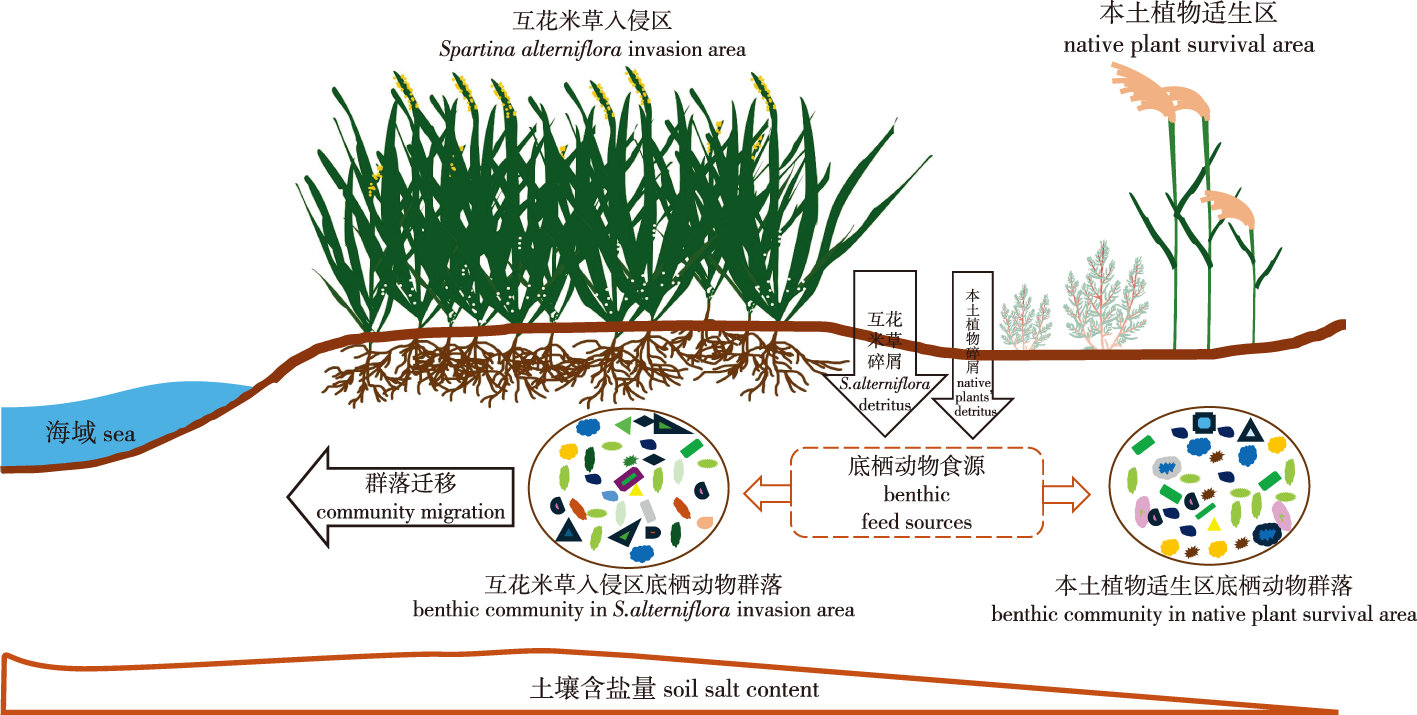
Biological invasions are a key cause of global biodiversity loss and the degradation of ecosystem functions. The introduction of Spartina alterniflora into China's coastal regions has adversely affected the structure and functionality of wetland ecosystems, as well as bird habitats. This review collates relevant literature from the China National Knowledge Infrastructure (CNKI) and Web of Science (WOS) databases on the impact of S. alterniflora invasion on avian habitats in coastal salt marsh wetlands. It synthesizes the ecological implications of the S. alterniflora invasion process and management measures for bird habitat availability, food supply, and survival costs in coastal wetlands. The objective is to establish a reference framework for avian diversity conservation and habitat restoration in coastal salt marsh wetlands. The results showed that: (1) During the initial stages of invasion, S. alterniflora forms stable communities and expands rapidly in wetlands through both sexual and asexual reproduction, thereby reducing the living space of native plants. Bird food sources are disrupted by S. alterniflora, leading to reduced community stability and altered structure, which subsequently affects bird habitats. (2) Once S. alterniflora establishes its dominant community, the dense vegetation further disrupts the structure and functions of native plant communities, obstructing bird foraging paths and reducing habitat availability. Moreover, benthic fauna and insect communities are disturbed by S. alterniflora, leading to changes in their community structure and feeding habits, thus further disrupting bird food sources. Most birds tend to avoid S. alterniflora, with only a small proportion able to adapt to it. (3) The management of S. alterniflora can facilitate the habitat restoration of bird habitats. While native birds benefit from control measures, those already adapted to S. alterniflora may experience adverse effects. We conclude that: Research on the effects of S. alterniflora invasion on avian habitat characteristics has made significant progress and the management project of this invasive plant is being implemented on a large scale simultaneously. In the future, research on the impact of treatment projects on bird habitat has become a research hotspot. We can distinguish the changes in the habitat availability of birds with different migratory habits after the implementation of the management of S. alterniflora, to enrich the study content on the impact of S. alterniflora invasion and management on the bird habitats in coastal salt marsh wetlands, and provide a reference for the conservation of bird biodiversity in coastal salt marsh wetlands.
coastal salt marsh wetlands / Spartina alterniflora / biological invasion / bird habitats
| [1] |
|
| [2] |
|
| [3] |
|
| [4] |
|
| [5] |
张燕, 孙勇, 鲁长虎, 等. 盐城国家级珍禽自然保护区互花米草入侵后三种生境中越冬鸟类群落格局[J]. 湿地科学, 2017, 15(3): 433-441.
|
| [6] |
|
| [7] |
徐雅, 张华兵. 20世纪80年代以来盐城滨海湿地互花米草扩张时空轨迹及对景观格局的影响[J]. 自然资源遥感, 2025, 37(2):246-255.
|
| [8] |
陈思明. 互花米草(Spartina alterniflora)在中国沿海的潜在分布及其对气候变化的响应[J]. 生态与农村环境学报, 2021, 37(12):1575-1585.
|
| [9] |
|
| [10] |
|
| [11] |
|
| [12] |
陈柯欣, 丛丕福, 曲丽梅, 等. 黄河三角洲互花米草、碱蓬种群变化及扩散模拟[J]. 北京师范大学学报(自然科学版), 2021, 57(1):128-134.
|
| [13] |
|
| [14] |
|
| [15] |
|
| [16] |
|
| [17] |
|
| [18] |
Changes in climatic conditions are predicted to impact species distribution and hence alter their diversity patterns. Modifications in the composition of biological communities are expected as a result of the loss and replacement of species due to global warming. Forest frugivorous birds already suffer from habitat loss and may disappear locally due to suitable area contraction or range shifts to novel areas, disrupting seed dispersal and consequently the functioning of natural ecosystems. Here, we investigate the impacts of different climate scenarios on alpha and beta diversities of forest frugivorous birds.
|
| [19] |
|
| [20] |
陈梦缘, 汪生财, 路琦, 等. 环渤海海岸带水鸟栖息地适宜性评价及影响因素[J]. 生态学杂志, 2024, 43(4):1152-1160.
|
| [21] |
解雪峰, 孙晓敏, 吴涛, 等. 互花米草入侵对滨海湿地生态系统的影响研究进展[J]. 应用生态学报, 2020, 31(6):2119-2128.
|
| [22] |
陈潘, 张燕, 朱晓静, 等. 互花米草入侵对鸟类的生态影响[J]. 生态学报, 2019, 39(7):2282-2290.
|
| [23] |
|
| [24] |
|
| [25] |
许海锋, 董斌, 任春秋, 等. 崇明东滩典型越冬候鸟生境适宜性研究[J]. 湿地科学, 2023, 21(2):259-269.
|
| [26] |
Plant invasion is an emerging driver of global change worldwide. We aimed to disentangle its impacts on plant-soil nutrient concentrations. We conducted a meta-analysis of 215 peer-reviewed articles and 1233 observations. Invasive plant species had globally higher N and P concentrations in photosynthetic tissues but not in foliar litter, in comparison with their native competitors. Invasive plants were also associated with higher soil C and N stocks and N, P, and K availabilities. The differences in N and P concentrations in photosynthetic tissues and in soil total C and N, soil N, P, and K availabilities between invasive and native species decreased when the environment was richer in nutrient resources. The results thus suggested higher nutrient resorption efficiencies in invasive than in native species in nutrient-poor environments. There were differences in soil total N concentrations but not in total P concentrations, indicating that the differences associated to invasive plants were related with biological processes, not with geochemical processes. The results suggest that invasiveness is not only a driver of changes in ecosystem species composition but that it is also associated with significant changes in plant-soil elemental composition and stoichiometry.© 2016 John Wiley & Sons Ltd.
|
| [27] |
|
| [28] |
|
| [29] |
|
| [30] |
|
| [31] |
|
| [32] |
|
| [33] |
韩爽, 张华兵, 刘玉卿, 等. 盐城滨海湿地芦苇群落和互花米草群落对碱蓬群落挤压的时空变化特征[J]. 生态学报, 2024, 44(22):10309-10321.
|
| [34] |
|
| [35] |
艾顺毅, 李加林, 田鹏, 等. 基于Sentinel-2A影像的杭州湾南岸湿地植被特征及其候鸟生境分析[J]. 海洋通报, 2023, 42(1):92-101.
|
| [36] |
|
| [37] |
Evaluating the ability of anthropogenic habitats to serve as surrogates for natural habitats is an increasingly relevant issue in conservation biology. This issue is especially urgent in tropical coastal wetlands that support large concentrations of migratory shorebird populations and are under pressure from development. Here we evaluated the species composition, abundance, and habitat use of Nearctic migratory shorebirds using recently harvested aquaculture ponds during two non-breeding seasons at shrimp farms surrounding Bahía Santa María (BSM), northwestern Mexico. We also estimated shorebird densities at intertidal units in BSM during and after the harvesting season to explore the connectivity with shrimp farms. Over 25,000 individuals of 25 shorebird species used the surveyed farms (∼13% of shrimp-farm development in BSM; 2014–2015: 10 farms, 994 ha; 2015–2016: 8 farms, 924 ha) during the harvest season. The most abundant species were: Western Sandpiper Calidris mauri, Willet Tringa semipalmata, Marbled Godwit Limosa fedoa, dowitchers Limnodromus spp., Black-necked Stilt Himantopus mexicanus and American Avocet Recurvirostra americana. Numbers of birds decreased as the harvest cycle progressed. Most birds (> 70%) were foraging on the ponds, regardless of tidal stage, while numbers increased during high tide for the most abundant species. At surveyed intertidal areas, shorebird densities were overall similar within and between non-breeding seasons. These results indicate that shrimp farms offer ephemeral but consistent foraging habitats used by non-breeding shorebirds, even in vast coastal wetlands offering a high availability of natural intertidal mudflats. Assuming a similar shorebird use in other shrimp ponds not surveyed within BSM, a significant proportion (> 1% of the biogeographic population) of Willet, Marbled Godwit, and Western Sandpiper, as well as imperilled Red Knot Calidris canutus, might use shrimp farms throughout the harvesting season. Before including current semi-intensive shrimp farms within management plans of BSM, further research is mandatory to assess their utility as alternative foraging habitats for shorebird conservation at tropical areas.
|
| [38] |
|
| [39] |
赵彩云, 李俊生, 宫璐, 等. 广西北海市滨海湿地互花米草入侵对大型底栖动物的影响[J]. 湿地科学, 2014, 12(6):733-739.
|
| [40] |
姜少玉. 黄河三角洲互花米草入侵对大型底栖动物的生态影响[D]. 烟台: 中国科学院大学(中国科学院烟台海岸带研究所), 2021.
|
| [41] |
|
| [42] |
|
| [43] |
|
| [44] |
|
| [45] |
舒王凯, 杨俊, 秦宇露, 等. 本地种芦苇缓解湿地外来入侵种互花米草的化感作用[J]. 杭州师范大学学报(自然科学版), 2019, 18(5):483-489.
|
| [46] |
|
| [47] |
|
| [48] |
Waterbirds depend on a dispersed network of wetlands for their annual life cycle during migration. Climate and land use changes raise new concerns about the sustainability of these habitat networks, as water scarcity triggers ecological and socioeconomic impacts threatening wetland availability and quality. During the migration period, birds can be present in large enough numbers to influence water quality themselves linking them and water management in efforts to conserve habitats for endangered populations. Despite this, the guidelines within laws do not properly account for the annual change of water quality due to natural factors such as the migration periods of birds. Principal component analysis and principal component regression was used to analyze the correlations between the presence of a multitude of migratory waterbird communities and water quality metrics based on a dataset collected over four years in the Dumbrăvița section of the Homoród stream in Transylvania. The results reveal a correlation between the presence and numbers of various bird species and the seasonal changes in water quality. Piscivorous birds tended to increase the phosphorus load, herbivorous waterbirds the nitrogen load, while benthivorous duck species influenced a variety of parameters. The established PCR water quality prediction model showed accurate prediction capabilities for the water quality index of the observed region. For the tested data set, the method provided an R2 value of 0.81 and a mean squared prediction error of 0.17.
|
| [49] |
|
| [50] |
任璘婧, 李秀珍, 杨世伦, 等. 崇明东滩盐沼植被变化对滩涂湿地促淤消浪功能的影响[J]. 生态学报, 2014, 34(12):3350-3358.
|
| [51] |
|
| [52] |
肖博文. 荣成天鹅湖碳氮磷的分布及鸟粪分解对碳氮磷含量的影响[D]. 呼和浩特: 内蒙古大学, 2015.
|
| [53] |
Many waterbird populations have become increasingly dependent on agricultural habitats for feeding. While habitat destruction has been proposed as a key reason forcing waterbirds to move from natural habitats to agricultural habitats, few have used long‐term data to test this hypothesis. The Siberian crane (Leucogeranus leucogeranus) is an IUCN Critically Endangered species. About 98% of its global population winters at Poyang Lake, China. Recently, many cranes shifted from feeding in natural wetlands to agricultural habitats. Here, we integrate bird surveys, Vallisneria tuber (the traditional food of cranes in natural wetlands) surveys, water level data, and remotely sensed images from 1999 to 2016 to explore the drivers of this habitat shift. Changes in Siberian crane numbers in natural wetlands and agricultural fields indicated that the habitat shift occurred in the winters of 2015–2016. Analyses using generalized linear mixed models suggested that crane numbers in natural wetlands were positively related to tuber density and the interaction between dry season (October–March) water level and tuber density. The changes in tuber density and dry season water level in 2015–2016 indicated that tuber disappearance may have been the primary driver of the habitat shift, with a smaller effect of high water level. Submerged plants at Poyang Lake have degraded seriously in the past two decades. The plant degradation at Shahu Lake, a sublake of Poyang Lake, may have been caused by high spring water, high winter temperature, and low summer temperature. However, the drivers of tuber disappearance at Poyang Lake may not be restricted to these variables. Because Poyang Lake is an important refuge for many waterbirds in the Yangtze River floodplain, it is urgent to take effective measures to restore its submerged plants and ecosystem health. Agricultural fields can be important refuges for Siberian cranes, mitigating the negative impacts of wetland deterioration.
|
| [54] |
|
| [55] |
|
| [56] |
|
| [57] |
李景霞, 付碧宏. 江苏盐城滨海湿地系统格局变化及其对丹顶鹤生境的影响[J]. 遥感学报, 2021, 25(12):2507-2519.
|
| [58] |
王倩, 史欢欢, 于振林, 等. 盐度及种间相互作用对海三棱藨草、互花米草萌发及生长的影响[J]. 生态学报, 2022, 42(20):8300-8310.
|
| [59] |
丁文慧, 姜俊彦, 李秀珍, 等. 崇明东滩南部盐沼植被空间分布及影响因素分析[J]. 植物生态学报, 2015, 39(7):704-716.
崇明东滩南部滩面高程、土壤盐度在空间上呈明显的梯度变化规律。高程整体西高东低、北高南低, 盐度东北高、西南低, 两者共同限制着盐沼植物在空间上的分布。该文围绕崇明东滩南部主要植被类群及其空间分布, 探讨了土壤盐度、潮滩高程两大环境因子与植物种群分布的对应关系。基于2013年夏、秋季植被空间网格采样和空间插值, 分析了东滩南部植物的空间分布现状, 发现不同植物类群在高程和土壤盐度上存在极显著的差异(p < 0.01)。高程差异: 莎草科类群主要分布于高程区间2.93-4.07 m的低潮滩, 禾本科主要集中分布在高程3.13-4.31 m的中、高潮滩; 盐度差异: 海三棱藨草(Scirpus mariqueter)和互花米草(Spartina alterniflora)优势种群植被覆盖区表层30 cm的平均土壤盐度为(3.2 ± 0.6) g·kg<sup>-1</sup>, 显著高于其他类群植物分布区的平均土壤盐度(2.0 ± 0.3) g·kg<sup>-1</sup> (p < 0.01)。崇明东滩湿地生态系统的关键种兼先锋种——海三棱藨草, 分布高程介于2.53-3.97 m, 而互花米草能适应海三棱藨草80%的高程区间, 两者在高程上存在竞争关系。统计数据显示, 研究区域中近90%的海三棱藨草分布在研究区东北部, 土壤盐度范围为1.6-4.5 g·kg<sup>-1</sup>, 海三棱藨草、互花米草能较好地适应该空间内的盐度胁迫, 两种植物在此交替出现。但是在高程和土壤盐度的综合作用下, 互花米草的生长状况更好, 因此该区的海三棱藨草很可能会被互花米草逐步取代。对各类群植被分布和优势面积的研究发现, 海三棱藨草总分布面积为294 hm<sup>2</sup>, 优势群落面积120 hm<sup>2</sup>, 海三棱藨草仅占莎草科植物总优势面积的15.7%, 占研究区总面积的6.9%, 在6种主要植物(芦苇(Phragmites australis)、白茅(Imperata cylindrica)、互花米草、糙叶薹草(Carex scabrifolia)、藨草(Scirpus triqueter)、海三棱藨草)中比重最小, 这给保护区内海三棱藨草种群的恢复和保护带来极大的挑战。
|
| [60] |
潘卉, 陈秀芝, 吴捷, 等. 互花米草入侵对长江口九段沙湿地昆虫功能群组成特征及季节动态的影响[J]. 昆虫学报, 2017, 60(1):67-83.
【目的】揭示互花米草Spartina alterniflora入侵对盐沼湿地昆虫不同功能群组成特征和时间动态的影响。【方法】于2015年的不同季节,在不同的样点沿10 m长的样线,以扫网法对长江口九段沙湿地不同样点的互花米草、芦苇和藨草群落进行昆虫采集。采用非参数检验方法比较不同植物群落中不同昆虫取食功能群物种丰富度、个体多度和季节动态的差异,采用非参数多维度排序方法分析植物生境对各昆虫功能群组成的影响,并用指示种分析方法分析不同昆虫的生境偏好。【结果】共采集昆虫72科,188种,10 338头。互花米草群落昆虫物种丰富度和个体多度显著低于芦苇群落,藨草群落昆虫物种丰富度与互花米草群落差异不显著,但昆虫个体数显著多于互花米草群落。不同昆虫功能群分别比较表明,植食昆虫物种数和个体数在互花米草和芦苇群落间差异不显著,藨草群落植食昆虫物种数最少但个体数量最多。芦苇群落捕食/寄生昆虫物种数和个体数均显著多于互花米草和藨草群落。腐食/菌食昆虫物种数和个体数在不同植物群落无显著差异。季节动态分析显示,不同昆虫功能群物种数和个体数在互花米草群落的峰值均出现在春季,而在芦苇和藨草群落中则具不同趋势。根据非参数多维度排序分析结果,互花米草入侵显著改变了昆虫的群落结构,并对不同昆虫功能群的物种组成均产生了显著影响。指示种分析方法结果进一步表明,偏好互花米草的昆虫物种数最少,主要为广食性植食昆虫。偏好芦苇分布的昆虫物种数最多,主要为捕食/寄生昆虫和专食性植食昆虫。偏好藨草的植食昆虫虽为广食性,但指示值较高。【结论】互花米草入侵降低了盐沼湿地的昆虫多样性,并显著改变了盐沼湿地昆虫功能群组成特征和季节动态。相比植食昆虫,天敌昆虫对互花米草入侵的影响更为敏感。一些广食性的植食昆虫可能已对互花米草产生了适应机制,其可能造成的生态学后果应引起重视。
【Aim】 This study aims to explore the effects of <em>Spartina alterniflora</em> invasion on the structural characteristics and seasonal dynamics of insect functional groups in salt marshes. 【Methods】 In 2015, insects were seasonally collected by a sweeping net along a 10 m long transect line in different sample plots of <em>S.alterniflora</em>,<em> Phragmites australis</em> and <em>Scirpus triqueter</em> communities in Jiuduansha wetland of the Yangtze River Estuary, East China. The nonparametric test method was adopted to compare the variations in the species richness, individual abundance and seasonal dynamics of different functional feeding groups of insects between different plant communities. The effects of plant habitats on the assemblage compositions of different insect functional groups were assessed by the nonmetric multidimensional scaling (NMS) ordination analysis. The habitat preferences of insect species were analysed by the indicator species analysis (ISA). 【Results】 A total of 10 338 individuals belonging to 188 species in 72 insect families were collected. Species richness and individual abundance of insects were significantly lower in <em>S.alterniflora</em> than in<em> P.australis</em>. The species richness of insects in <em>Sc.triqueter</em> was not significantly different from that in <em>S.alterniflora</em>.However, the individual number of insects in <em>Sc.triqueter</em> was significantly higher than that in <em>S.alterniflora</em>. As far as different insect functional groups were concerned, <em>Sc.triqueter</em> had the lowest species number but the highest individual number of insect herbivores. Both species and individual numbers of insect herbivores were not significantly different between <em>S. alterniflora</em> and <em>P. australis</em>. The species richness and abundance of predator/parasitoid insects were significantly higher in <em>P.australis</em> than in <em>S.alterniflora</em> and <em>Sc.triqueter</em>. The species and individual numbers of insect detritivores were not significantly different among plants. In addition, it was shown that the richness and abundance of all insect functional groups in <em>S.alterniflora</em> reached their peak values in spring. However, in <em>P.australis</em> and <em>Sc.triqueter</em>, different functional groups reached their species richness and abundance peaks in different seasons. According to the results of NMS ordination analysis,<em> S.alterniflora</em> invasion significantly changed the insect community composition,even when each functional group was individually concerned. According to the results of ISA, the number of insect species preferring <em>S.alterniflora</em> was the lowest. Of these species, most were generalist herbivores. The number of species preferring <em>P.australis</em> was the highest. Among these species, most were predator/parasitoid and specialist herbivore species. Herbivore species preferring <em>Sc.triqueter</em> were all generalists, but with relatively high indicator values. 【Conclusion】 <em>S.alterniflora</em> invasion reduces the insect biodiversity and significantly changes the structural characteristics and seasonal dynamics of insect functional groups in Jiuduansha wetland. In comparison with insect herbivores, natural enemy insects are more sensitive to the effects of <em>S. alterniflora</em> invasion. Some generalist herbivores may have developed adaptation mechanisms to <em>S. alterniflora</em>. Enough attention should be paid to the potential ecological and evolutionary consequences behind these phenomena.
|
| [61] |
蒋际宝, 赵梅君, 胡佳耀, 等. 盐城国家级珍禽自然保护区不同生境的昆虫群落研究[J]. 上海师范大学学报(自然科学版), 2010, 39(2):181-188.
|
| [62] |
|
| [63] |
|
| [64] |
|
| [65] |
|
| [66] |
|
| [67] |
汪钰明, 高新贻, 谢世君, 等. 互花米草入侵对红树林底栖甲壳动物和鱼类功能群及生态位的影响[J]. 应用生态学报, 2022, 33(11):3016-3026.
为了解互花米草入侵对红树林湿地生态系统底栖甲壳动物和鱼类的影响,本研究利用地笼方式于2020年8月、2021年1月和4月对福建漳江口2个原生红树林样地(白骨壤和秋茄)、2个互花米草入侵样地以及1个光滩样地的底栖甲壳动物和鱼类进行采样调查。采用相对重要性指数、Shannon多样性指数、Pielou均匀度指数和Margalef丰富度指数分析底栖甲壳动物和鱼类的优势种及物种多样性,统计其功能群,并计算其生态位宽度和生态位重叠指数。结果表明: 3个季节共采集到底栖甲壳动物和鱼类种类37种,隶属于2门2纲8目17科,其中大多数为暖水性和广盐性物种,且以肉食性和杂食性功能群为主。双因素方差分析和非度量多维尺度分析结果表明,相比光滩,互花米草入侵后,底栖甲壳动物和鱼类的群落多样性指数变化不显著,但功能群发生了显著变化,浮游生物食性功能群以及肉食性和植食性功能群物种均有一定程度的增加。相比红树林样地,互花米草样地内底栖甲壳动物和鱼类物种丰富度更高。优势物种的时空生态位宽度变化范围在0~1.4186,其中棱鮻最高(1.4186),其次是中华乌塘鳢(1.0168)、刀额新对虾(0.9469)、脊尾白虾(0.8922)。
|
| [68] |
|
| [69] |
|
| [70] |
The Reed Parrotbill Paradoxornis heudei is an endemic reedbed-inhabiting passerine of east Asia. In the Shanghai municipality, which harbours significant populations of this species, almost all reedbed surfaces are annually harvested. Furthermore, the reedbeds are being invaded by Smooth Cordgrass Spartina alterniflora, an introduced species that can outcompete the native Common Reed Phragmites australis. In this paper, we have shown that Reed Parrotbills do not nest in areas dominated by Smooth Cordgrass and avoid using them. In the areas that are primarily composed of Common Reed, the densities of birds are higher in the unharvested sections. The birds appear to select nesting sites with low Smooth Cordgrass densities, tall reed stems, and relatively equal densities of both dry and green stems. Reed harvesting activity results in vegetation that is too low for bird nesting. However, no nests were found in areas where the reeds had not been harvested for several years and had high densities of dry reed stems; these results could be attributed to the fact that the high density of broken stems reduced the vegetation cover. On the basis of our results, we recommend implementation of four years harvesting-cycle rotation and avoidance of reclamation in reedbeds which have not been invaded by Smooth Cordgrass.
|
| [71] |
任武阳, 王成, 刘红玉, 等. 基于鸟类生境需求的植被景观覆盖度多样性:以江苏盐城滨海湿地为例[J]. 生态学杂志, 2019, 38(12):3870-3877.
湿地景观覆盖度的多样性,为鸟类提供了多层次的生境选择,这对维护湿地鸟类多样性具有十分重要的意义。运用高分二号遥感影像,采用面向对象的分类方法,提取湿地植被生境类型。依据像元二分模型,计算湿地植被覆盖度,并结合覆盖度波动区间,划分五大覆盖度类型区,最后对不同植被的覆盖度进行统计分析。结果表明:相较于传统的监督分类方法,面向对象分类结果总体精度更高,达91.21%。遥感解译的湿地植被呈现明显的带状分布,且主要生境为芦苇、互花米草和碱蓬。湿地植被覆盖度呈中间低四周高的分布格局,不同植被优势覆盖度类型存在较大差异。其中,芦苇主要集中在较高覆被区域和高覆被区域,占植被总面积45%以上;互花米草主要集中在高覆被区域,占植被总面积的25%;碱蓬主要集中在较高覆被区域,占总面积的7.72%。
|
| [72] |
陈浩, 王刚, 王成, 等. 野化放归丹顶鹤活动节律、家域特征和栖息地选择[J]. 生态学报, 2024, 44(4):1526-1538.
|
| [73] |
|
| [74] |
|
| [75] |
The threatened Marsh Grassbird (Locustella pryeri) first appeared in the salt marsh in east China after the salt marsh was invaded by cordgrass (Spartina alterniflora), a non-native invasive species. To understand the dependence of non-native Marsh Grassbird on the non-native cordgrass, we quantified habitat use, food source, and reproductive success of the Marsh Grassbird at the Chongming Dongtan (CMDT) salt marsh. In the breeding season, we used point counts and radio-tracking to determine habitat use by Marsh Grassbirds. We analyzed basal food sources of the Marsh Grassbirds by comparing the δ(13) C isotope signatures of feather and fecal samples of birds with those of local plants. We monitored the nests through the breeding season and determined the breeding success of the Marsh Grassbirds at CMDT. Density of Marsh Grassbirds was higher where cordgrass occurred than in areas of native reed (Phragmites australis) monoculture. The breeding territory of the Marsh Grassbird was composed mainly of cordgrass stands, and nests were built exclusively against cordgrass stems. Cordgrass was the major primary producer at the base of the Marsh Grassbird food chain. Breeding success of the Marsh Grassbird at CMDT was similar to breeding success within its native range. Our results suggest non-native cordgrass provides essential habitat and food for breeding Marsh Grassbirds at CMDT and that the increase in Marsh Grassbird abundance may reflect the rapid spread of cordgrass in the coastal regions of east China. Our study provides an example of how a primary invader (i.e., cordgrass) can alter an ecosystem and thus facilitate colonization by a second non-native species.© 2013 Society for Conservation Biology.
|
| [76] |
胡春芳, 李枫, 丛日杰, 等. 崇明东滩斑背大尾莺的巢址特征[J]. 东北林业大学学报, 2012, 40(5):107-111.
|
| [77] |
|
| [78] |
|
| [79] |
|
| [80] |
|
| [81] |
|
| [82] |
王东辉, 张利权, 管玉娟. 基于CA模型的上海九段沙互花米草和芦苇种群扩散动态[J]. 应用生态学报, 2007, 18(12):2807-2813.
|
| [83] |
李振今, 王志勇, 刘晓彤, 等. 利用随机森林和改进的CA-Markov模型探究互花米草治理对黄河三角洲湿地利用及景观格局影响[J]. 生态学报, 2024, 44(18):8366-8382.
|
| [84] |
|
| [85] |
Coastal ecosystems worldwide are being threatened by invasive plants in the context of global changes. However, how invasive plants influence native faunal communities and whether native faunal communities can recover following the invader removals/controls across global coastal ecosystems are still poorly understood. Here, we present the first global meta‐analysis to quantify the impacts of Spartina species invasions on coastal faunal communities and further to evaluate the outcomes of Spartina species removals on faunal community recovery based on 74 independent studies. We found that invasive Spartina species generally decreased the biodiversity (e.g., species richness), but increased coastal faunal abundance (e.g., individual number) and fitness (e.g., biomass), though the effect on abundance was insignificant. The pattern of influence was strongly dependent on habitat types, faunal taxa, trophic levels, and feeding types. Specifically, Spartina species invasion of mudflats caused greater impacts than invasion of vegetated habitats. Insects and birds at higher trophic levels were strongly affected by invasive Spartina, indicating that invasive plant effects can cascade upward along the food chain. Additionally, impacts of Spartina invasions were more obvious on food specialists such as herbivores and carnivores. Furthermore, our analyses revealed that invader removals were overall beneficial for native faunal communities to recover from the displacement caused by Spartina invasions, but this recovery process depended on specific removal measure and time. For example, the long‐term waterlogging had strong negative impacts on faunal recovery, so it should not be encouraged. Our findings suggest that invasive plants could have contrasting effects on functional responses of native faunal communities. Although invasive plant removals could restore native faunal communities, future functional restorations of invaded ecosystems should take the legacy effects of invasive species on native communities into account. These findings provide insightful implications for future scientific controls of invasive species and ecosystem restoration under intensifying global changes.
|
| [86] |
|
| [87] |
马强, 吴巍, 汤臣栋, 等. 崇明东滩湿地互花米草治理对鸟类及底栖动物多样性的影响[J]. 南京林业大学学报(自然科学版), 2017, 41(1):9-14.
【目的】崇明东滩湿地是国际涉禽鸟类和居留繁殖鸟类的重要栖息地,互花米草(Spartina alterniflora)的入侵导致鸟类栖息地的群落结构与功能发生变化,2011年在保护区建成互花米草治理与鸟类栖息地示范区,需要了解示范区与对照区的芦苇(Phragmites australis)生长状况、鸟类和大型底栖动物的种类与数量变化,探讨互花米草治理成效以及对湿地生物多样性的影响。【方法】在示范区内外分别设置了8个生物多样性监测点和7个对照监测点,对植物群落组成、鸟的种类和大型底栖动物物种进行监测和采样分析。【结果】刈割和清除互花米草的工程成效显著。在示范区内,鸟的种类和数量以及水鸟的种类与数量均高于对照区,说明互花米草治理可为雁鸭类等重要水鸟提供良好的栖息地。同时,示范区内软体动物、节肢动物和环节动物的密度显著低于对照区。【结论】示范区在完成工程措施后景观和生物多样性发生了较大变化。较之互花米草群落,其生物多样性维持的生态服务功能有了明显的恢复,吸引了不同类群的鸟类在此停歇或繁殖,示范区的营造已取得较好成效。今后将重点监测对水鸟种群有重要影响的生物群落和环境因子,更全面评估示范工程对栖息地恢复成效。
|
| [88] |
The grass species Spartina alterniflora (smooth cordgrass) is an invasive ecosystem engineer with serious ecological consequences to intertidal mudflats and saltmarshes. The largest infestation in North America was in Willapa Bay, WA, where it occupied ~3,600 solid ha, covering ~27,000 ha of intertidal habitat. An extensive effort by land managers to eradicate S. alterniflora has been in place for over two decades. This article discusses (1) the success of the control and issues that will need to be resolved in order to achieve eradication; (2) post-control succession of affected tidelands to native marsh species, and (3) the impact that S. alterniflora removal has had on shorebird usage of affected tidelands.
|
| [89] |
|
| [90] |
李飞飞, 高珂晓, 朱金方, 等. 综合物理防控技术对盐城大丰港互花米草的控制效果[J]. 生态学报, 2021, 41(24):9637-9644.
|
| [91] |
莫雪, 吴博, 刘佳凯, 等. 施用咪唑烟酸除草剂去除漳江口红树林中互花米草的短期实验[J]. 湿地科学, 2022, 20(2):277-284.
|
| [92] |
李佳骏, 金双, 李汝佳, 等. 刈割+翻耕治理互花米草后滦南湿地大型底栖动物群落结构变化特征[J]. 湿地科学, 2024, 22(3):349-358.
|
| [93] |
江佳佳, 赵玉杰, 赵佳媛, 等. 盐沼入侵植物互花米草治理后植食性昆虫食物结构的变化[J]. 复旦学报(自然科学版), 2021, 60(4):444-450.
|
| [94] |
|
| [95] |
林秋莲, 顾肖璇, 陈昕韡, 等. 红树植物秋茄替代互花米草的生态修复评估:以浙江温州为例[J]. 生态学杂志, 2020, 39(6):1761-1768.
互花米草(Spartina alterniflora)已经大面积入侵并威胁我国滨海湿地生态系统。利用红树植物替代法控制互花米草入侵的生态修复模式已得到广泛关注。本研究选取浙江温州鳌江口红树植物秋茄(Kandelia obovata)替代互花米草的生态修复区,在3年修复期前后,对修复区和对照区进行植物群落结构和大型底栖动物群落多样性监测,结合沉积物质量与水质变化监测,对生态修复的效果进行评价。结果表明:生态修复区的秋茄群落虽结构单一、但生长良好;红树林生境大型底栖动物物种多样性指数为0~2.055;而在互花米草生境中为1.053~2.805,说明对大型底栖动物而言互花米草生境的生态环境状况优于红树林生境。这可能是由于恢复的早期阶段,秋茄树龄小且对水质污染的改善作用不显著,其大型底栖动物的种类偏少。本研究是红树林高纬度分布区生态替代法控制互花米草的典型案例;随着植株的生长,秋茄群落的生态效益将进一步显现。
|
| [96] |
The invasion of Spartina alterniflora is one of the main threats faced by mangrove wetlands in Quanzhou Bay, Fujian. To effectively manage S. alterniflora, mangrove plants (Kandelia obovata, Aegiceras corniculatum, Bruguiera gymnorhiza, Rhizophora stylosa, and Avicennia marina) were used to replace it in 2022 to restore the wetland ecosystem. Samples of meiofauna and marine nematodes were collected four times, including in September 2022 (before the removal of S. alterniflora), October 2022 (after removal), and December 2022 and March 2023 (after planting mangrove plants). This paper investigates changes in the composition, abundance, and biomass of meiofauna in different time periods, with a specific focus on comparing the community structure and biodiversity indices of marine nematodes in S. alterniflora and mangrove habitats. The results indicate that among the five meiofauna groups identified, marine nematodes account for 92.91%, 91.91%, 92.03%, and 85.92% of the total meiofauna abundance in the respective study periods. In the S. alterniflora habitat in September, marine nematodes were identified belonging to 12 families and 20 genera, of which 6 genera were dominant (percentage ≥ 5%). They were Ptycholaimellus, Parodontophora, Terschellingia, Halichoanolaimus, Metachromadora, and Parasphaerolaimus. In the mangrove habitat in December, marine nematodes were identified belonging to 15 families and 23 genera, with 6 genera being dominant, namely Daptonema, Admirandus, Parodontophora, Ptycholaimellus, Terschellingia, and Anoplostoma. Comparing the marine nematode communities in the two habitats, the mangrove habitat exhibits higher diversity than the S. alterniflora habitat. There was a change in the dominant genera, and their dominance has decreased. The dominant genera of marine nematodes found in both habitats are common and widely distributed groups. The changes in the abundance of meiofauna and the community structure of marine nematodes following the restoration of the S. alterniflora habitat by planting mangroves provide valuable insights for ecological monitoring after restoration measures in estuarine wetland conservation areas.
|
| [97] |
|
| [98] |
冯建祥, 宁存鑫, 朱小山, 等. 福建漳江口本土红树植物秋茄替代互花米草生态修复效果定量评价[J]. 海洋与湖沼, 2017, 48(2):266-275.
|
| [99] |
|
/
| 〈 |
|
〉 |