PDF(1829 KB)

Study and comprehensive evaluation on wood density, main chemical components and tracheid morphology of Ginkgo biloba clones
LI Xiongjie, GAO Tianhui, CHAO Jinyi, WANG Yeqiao, TU Haochuan, ZHENG Jingjing, WANG Guibin, YU Pengfei
Journal of Nanjing Forestry University (Natural Sciences Edition) ›› 2025, Vol. 49 ›› Issue (6) : 171-180.
PDF(1829 KB)
 PDF(1829 KB)
Study and comprehensive evaluation on wood density, main chemical components and tracheid morphology of Ginkgo biloba clones
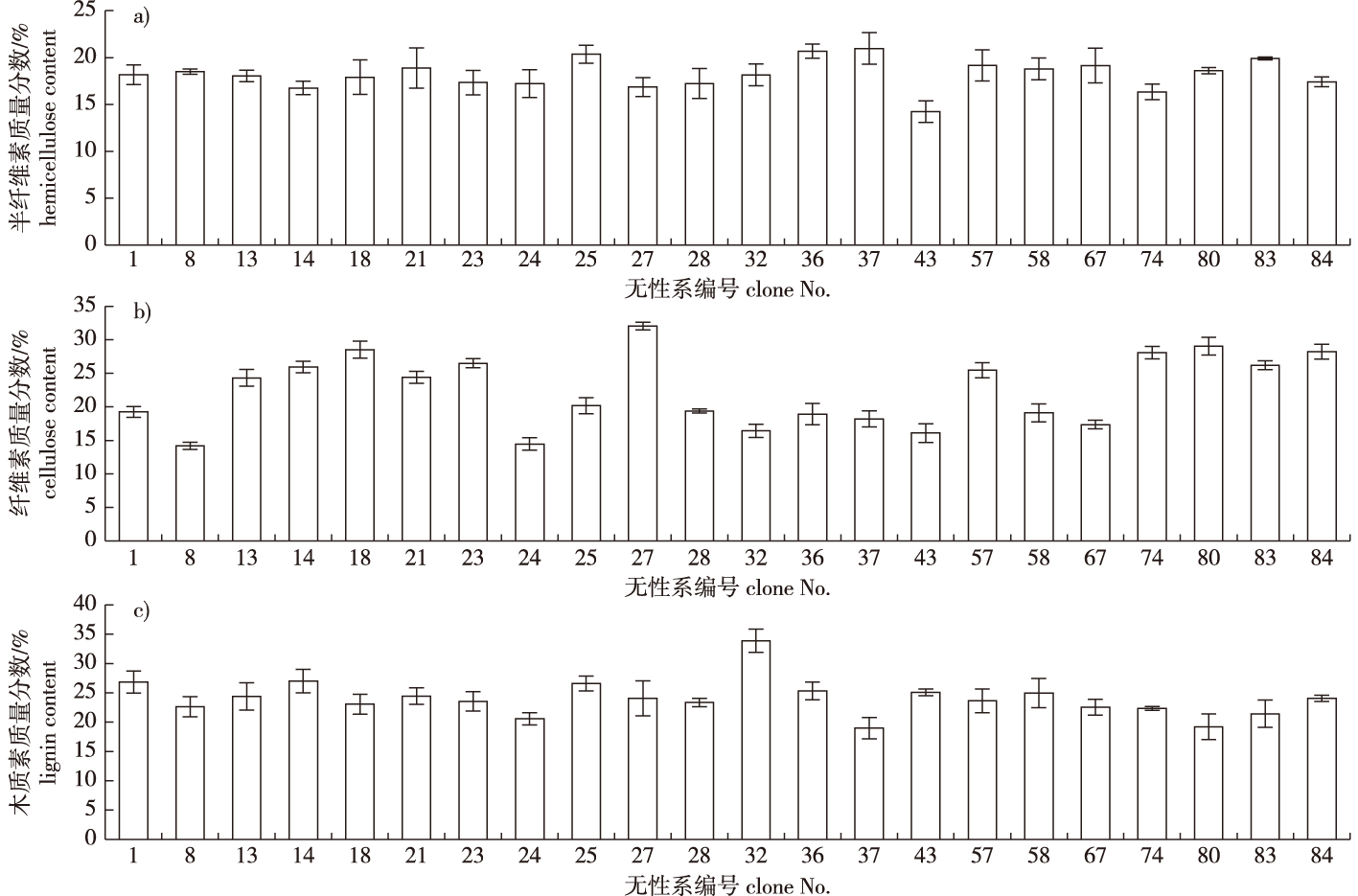
【Objective】This study aims to elucidate the differences in wood properties among Ginkgo biloba clones and to screen for superior clones, thereby providing a theoretical basis for the breeding of high-quality timber clones, wood processing and utilization, and directional cultivation.【Method】22 G. biloba clones from a germplasm nursery in Pizhou City, Jiangsu Province, were studied. Variation patterns in 11 wood property traits: including basic wood density, main chemical components (cellulose, hemicellulose, lignin), and tracheid morphological characteristics (length, width, lumen diameter, wall thickness, length-to-width ratio, wall-to-lumen ratio) were analyzed. Wood quality of these clones was evaluated using the membership function method and the Bregman multi-trait comprehensive evaluation method to screen for superior timber-purpose clones.【Result】Except for the tracheid length-to-width ratio, the other 10 wood property traits exhibited highly significant differences among clones (P<0.01). The coefficients of variation (CV) for these traits ranged from 9.21% to 23.81%, and repeatability ranged from 0.316 to 0.988. Correlation analysis revealed that basic wood density was significantly positively correlated with cellulose and lignin content (P<0.01). Additionally, tracheid length, width, and lumen diameter were significantly positively correlated with each other (P<0.01). The membership function method ranked clones 37 and 23 as the top two. Using the Breggin method with a 10% selection rate, clones 37 and 23 were also selected. The genetic gain for the wood properties of these selected clones ranged from -10.13% to 10.03%. Both evaluation methods yielded consistent results: clones 37 and 23 exhibited higher basic density, longer tracheid length, a larger length-to-width ratio, higher cellulose content, lower lignin content, and a smaller wall-to-lumen ratio, meeting the criteria for high-quality fiber material.【Conclusion】Basic wood density is substantially controlled by genetics, indicating considerable potential for selection. Based on the comprehensive evaluation results, clones 37 and 23 characterized by long tracheid length and low lignin content, are recommended as superior fiber timber clones for practical application in production.
Ginkgo biloba / clones / phenotypic variation / repeatability / wood properties / comprehensive assessment method
| [1] |
|
| [2] |
|
| [3] |
赵桂玲. “木材高效利用结构调控与定向重组机制” 国家自然科学基金重大项目结题综述[J]. 中国科学基金, 2024, 38(3):517-525.
|
| [4] |
成俊卿. 木材学[M]. 北京: 中国林业出版社,1985:82-86.
|
| [5] |
李坚. 木材科学[M]. 3版. 北京: 科学出版社,2014:84-121.
|
| [6] |
|
| [7] |
|
| [8] |
|
| [9] |
|
| [10] |
李青粉, 王军辉, 李登平, 等. 青海云杉无性系木材性状的遗传变异[J]. 东北林业大学学报, 2015, 43(12):12-16,35.
|
| [11] |
严涵薇, 程雅静, 余彤彤, 等. 10年生黑杨派无性系材性径向遗传变异分析与综合评价[J]. 林业科学研究, 2021, 34(6):28-37.
|
| [12] |
齐明. 我国杉木无性系选育的成就、问题和对策[J]. 世界林业研究, 2007, 20(6):50-55.
|
| [13] |
江泽慧. 世界主要树种木材科学特性[M]. 2版. 北京: 科学出版社,2016:15-16.
|
| [14] |
曹福亮. 中国银杏志[M]. 北京: 中国林业出版社,2007:7-12.
|
| [15] |
郁万文, 刘新亮, 曹福亮, 等. 不同银杏无性系叶药用成分差异及聚类分析[J]. 植物学报, 2014, 49(3):292-305.
|
| [16] |
巩其亮. 银杏无性系材性遗传变异及良种选择[D]. 泰安: 山东农业大学,2009:149.
|
| [17] |
尹思慈. 木材品质和缺陷[M]. 北京: 中国林业出版社, 1990: 19-21.
|
| [18] |
胡兴峰, 吴帆, 孙晓波, 等. 38年生马尾松种源生长及材性联合分析[J]. 南京林业大学学报(自然科学版), 2022, 46(3):203-212.
|
| [19] |
续九如. 林木数量遗传学[M]. 北京: 高等教育出版社,2006:26-33.
|
| [20] |
朱之悌. 林木遗传学基础[M]. 北京: 中国林业出版社,1990:187-191.
|
| [21] |
白史且, 苟文龙, 张新全, 等. 假俭草种群变异与生态特性的研究[J]. 北京林业大学学报, 2002, 24(4):97-101.
|
| [22] |
李善文, 姜岳忠, 王桂岩, 等. 黑杨派无性系多性状遗传分析及综合评选研究[J]. 北京林业大学学报, 2004, 26(3):36-40.
|
| [23] |
王淼, 吴国亮, 张蕊, 等. 木荷18年生种源生长、材性的地理种源变异[J]. 应用生态学报, 2023, 34(9):2337-2344.
|
| [24] |
胡拉, 吴东山, 徐慧兰, 等. 青冈栎天然林木材的解剖特征及基本材性研究[J]. 西南林业大学学报(自然科学), 2018, 38(2):206-210.
|
| [25] |
乔卫阳, 邱勇斌, 邹军, 等. 红椿天然林分木材材性性状变异规律研究[J]. 中南林业科技大学学报, 2017, 37(5):101-105.
|
| [26] |
尚秀华, 张沛健, 罗建中, 等. 赤桉幼龄材物理力学性质研究[J]. 西北农林科技大学学报(自然科学版), 2019, 47(5):32-41.
|
| [27] |
杨雪梅, 陈庭巧, 赵杨. 马尾松半同胞子代林材性变异研究[J]. 西南林业大学学报(自然科学), 2018, 38(3):15-20.
|
| [28] |
赵林峰, 高建亮. 杉木速生无性系30年生木材材性的比较[J]. 中南林业科技大学学报, 2021, 41(8):153-160.
|
| [29] |
李娜, 杨袁木, 徐放, 等. 红锥优树无性系群体表型变异研究及综合选择[J]. 中南林业科技大学学报, 2023, 43(8):73-84.
|
| [30] |
韦一, 范艳如, 邱勇斌, 等. 毛红椿生长、心材和材性性状遗传分析及家系选择[J]. 林业科学研究, 2024, 37(4):33-40.
|
| [31] |
程琳, 戴俊, 罗启亮, 等. 14个杉木家系主要用材性状表型多样性分析与评价[J]. 热带亚热带植物学报, 2022, 30(6):874-883.
|
| [32] |
于海洋, 庞忠义, 殷春红, 等. 100个杨树无性系生长及材性变异研究[J]. 西北林学院学报, 2023, 38(4):134-142,155.
|
| [33] |
魏嘉彤, 陈思琪, 芦贤博, 等. 基于生长与木材性状的红松优良种源评价选择[J]. 北京林业大学学报, 2022, 44(3):12-23.
|
| [34] |
|
| [35] |
杨艳, 唐洁, 李永进, 等. 7个南方适生杨树无性系生长和木材纤维性状分析与评价[J]. 浙江农林大学学报, 2022, 39(4):807-813.
|
| [36] |
牛敏, 高慧, 赵广杰. 欧美杨107应拉木的纤维形态与化学组成[J]. 北京林业大学学报, 2010, 32(2):141-144.
|
| [37] |
邢馨忆, 王冰冰, 关莹, 等. 楸树不同无性系木材部分材性径向变异研究[J]. 林业工程学报, 2022, 7(2):72-77.
|
| [38] |
|
| [39] |
|
| [40] |
刘海琳, 国增超, 侯静, 等. 簸箕柳F1杂交群体木材材性与生长性状相关性分析[J]. 中南林业科技大学学报, 2016, 36(2):45-49.
|
| [41] |
盛业龙, 王莎莎, 许美玲, 等. 应用隶属函数法综合评价不同烤烟品种苗期抗旱性[J]. 南方农业学报, 2014, 45(10):1751-1758.
|
| [42] |
张俊佩, 王滋, 周贤武, 等. 不同品系美国黑核桃木材物理力学性质的差异[J]. 林业科学, 2016, 52(6):108-114.
|
| [43] |
赵林峰, 高建亮, 彭劲松, 等. 3种类型杉木林分生长、密度和材质的综合评价[J]. 安徽农业大学学报, 2023, 50(1):29-35.
|
| [44] |
陈柄华, 张杰, 刘桂丰, 等. 白桦半同胞家系纸浆材优良家系选择及选择方法评价[J]. 植物研究, 2023, 43(5):690-699.
|
/
| 〈 |
|
〉 |