Effects of combined application of biochar and organic fertilizer on soil properties and leaf nutrients in a compound system of Cyclocarya paliurus and Camellia sinensis

Xiao Kaiying, Fang Shengzuo, Deng Rui, Wang Shanshan, Wang Jianren, Huang Jinshui

Journal of Nanjing Forestry University (Natural Sciences Edition) ›› 2026, Vol. 50 ›› Issue (4) : 146-154.

PDF(2000 KB)
PDF(2000 KB)
Journal of Nanjing Forestry University (Natural Sciences Edition) ›› 2026, Vol. 50 ›› Issue (4) : 146-154. DOI: 10.12302/j.issn.1000-2006.202412017

Effects of combined application of biochar and organic fertilizer on soil properties and leaf nutrients in a compound system of Cyclocarya paliurus and Camellia sinensis

Author information +
History +

Abstract

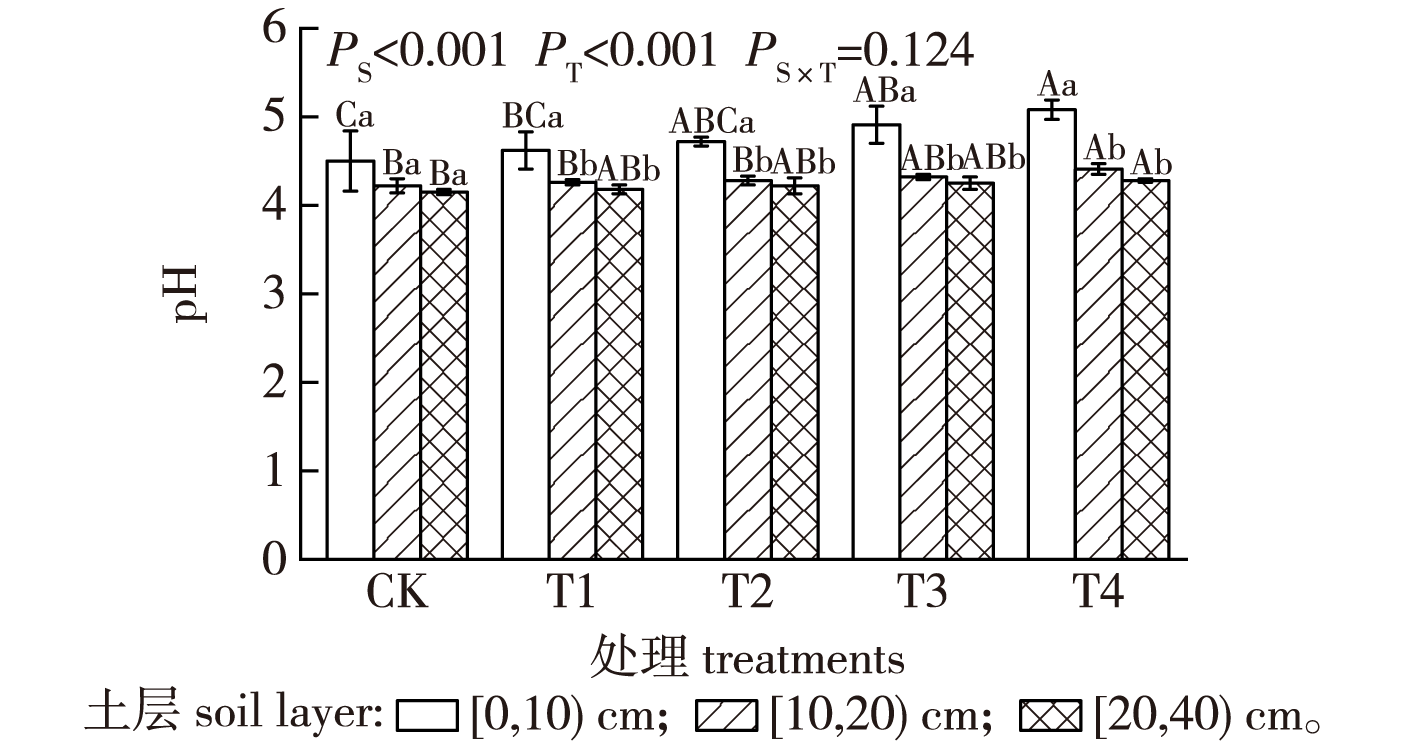
【Objective】Wheel wingnut (Cyclocarya paliurus), native to China, is the sole species in its genus. Grown for its medicine food homologous and fine timber tree species as well as for an ornamental plant, there exists a great development and application prospect for C. paliurus resources. This study explores the responses of soil nutrients, soil enzymes activities and leaf nutrients to combined application of biochar and organic fertilizer in a compound system of C. paliurus and tea(Camellia sinensis), to select an optimal application mass ratio of biochar and organic fertilizer, and to provide organic cultivation scheme for the management of C. paliurus and tea compound system.【Method】A completely randomized block design was established in the compound system of C. paliurus and tea, comprising five treatments with different application mass ratios of biochar and organic fertilizer: CK (no fertilization), T1 (100% organic fertilizer, as 4 500 kg/hm2), T2 (15% biochar + 85% organic fertilizer, as 675 kg/hm2+3 825 kg/hm2), T3 (30% biochar + 70% organic fertilizer, as 1 350 kg/hm2+3 150 kg/hm2), and T4 (50% biochar + 50% organic fertilizer, as 2 250 kg/hm2+2 250 kg/hm2). The study examined the effects of these treatments on soil nutrients and enzyme activities across different soil layers ((0,10], (10,20], and (20,40] cm), as well as on the leaf nutrient content of both plant species.【Result】Two-way ANOVA indicates that both different fertilization treatments and soil layer depth have significant impacts on soil pH (P<0.05). With the increase of biochar application ratio, soil pH in the surface layer (0,10] cm significantly increases (P<0.05). Compared with CK treatment, the treatment with T4 increases the pH by 12.89%, 4.50% and 3.13% in the soils of (0,10], (10,20] and (20,40] cm respectively. Application of biochar combined with organic fertilizers significantly affects soil nutrients (P<0.05). Compared to the CK, the combined application of biochar and organic fertilizer significantly increases both the soil total and available nutrient contents of nitrogen and phosphorus in the soil (P<0.05), and shows a trend of first increasing and then decreasing with increasing biochar application ratio. Both fertilizer treatments and soil layer depth have a highly significant effect on soil enzyme activities (P<0.001). Combined application of biochar and organic fertilizer also significantly enhances the activities of β-glucoside (βG) and acid phosphatase (ACP) in the soil layers of (0,10] cm (P<0.05), which all reach the maximum values at the T2 treatment and significantly increase by 22.6% and 47.0% respectively when compared with CK treatment. In general, the activities of βG, NAG and ACP show a decreasing trend with the increase of biochar addition. Different treatments have significant effects on leaf nutrient contents of nitrogen and phosphorus in C. paliurus (P<0.05). The highest N content in C. paliurus leaves is observed under T3 treatment, with 12.4% greater than the CK, while the lowest P content is detected under T4 treatment and the highest P content is under T1 treatment (about 6% higher than T4 treatment). However, no significant effect on nutrient contents of nitrogen and phosphorus in tea leaves is detected among different treatments (P>0.05), with the maximum value appearing in the T2 treatment as a whole. The partial least squares path modeling (PLSPM) analysis results show that the effects of combined application of biochar and organic fertilizer on soil pH and soil enzyme activity are highly significant positive regulation (P<0.01), and the path coefficients reach 0.899 and 0.752 respectively. Meanwhile, a combined application of biochar and organic fertilizer can increase the content of available nitrogen and available phosphorus in soil by improving soil pH and soil enzyme activity, and soil available nutrients have a significant positive effect on the plant leaf nutrient uptake.【Conclusion】A reasonable combined application of biochar and organic fertilizer can significantly improve soil pH and soil enzyme activity, accelerate soil nutrient conversion, and promote nutrient uptake and utilization of C. paliurus and tea tree, while the application mass ratio of 15% biochar and 85% organic fertilizer can achieve the effect. However, the proportion of such combined application should be continuously improved based on the site conditions and stand ages.
Key words

biochar / organic fertilizer / soil nutrients / soil enzymes activity / compound system of wheel wingnut (Cyclocarya paliurus) and tea(Camellia sinensis) / tea-tree intercropping

Cite this article

Download Citations
Xiao Kaiying , Fang Shengzuo , Deng Rui , et al . Effects of combined application of biochar and organic fertilizer on soil properties and leaf nutrients in a compound system of Cyclocarya paliurus and Camellia sinensis[J]. Journal of Nanjing Forestry University (Natural Sciences Edition). 2026, 50(4): 146-154 https://doi.org/10.12302/j.issn.1000-2006.202412017

References

[1]
方升佐. 青钱柳产业发展历程及资源培育研究进展[J]. 南京林业大学学报(自然科学版), 2022, 46(6):115-126.
Fang S Z. A review on the development history and the resource silviculture of Cyclocarya paliurus industry[J]. Journal of Nanjing Forestry University (Natural Sciences Edition), 2022, 46(6):115-126.DOI: 10.12302/j.issn.1000-2006.202206019.
[2]
Qin J, Yue X L, Fang S Z, et al. Nitrogen addition modifies the relative gene expression level and accumulation of carbon-based bioactive substances in Cyclocarya paliurus[J]. Plant Physiology and Biochemistry, 2022, 188:70-80.DOI: 10.1016/j.plaphy.2022.07.037.
[3]
国家卫生和计划生育委员会. 关于批准裸藻等8种新食品原料的公告(2013年第10号)[EB/OL].(2013-10-30)[2024-12-15]. https://zwfw.nhc.gov.cn/kzx/tzgg/xspylsp_225/201310/t20131030_1282.html.
[4]
肖润林, 王久荣, 单武雄, 等. 不同遮荫水平对茶树光合环境及茶叶品质的影响[J]. 中国生态农业学报, 2007, 15(6):6-11.
Xiao R L, Wang J R, Shan W X, et al. Tea plantation environment and quality under different degrees of shading[J]. Chinese Journal of Eco-Agriculture, 2007, 15(6):6-11. DOI:10.3724/SP.J.1011.2007.00006.
[5]
王钰茹, 黄兴成, 张贝贝, 等. 不同养分管理对有机茶产量、养分、品质及效益的影响[J]. 中国农业大学学报, 2025, 30(3):131-140.
Wang Y R, Huang X C, Zhang B B, et al. Effects of different nutrient management on the yield,nutrients,quality and benefits of organic tea[J]. Journal of China Agricultural University, 2025, 30(3):131-140.DOI: 10.11841/j.issn.1007-4333.2025.03.12.
[6]
季凌飞, 倪康, 马立锋, 等. 不同施肥方式对酸性茶园土壤真菌群落的影响[J]. 生态学报, 2018, 38(22):8158-8166.
Ji L F, Ni K, Ma L F, et al. Effect of different fertilizer regimes on the fungal community of acidic tea-garden soil[J]. Acta Ecologica Sinica, 2018, 38(22):8158-8166.DOI: 10.5846/stxb201710151847.
[7]
尹荣秀, 王文华, 郭灿, 等. 有机肥对茶园土壤及茶叶产量与品质的影响研究进展[J]. 茶叶通讯, 2020, 47(1):6-12.
Yin R X, Wang W H, Guo C, et al. Research progress on the effects of organic fertilizer on tea garden soil,tea yield and quality[J]. Journal of Tea Communication, 2020, 47(1):6-12.DOI: 10.3969/j.issn.1009-525X.2020.01.003.
[8]
Nartey O D, Zhao B W. Biochar preparation,characterization,and adsorptive capacity and its effect on bioavailability of contaminants:an overview[J]. Advances in Materials Science and Engineering, 2014(1): 715398.DOI: 10.1155/2014/715398.
[9]
Zhang Q, Xiao J, Xue J H, et al. Quantifying the effects of biochar application on greenhouse gas emissions from agricultural soils:a global meta-analysis[J]. Sustainability, 2020, 12(8):3436.DOI: 10.3390/su12083436.
[10]
陈丽美, 李小英, 岳学文, 等. 竹炭与有机肥混施对火龙果产量和品质影响及其改土作用[J]. 生态环境学报, 2019, 28(11):2231-2238.
Chen L M, Li X Y, Yue X W, et al. Effect of mixed application of bamboo charcoal and organic fertilizer on yield and quality of red pitaya and soil amelioration[J]. Ecology and Environmental Sciences, 2019, 28(11):2231-2238.DOI: 10.16258/j.cnki.1674-5906.2019.11.012.
[11]
黄永东, 杜应琼, 陈永坚, 等. 农业废弃物生物炭理化性质的差异及对菜心产量的影响[J]. 生态环境学报, 2018, 27(2):356-363.
Huang Y D, Du Y Q, Chen Y J, et al. Physicochemical properties of biochars originated from different agricultural wastes and their impact on the yield of Brassica campestris L[J]. Ecology and Environmental Sciences, 2018, 27(2):356-363.DOI: 10.16258/j.cnki.1674-5906.2018.02.021.
[12]
Brtnicky M, Dokulilova T, Holatko J, et al. Long-term effects of biochar-based organic amendments on soil microbial parameters[J]. Agronomy, 2019, 9(11):747.DOI: 10.3390/agronomy9110747.
[13]
You X W, Jiang H T, Zhao M, et al. Biochar reduced Chinese chive (Allium tuberosum) uptake and dissipation of thiamethoxam in an agricultural soil[J]. Journal of Hazardous Materials, 2020, 390:121749.DOI: 10.1016/j.jhazmat.2019.121749.
[14]
Duan Y M, Zhang L S, Yang J F, et al. Insight to bacteria community response of organic management in apple orchard-bagasse fertilizer combined with biochar[J]. Chemosphere, 2022, 286:131693.DOI: 10.1016/j.chemosphere.2021.131693.
[15]
文慧宝, 杜双江, 程贵庆, 等. 生物炭与有机肥配施对白菜生长品质、土壤养分及酶活性的影响[J]. 江苏农业科学, 2023, 51(20):224-230.
Wen H B, Du S J, Chen G Q, et al. Influences of combined application of biochar and organic fertilizer on growth quality,soil nutrients and enzyme activities of Chinese cabbage[J]. Jiangsu Agricultural Sciences, 2023, 51(20):224-230.DOI: 10.15889/j.issn.1002-1302.2023.20.032.
[16]
王锦涛, 刘伟杰, 刘丙祥, 等. 秸秆和牛粪生物炭对矿区菜地土壤中镉的钝化效果和小白菜生长的影响[J]. 生态与农村环境学报, 2024, 40(11): 1524-1532.
Wang J T, Liu W J, Liu B X, et al. Effects of straw and cow dung biochars on the cadmium passivation in the vegetable fields around the mining area and the growth of chinese cabbage[J]. Journal of Ecology and Rural Environment, 2024, 40(11): 1524-1532. DOI: 10.19741/j.issn.1673-4831.2024.0086.
[17]
鲍士旦. 土壤农化分析[M]. 3版. 北京: 中国农业出版社, 2000.
Bao S D. Soil and agricultural chemistry analysis[M]. 3rd ed. Beijing: China Agriculture Press, 2000.
[18]
吕付泽, 杨雅丽, 鲍雪莲, 等. 免耕不同秸秆覆盖量对土壤酶活性及土壤有机碳含量的影响[J]. 土壤与作物, 2024, 13(2):140-153.
Lyu F Z, Yang Y L, Bao X L, et al. Effects of different amounts of stover mulching with no-tillage on soil enzyme activities and soil organic carbon content[J]. Soils and Crops, 2024, 13(2):140-153.DOI: 10.11689/sc.2023092901.
[19]
袁访, 李开钰, 杨慧, 等. 生物炭施用对黄壤土壤养分及酶活性的影响[J]. 环境科学, 2022, 43(9):4655-4661.
Yuan F, Li K Y, Yang H, et al. Effects of biochar application on yellow soil nutrients and enzyme activities[J]. Environmental Science, 2022, 43(9):4655-4661.DOI: 10.13227/j.hjkx.202112155.
[20]
娄伟, 李梦媛, 严翔, 等. 微生物水溶肥对赣南脐橙品质及重金属含量的影响[J]. 中国南方果树, 2023, 52(5):30-35.
Lou W, Li M Y, Yan X, et al. Effect of microbial water soluble fertilizer on quality and heavy metal content of newhall navel orange in southern Jiangxi Province[J]. South China Fruits, 2023, 52(5):30-35.DOI: 10.13938/j.issn.1007-1431.20220706.
[21]
高欣欣, 刘高源, 刘少春, 等. 机械压实对蔗田土壤和甘蔗根系的影响研究进展[J]. 热带农业科学, 2020, 40(11):29-34.
Gao X X, Liu G Y, Liu S C, et al. Research progress in the effect of mechanical compaction on soil and root growth in sugarcane fields[J]. Chinese Journal of Tropical Agriculture, 2020, 40(11):29-34.DOI: 10.12008/j.issn.1009-2196.2020.11.005.
[22]
Li Z C, Song Z L, Singh B P, et al. The impact of crop residue biochars on silicon and nutrient cycles in croplands[J]. Science of The Total Environment, 2019, 659:673-680.DOI: 10.1016/j.scitotenv.2018.12.381.
[23]
刘柏延, 陈姗姗, 苏丽影, 等. 生物炭对甘薯生长和产量性状的影响[J]. 东北农业科学, 2023, 48(5):117-121.
Liu B Y, Chen S S, Su L Y, et al. Effect of biochar on growth and yield characters of sweet potato[J]. Journal of Northeast Agricultural Sciences, 2023, 48(5):117-121.DOI: 10.16423/j.cnki.1003-8701.2023.05.025.
[24]
Cui L Q, Ippolito J A, Noerpel M, et al. Nutrient alterations following biochar application to a Cd-contaminated solution and soil[J]. Biochar, 2021, 3(4):457-468.DOI: 10.1007/s42773-021-00106-1.
[25]
Dai Z M, Zhang X J, Tang C, et al. Potential role of biochars in decreasing soil acidification-a critical review[J]. Science of The Total Environment, 2017, 581/582:601-611.DOI: 10.1016/j.scitotenv.2016.12.169.
[26]
Dai Z M, Wang Y N, Muhammad N, et al. The effects and mechanisms of soil acidity changes,following incorporation of biochars in three soils differing in initial pH[J]. Soil Science Society of America Journal, 2014, 78(5):1606-1614.DOI: 10.2136/sssaj2013.08.0340.
[27]
李怡博, 翟春贺, 苏梦迪, 等. 微生物肥与高碳基肥配施对植烟土壤微生物数量和土壤肥力的影响[J]. 烟草科技, 2021, 54(4):23-32.
Li Y B, Zhai C H, Su M D, et al. Effects of combined application of microbial fertilizers and high-carbon base fertilizers on soil microbial population and fertility of tobacco growing soil[J]. Tobacco Science & Technology, 2021, 54(4):23-32.DOI: 10.16135/j.issn1002-0861.2020.0339.
[28]
Yan X L, Fei Y, Yang X, et al. Enhanced delivery of engineered Fe-Mn binary oxides in heterogeneous porous media for efficient arsenic stabilization[J]. Journal of Hazardous Materials, 2022, 424:127371.DOI: 10.1016/j.jhazmat.2021.127371.
[29]
Alkharabsheh H M, Seleiman M F, Battaglia M L, et al. Biochar and its broad impacts in soil quality and fertility,nutrient leaching and crop productivity:a review[J]. Agronomy, 2021, 11(5):993.DOI: 10.3390/agronomy11050993.
[30]
Wang B, Allison S D. Emergent properties of organic matter decomposition by soil enzymes[J]. Soil Biology and Biochemistry, 2019, 136:107522.DOI: 10.1016/j.soilbio.2019.107522.
[31]
Lan Z Y, Deng R, Shang X L, et al. Biochar additions shape soil microbial community and leaf bioactive-substance accumulation in Cyclocarya paliurus grown on an acidic soil[J]. Applied Soil Ecology, 2024, 203:105652.DOI: 10.1016/j.apsoil.2024.105652.
[32]
邹珊, 段文标, 王亚飞, 等. 阔叶红松林皆伐后不同恢复方式下土壤有机碳形态与矿化速率变化[J]. 森林工程, 2024, 40(6):79-90.
ZOU S, DUAN W B, WANG Y F, et al. Changes of soil organic carbon morphology and mineralization rate under different recovery methods of broad-leaved Korean pine forest[J]. Forest Engineering, 2024, 40(6):79-90. DOI:10.7525/j.issn.1006-8023.2024.06.008.
[33]
赵蕊蕊, 刘勇, 王凯. 生物炭和有机肥对毛白杨人工林地木质分解及土壤养分循环相关酶活性的影响[J]. 林业科学, 2023, 59(11):1-11.
Zhao R R, Liu Y, Wang K. Effects of biochar and manure on wood decomposition and soil enzyme activities related soil nutrient cycling in a triploid Populus tomentosa plantation[J]. Scientia Silvae Sinicae, 2023, 59(11):1-11.DOI: 10.11707/j.1001-7488.LYKX20230114.
[34]
Wang X B, Song D L, Liang G Q, et al. Maize biochar addition rate influences soil enzyme activity and microbial community composition in a fluvo-aquic soil[J]. Applied Soil Ecology, 2015, 96:265-272.DOI: 10.1016/j.apsoil.2015.08.018.
[35]
梅宇, 张朔. 2022年中国茶叶生产与内销形势分析[J]. 中国茶叶, 2023, 45(4):25-30.
Mei Y, Zhang S. Analysis of China’s tea production and domestic sales in 2022[J]. China Tea, 2023, 45(4):25-30.DOI: 10.3969/j.issn.1000-3150.2023.04.005.
[36]
Cusack D F, Silver W L, Torn M S, et al. Changes in microbial community characteristics and soil organic matter with nitrogen additions in two tropical forests[J]. Ecology, 2011, 92(3):621-632.DOI: 10.1890/10-0459.1.
[37]
吕付泽, 杨雅丽, 鲍雪莲, 等. 免耕不同秸秆覆盖量对黑土微生物群落及其残留物的影响[J]. 应用生态学报, 2023, 34(4):903-912.
Lyu F Z, Yang Y L, Bao X L, et al. Effects of no-tillage and different stover mulching amounts on soil microbial community and microbial residue in the Mollisols of China[J]. Chinese Journal of Applied Ecology, 2023, 34(4):903-912.DOI: 10.13287/j.1001-9332.202304.033.
[38]
Ding Y, Liu Y G, Liu S B, et al. Biochar to improve soil fertility.a review[J]. Agronomy for Sustainable Development, 2016, 36(2):36.DOI: 10.1007/s13593-016-0372-z.
[39]
Li Y Z, Abdo A I, Shi Z J, et al. Biochar derived from invasive plants improved the pH,macronutrient availability and biological properties better than liming for acid rain-affected soil[J]. Biochar, 2023, 5(1):59.DOI: 10.1007/s42773-023-00251-9.
[40]
Pagliaccia D, Ortiz M, Rodriguez M V, et al. Enhancing soil health and nutrient availability for Carrizo citrangeCitroncirus sp.) through bokashi and biochar amendments:an exploration into indoor sustainable soil ecosystem management[J]. Scientia Horticulturae, 2024, 326:112661.DOI: 10.1016/j.scienta.2023.112661.
[41]
Chan K Y, Zwieten L V, Meszaros I, et al. Agronomic values of greenwaste biochar as a soil amendment[J]. Soil Research, 2007, 45(8):629.DOI: 10.1071/sr07109.
[42]
Wen P, Wu Z S, Han Y J, et al. Microwave-assisted synthesis of a novel biochar-based slow-release nitrogen fertilizer with enhanced water-retention capacity[J]. ACS Sustainable Chemistry & Engineering, 2017, 5(8):7374-7382.DOI: 10.1021/acssuschemeng.7b01721.
PDF(2000 KB)

Accesses

Citation

Detail

Sections
Recommended
The full text is translated into English by AI, aiming to facilitate reading and comprehension. The core content is subject to the explanation in Chinese.

/