PDF(1883 KB)

Evaluation of ecosystem service value in Dafeng Milu National Nature Reserve of Yancheng
Gao Mingyue, Wu Yongbo, Zhu Jiaxin, AN Yuting, Wang Libo
Journal of Nanjing Forestry University (Natural Sciences Edition) ›› 2026, Vol. 50 ›› Issue (4) : 181-188.
PDF(1883 KB)
 PDF(1883 KB)
Evaluation of ecosystem service value in Dafeng Milu National Nature Reserve of Yancheng
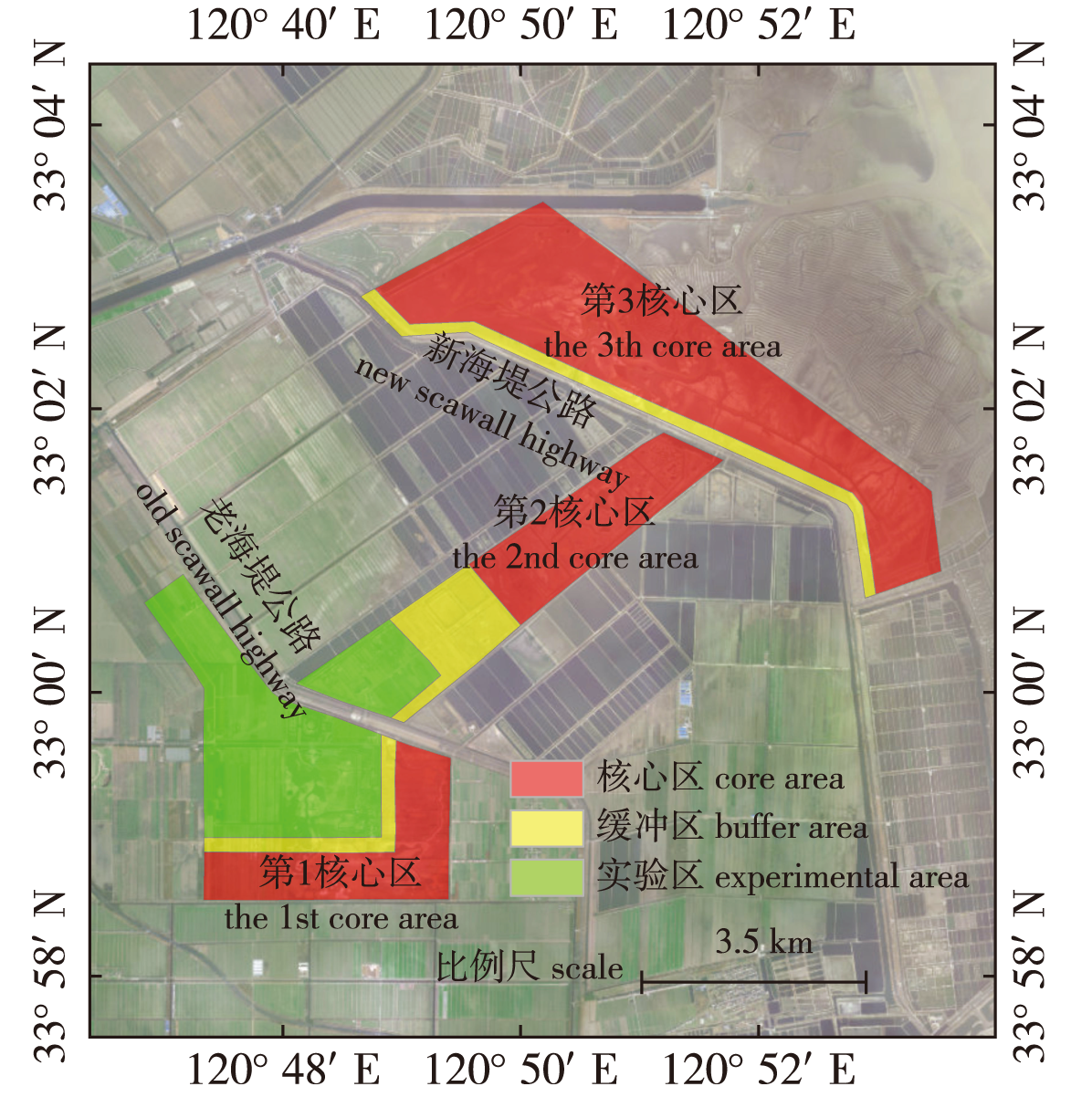
【Objective】This study aims to investigate the impact of the ecosystem service value (ESV) of the Dafeng Milu (Elaphurus davidianus) National Nature Reserve on regional socio-economic development, with the goal of providing a scientific basis for reserve management and ecological compensation.【Method】Aerial surveys of the reserve were conducted using unmanned aerial vehicle (UAV) remote sensing technology to acquire land use and land cover (LULC) data, complemented by ground-truthing measurements. Through integrated field investigations and image interpretation, the spatial distribution of LULC types and plant communities within the reserve was characterized. Physicochemical parameters of vegetation, soil, and water were systematically measured in situ. Spatial analysis was performed using ArcGIS 10.8 to quantify the areas of different LULC types. Based on the ecological characteristics of the reserve, an ecosystem service evaluation framework was established by selecting localized indicators and integrating UAV-derived data with field measurements. Various methods, including the market value method, shadow project method, travel cost method, replacement cost method, benefit transfer method, afforestation cost method, carbon tax method, and soil nutrient retention method were employed to assess the ecosystem service functions of the reserve.【Result】In 2017, the dominant land use types within the Dafeng Milu National Nature Reserve were tidal flats, bare land, and waters, which together accounted for 89.40% of the total area. Tidal flats constituted the largest proportion, covering 68.46%, followed by waters, which accounted for 11.75%. The total ESV of the reserve was estimated at 3.998 1 × 10⁸ CNY, with carbon sequestration being the most significant service. The service values, ranked in descending order, were: carbon sequestration > leisure tourism > nutrient cycling > water conservation > atmospheric regulation > water purification > biodiversity maintenance > scientific and cultural value > material production. The ESV of different plant communities followed by the order: Spartina alterniflora > bare land > Populus euramericana cv. I-214-Robinia pseudoacacia > Phragmites australis > Pennisetum alopecuroides > Imperata cylindrica > Suaeda glauca > Cynodon dactylon-Pennisentum alopecuroides mixed community.【Conclusion】The primary land use types in the reserve are tidal flats, bare land, and waters. The dominant herbaceous species in the first, second, and third core areas are Pennisentum alopecuroides, Phragmites australis, and S. alterniflora, respectively. Carbon sequestration and recreational tourism constitute the main ecosystem services provided by the reserve.
ecosystem service / values evaluation / land use / unmanned aerial vehicle (UAV) remote sensing / Dafeng Milu National Nature Reserve, Jiangsu Province
| [1] |
|
| [2] |
|
| [3] |
|
| [4] |
薛媛媛, 闫丹丹, 戚丽萍, 等. 江苏大丰麋鹿国家级自然保护区互花米草对水盐梯度的生态响应[J]. 环境科学学报, 2022, 42(1): 28-35.
|
| [5] |
|
| [6] |
邹兴红, 吴永波, 朱晓成, 等. 基于高光谱反射率的江苏大丰麋鹿国家级自然保护区水体营养状态评价[J]. 湿地科学, 2020, 18(2): 219-227.
|
| [7] |
袁红平, 解生彬, 薛丹丹, 等. 湿地生态监测系统设计与应用研究:以江苏省大丰麋鹿国家级自然保护区为例[J]. 中国农业文摘-农业工程, 2022, 34(1): 18-20.
|
| [8] |
常虎, 杨晋炜, 左平, 等. 外来物种互花米草除治成本与除治策略的权衡[J]. 生态与农村环境学报, 2025, 41(7): 841-851.
|
| [9] |
王立波, 姜慧, 安玉亭, 等. 中国麋鹿种群现状分析及保护对策探讨[J]. 野生动物学报, 2020, 41(3): 806-813.
|
| [10] |
中华人民共和国人力资源和社会保障部. 2017年度人力资源和社会保障事业发展统计公报[R]. 北京: 人力资源和社会保障部, 2018.
Ministry of Human Resources and Social Security of the People’s Republic of China. Statistical communiqué on human resources and social security development in 2017[R]. Beijing: Ministry of Human Resources and Social Security, 2018.
|
| [11] |
GB/T 21010-2017 土地利用现状国家分类标准[S].
GB/T 21010-2017 National Land Use Classification Standard[S].
|
| [12] |
江胜国. 国内土壤容重测定方法综述[J]. 湖北农业科学, 2019, 58 (增刊2): 82-86,91.
|
| [13] |
王火焰, 周健民. 土壤钾素形态转化机制与测定方法优化的研究进展[J]. 华中农业大学学报, 2023, 42(6): 35-42.
|
| [14] |
李朝英, 郑路. 流动分析仪同时快速测定植物全氮、全磷含量的方法改进[J]. 中国土壤与肥料, 2021(2): 336-342.
|
| [15] |
崔丽娟, 庞丙亮, 李伟, 等. 扎龙湿地生态系统服务价值评价[J]. 生态学报, 2016, 36(3):828-836.
|
| [16] |
王磊, 何冬梅, 江浩, 等. 江苏滨海湿地生态系统服务功能价值评估[J]. 生态科学, 2016, 35(5):169-175.
|
| [17] |
GB HJ636-2012 水质总氮的测定碱性过硫酸钾消解紫外分光光度法[S].
|
| [18] |
GB/T 11893-1989 水质总磷的测定钼酸铵分光光度法[S].
|
| [19] |
游惠明, 韩建亮, 潘德灼, 等. 泉州湾河口湿地生态系统服务价值的动态评价及驱动力分析[J]. 应用生态学报, 2019, 30(12): 4286-4292.
|
| [20] |
王妍, 李欣茹, 张甜甜, 等. 基于不同游客视角的百花山自然保护区生态系统服务社会价值评估[J]. 生态学报, 2023, 43(22): 9446-9458.
|
| [21] |
丁冬静, 李玫, 廖宝文, 等. 海南省滨海自然湿地生态系统服务功能价值评估[J]. 生态环境学报, 2015, 24(9): 1472-1477.
|
| [22] |
谢高地, 张彩霞, 张雷明, 等. 基于单位面积价值当量因子的生态系统服务价值化方法改进[J]. 自然资源学报, 2015, 30(8): 1243-1254.
|
| [23] |
韩爽, 张华兵, 刘玉卿, 等. 盐城滨海湿地芦苇群落和互花米草群落对碱蓬群落挤压的时空变化特征[J]. 生态学报, 2024, 44(22):10309-10321.
|
| [24] |
左雪燕, 窦志国, 蔡杨, 等. 江苏盐城滨海湿地优势植物功能性状分析[J]. 湿地科学与管理, 2019, 15(3):59-62.
|
| [25] |
曹牧, 薛建辉. 崇明东滩湿地生态系统服务功能与价值评估研究述评[J]. 南京林业大学学报(自然科学版), 2016, 40(5): 163-169.
|
| [26] |
高文佳, 吴永波, 邹兴红. 江苏大丰滨海湿地麋鹿春夏秋季生境选择[J]. 生态学杂志, 2023, 42(11): 2682-2689.
|
| [27] |
江波, 张路, 欧阳志云. 青海湖湿地生态系统服务价值评估[J]. 应用生态学报, 2015, 26(10):3137-3144.
|
| [28] |
蔡爱军, 马随随. 中国滨海湿地蓝色碳汇研究进展[J]. 湿地科学, 2022, 20(6): 846-851.
|
| [29] |
|
| [30] |
|
| [31] |
何舢, 韩少杰, 王丹彤, 等. 典型黑土区坡耕地表层土壤活性有机碳变化特征[J]. 森林工程, 2024, 40(2):85-91.
|
| [32] |
万安娜, 韩其飞, 李超凡, 等. 江苏滨海盐沼湿地碳动态时空差异及其对气候变化的响应[J]. 生态学杂志, 2024, 43(11): 3433-3442.
|
| [33] |
|
| [34] |
李沁园, 张思九, 林育青, 等. 近十年青海湖水生态系统生产总值变化及其影响因素[J]. 湖泊科学, 2024, 36(3): 963-974.
|
/
| 〈 |
|
〉 |