Research on the spatiotemporal response relationship between ecosystem services and tourist activity footprints in Urumqi City

Zhou Weiliang

Journal of Nanjing Forestry University (Natural Sciences Edition) ›› 2026, Vol. 50 ›› Issue (5) : 251-258.

PDF(18223 KB)
PDF(18223 KB)
Journal of Nanjing Forestry University (Natural Sciences Edition) ›› 2026, Vol. 50 ›› Issue (5) : 251-258. DOI: 10.12302/j.issn.1000-2006.202502016

Research on the spatiotemporal response relationship between ecosystem services and tourist activity footprints in Urumqi City

Author information +
History +

Abstract

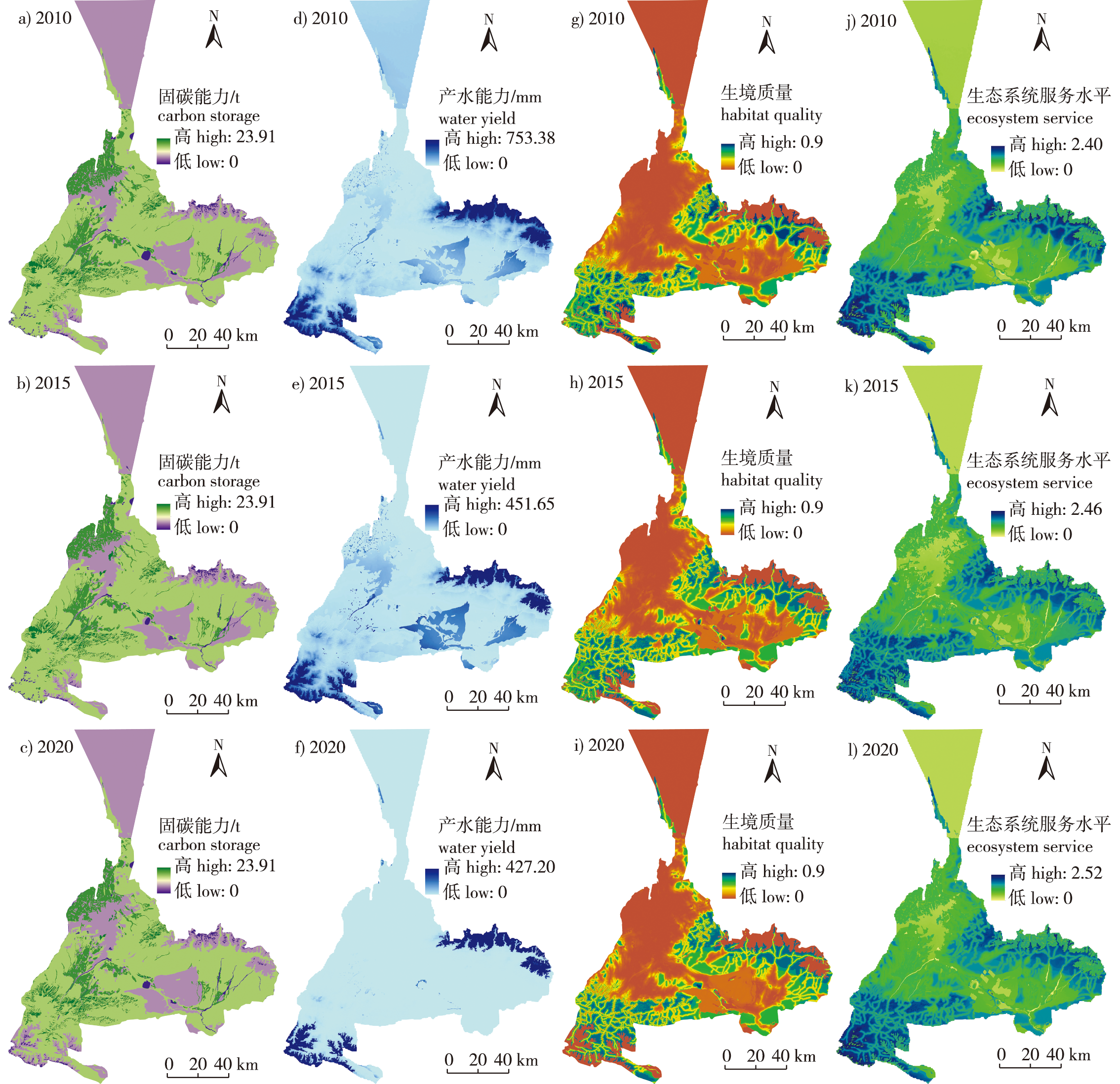
【Objective】This study investigates the spatiotemporal patterns of ecosystem services and tourist activity footprints in Urumqi, elucidates their coupling mechanisms, and proposes strategies for their coordinated development. 【Method】Based on land use, soil, and meteorological data from 2010, 2015, and 2020, the InVEST model was employed to assess carbon sequestration, water yield, and habitat quality, thereby quantifying the integrated ecosystem service level. Concurrently, point of interest (POI) data from the same periods were utilized to delineate the spatial distribution and evolution of tourist activity footprints. The global and local spatiotemporal response relationships between these two elements were subsequently analyzed. 【Result】(1) Ecosystem service levels exhibited significant spatial heterogeneity, forming low-value clusters in the built-up areas and northern desert regions, while high-value clusters were distributed across peripheral forests, grasslands, and alpine ice-snow zones. (2) Tourist activity footprints were predominantly concentrated within the built-up area, demonstrating a distinct outward expansion in a concentric pattern over time. (3) A significant negative correlation was observed at the citywide scale. Locally, the dominant response pattern was characterized by “High Service-Low Activity” decoupling, alongside localized “Low-Low” synergistic clusters. 【Conclusion】 It is recommended to leverage regional resource endowments to develop differentiated ecotourism products, including desert, forest hiking, grassland recreation, and alpine ice-snow tourism. Furthermore, enhancing tourism reception facilities, optimizing public transport and car rental systems, and improving the accessibility of ecological spaces are crucial to guiding the orderly extension of tourist footprints and achieving a balance between ecological conservation and tourism development.
Key words

ecosystem service level / tourist activity footprint / points of interest(POI) / InVEST model / Urumqi City

Cite this article

Download Citations
Zhou Weiliang. Research on the spatiotemporal response relationship between ecosystem services and tourist activity footprints in Urumqi City[J]. Journal of Nanjing Forestry University (Natural Sciences Edition). 2026, 50(5): 251-258 https://doi.org/10.12302/j.issn.1000-2006.202502016

References

[1]
Finlayson M, Cruz R D, Davidson N, et al. Millennium ecosystem assessment: ecosystems and human well-being: wetlands and water synthesis[M]. Washington D C: Island Press, 2005.
[2]
Blattert C, Lemm R, Thees O, et al. Management of ecosystem services in mountain forests:review of indicators and value functions for model based multi-criteria decision analysis[J]. Ecological Indicators, 2017, 79:391-409. DOI:10.1016/j.ecolind.2017.04.025.
[3]
王超锐, 钟佳辉, 张勇, 等. 景观组成和景观配置对百山祖国家公园生态系统服务的影响[J]. 南京林业大学学报(自然科学版), 2026, 50(3):101-111.
Wang C R, Zhong J H, Zhang Y, et al. Effects of landscape composition and configuration on ecosystem services of Baishanzu National Park[J]. Journal of Nanjing Forestry University (Natural Sciences Edition), 2026, 50(3):101-111.DOI:10.12302/j.issn.1000-2006.202410005.
[4]
Dasgupta P. Economic value of biodiversity,overview[M]//Encyclopedia of Biodiversity. Amsterdam: Elsevier, 2001:291-304. DOI:10.1016/b0-12-226865-2/00086-9.
[5]
Holdren J P, Ehrlich P R. Human population and the global environment[J]. American Scientist, 1974, 62(3):282-292.
[6]
王鹏, 李乐, 李楠, 等. 国家公园生态系统文化服务多元利益主体认知比较:基于实证调查分析[J]. 生态学报, 2024, 44(10):4217-4230.
Wang P, Li L, Li N, et al. A comparison of multi-stakeholder cognition of cultural ecosystem services in national park:empirical evidence based on surveys[J]. Acta Ecologica Sinica, 2024, 44(10):4217-4230. DOI:10.20103/j.stxb.202306061197.
[7]
黄季焜, 侯玲玲, 亢楠楠, 等. 草地生态系统服务经济价值评估研究[J]. 中国工程科学, 2023, 25(1):198-206.
Huang J K, Hou L L, Kang N N, et al. A study on economic value of grassland ecosystem services[J]. Strategic Study of CAE, 2023, 25(1):198-206. DOI:10.15302/J-SSCAE-2023.01.015.
[8]
赵午冬, 李旭谱, 张立伟, 等. 重大公共卫生安全事件下城市居民对绿地类型及生态系统服务的需求时空演变特征[J]. 生态学报, 2024, 44(10):4157-4169.
Zhao W D, Li X P, Zhang L W, et al. Spatial and temporal evolution of urban residents’ demand for green space types and ecosystem services under major public health safety events[J]. Acta Ecologica Sinica, 2024, 44(10):4157-4169. DOI:10.20103/j.stxb.202307191550.
[9]
周晓艳, 王海军, 黄欣, 等. 广佛都市圈生态系统服务权衡协同对城镇空间多维扩张的响应[J]. 应用生态学报, 2024, 35(7):1935-1943.
Zhou X Y, Wang H J, Huang X, et al. Responses of ecosystem service trade-offs and synergies in Guangfo Metropolitan Area to multidimensional expansion of urban space[J]. Chinese Journal of Applied Ecology, 2024, 35(7):1935-1943. DOI:10.13287/j.1001-9332.202407.024.
[10]
张赛赛, 胡江玲, 王梦杰. 乌鲁木齐市土地利用变化对生态系统服务价值的影响[J]. 环境保护科学, 2024, 50(5):23-30.
Zhang S S, Hu J L, Wang M J. Impact of land use change on ecosystem service value in Urumqi[J]. Environmental Protection Science, 2024, 50(5):23-30. DOI:10.16803/j.cnki.issn.1004-6216.2023120018.
[11]
朱义政, 王兆峰. 生态系统服务价值下的南山国家公园生态补偿的策略[J]. 湖南师范大学自然科学学报, 2024, 47(3):28-36.
Zhu Y Z, Wang Z F. Research on ecological compensation standards for Nanshan National Park under the value of ecosystem services[J]. Journal of Natural Science of Hunan Normal University, 2024, 47(3):28-36. DOI:10.7612/j.issn.2096-5281.2024.03.004.
[12]
安健吉, 员学锋, 杨悦, 等. 退耕还林还草工程对陕北地区生态系统服务的影响[J]. 环境科学, 2025, 46(4):2410-2427.
An J J, Yuan X F, Yang Y, et al. Effect of the grain for green program on ecosystem services in northern Shaanxi,China[J]. Environmental Science, 2025, 46(4):2410-2427. DOI:10.13227/j.hjkx.202404097.
[13]
杨爱玲, 李晓娜, 潘尹茜雪, 等. 赤水河流域(云南段)土地利用变化对生态系统服务价值的影响[J]. 东北林业大学学报, 2024, 52(9):84-90,114.
Yang A L, Li X N, Panyi X X, et al. Effects of land use change on ecosystem service value in the Chishui River basin (Yunnan section)[J]. Journal of Northeast Forestry University, 2024, 52(9):84-90,114. DOI:10.13759/j.cnki.dlxb.2024.09.007.
[14]
程子捷, 陈志, 纪超, 等. 江西省兴国县矿山生态修复对生态系统服务影响研究[J]. 中国矿业, 2024, 33(6):120-128.
Cheng Z J, Chen Z, Ji C, et al. Research on the impact of mine ecological restoration on ecosystem services in Xingguo County,Jiangxi Province[J]. China Mining Magazine, 2024, 33(6):120-128.
[15]
戚琦, 王玲, 陈俊辰, 等. 武汉市城市快速扩张与生态系统服务价值权衡/协同的交互作用[J]. 地理科学, 2024, 44(6):953-963.
Qi Q, Wang L, Chen J C, et al. Interaction between rapid urban expansion and ecosystem service value trade-off/synergy in Wuhan City[J]. Scientia Geographica Sinica, 2024, 44(6):953-963. DOI:10.13249/j.cnki.sgs.20221597.
[16]
余玉洋, 李晶. 秦巴山区生态系统服务供需与人类活动强度的时空变化及其耦合关系[J]. 生态学报, 2024, 44(19):8764-8773.
Yu Y Y, Li J. Spatio-temporal changes of ecosystem service supply and demand and human activity intensity in Qinling-Daba Mountains and its coupling relationship[J]. Acta Ecologica Sinica, 2024, 44(19):8764-8773. DOI:10.20103/j.stxb.202206211756.
[17]
冯一凡, 李翅, 冯君明. 基于GTWR模型的济南都市圈生态系统服务价值对城市扩张时空响应[J]. 北京林业大学学报, 2024, 46(1):104-118.
Feng Y F, Li C, Feng J M. Spatiotemporal response of ecosystem service value in Jinan metropolitan area to urban expansion based on GTWR model[J]. Journal of Beijing Forestry University, 2024, 46(1):104-118. DOI:10.12171/j.1000-1522.20220489.
[18]
林玉英, 靳一东, 张发梓, 等. 中国优秀旅游城市旅游经济空间格局演变特征及影响因素[J]. 地理科学, 2024, 44(6):973-983.
Lin Y Y, Jin Y D, Zhang F Z, et al. Spatial patten evolution characteristics and influencing factors of tourism economy in Chinese excellent tourism cities[J]. Scientia Geographica Sinica, 2024, 44(6):973-983. DOI:10.13249/j.cnki.sgs.20230579.
[19]
史晓婷, 李磊, 陶卓民, 等. 长三角地区城市生态旅游发展水平时空演变及其影响因素[J]. 生态学报, 2024, 44(9):3970-3983.
Shi X T, Li L, Tao Z M, et al. Spatio-temporal evolution and influencing factors of urban ecotourism development level in the Yangtze River delta[J]. Acta Ecologica Sinica, 2024, 44(9):3970-3983. DOI:10.20103/j.stxb.202303210544.
[20]
闫绪娴, 范玲, 施江南. 我国空气质量综合指数时空分布特征及其对旅游效益的影响:基于31个主要旅游城市情况的分析[J]. 陕西师范大学学报(哲学社会科学版), 2020, 49(2):125-138.
Yan X X, Fan L, Shi J N. Temporal and spatial distribution characteristics and the influence of the air quality comprehensive index in China:based on the analysis of 31 major tourist cities[J]. Journal of Shaanxi Normal University (Philosophy and Social Sciences Edition), 2020, 49(2):125-138. DOI:10.15983/j.cnki.sxss.2020.0322.
[21]
李晶, 葛玉辉. 基于数字足迹的城市旅游流网络结构演化研究:以杭州市为例[J]. 资源开发与市场, 2021, 37(5):620-628.
Li J, Ge Y H. Research on the evolution of urban tourism flow network structure based on digital footprint:a case study of Hangzhou City[J]. Resource Development & Market, 2021, 37(5):620-628. DOI:10.3969/j.issn.1005-8141.2021.05.016.
[22]
吴朝巧, 林菲, 牛俊杰, 等. 山西中部城市群生态系统服务对土地利用格局变化的响应[J]. 干旱区研究, 2024, 41(7):1153-1166.
Wu Z Q, Lin F, Niu J J, et al. Response of ecosystem service to land use pattern change in the Shanxi central urban agglomeration[J]. Arid Zone Research, 2024, 41(7):1153-1166. DOI:10.13866/j.azr.2024.07.07.
[23]
范育蕾, 夏哲一, 魏雪, 等. 四个时期长江经济带湿地生态系统服务对景观格局响应研究[J]. 湿地科学, 2024, 22(1):139-147.
Fan Y L, Xia Z Y, Wei X, et al. The response of wetland ecosystem services to landscape pattern of the Yangtze River Economic Belt during four periods[J]. Wetland Science, 2024, 22(1):139-147. DOI:10.13248/j.cnki.wetlandsci.2024.01.015.
[24]
方露露, 许德华, 王伦澈, 等. 长江、黄河流域生态系统服务变化及权衡协同关系研究[J]. 地理研究, 2021, 40(3):821-838.
Fang L L, Xu D H, Wang L C, et al. The study of ecosystem services and the comparison of trade-off and synergy in Yangtze River basin and Yellow River basin[J]. Geographical Research, 2021, 40(3):821-838. DOI:10.11821/dlyj020200044.
[25]
孙严超, 蔡俊, 王子豪, 等. 基于InVEST-PLUS-GeoDectetor模型的环杭州湾碳储量时空演变与多情景预测[J]. 南京林业大学学报(自然科学版), 2025, 49(5):19-28.
Sun Y C, Cai J, Wang Z H, et al. Spatio-temporal evolution and multi-scenario prediction of carbon storage around Hangzhou Bay based on InVEST-PLUS-GeoDectetor model[J]. Journal of Nanjing Forestry University (Natural Sciences Edition), 2025, 49(5):19-28. DOI:10.12302/j.issn.1000-2006.202312009.
[26]
田昌园, 张红丽, 张艺, 等. 长江中下游地区生态系统服务对景观占比的响应及其阈值[J]. 生态学报, 2024, 44(18):8150-8158.
Tian C Y, Zhang H L, Zhang Y, et al. Response of ecosystem services to landscape proportion and its threshold in the middle and lower reaches of the Yangtze River[J]. Acta Ecologica Sinica, 2024, 44(18):8150-8158. DOI:10.20103/j.stxb.202401080062.
[27]
肖雅文. 基于微博签到的云南旅游客流时空分布[J]. 地理空间信息, 2024, 22(2):61-63.
Xiao Y W. Spatio-temporal distribution of tourist flow in Yunnan based on weibo sign-in data[J]. Geospatial Information, 2024, 22(2):61-63. DOI:10.3969/j.issn.1672-4623.2024.02.014.
[28]
范梦余, 陈怡宁, 张辉. 呼伦贝尔游客POI空间格局与移动轨迹研究-基于地理标记照片的实证分析[J]. 干旱区资源与环境, 2019, 33(6):203-208.
Fan M Y, Chen Y N, Zhang H. Spatial patterns of tourist POI and tourist moving trajectory in Hulunbuir City[J]. Journal of Arid Land Resources and Environment, 2019, 33(6):203-208. DOI:10.13448/j.cnki.jalre.2019.189.
[29]
孙鸿鹄, 甄峰, 罗桑扎西. 基于网络大数据的城市内部便利性供需空间特征研究:以南京市中心城区为例[J]. 人文地理, 2018, 33(6):62-68,151.
Sun H H, Zhen F, Luosang Zhaxi. Study on the spatial characteristics of supply and demand of urban amenities based on network big data:a case study of central urban area of Nanjing[J]. Human Geography, 2018, 33(6):62-68,151. DOI:10.13959/j.issn.1003-2398.2018.06.008.
[30]
哈斯娜, 刘欢, 张雪峰, 等. 沙漠生态系统服务价值评估:以乌兰布和沙漠为例[J]. 内蒙古大学学报(自然科学版), 2023, 54(1):69-79.
Ha S N, Liu H, Zhang X F, et al. Dynamics of ecosystem service value in ulan buh desert in the past 30 years[J]. Journal of Inner Mongolia University (Natural Science Edition), 2023, 54(1):69-79. DOI:10.13484/j.nmgdxxbzk.20230109.
[31]
于贵瑞, 朱剑兴, 徐丽, 等. 中国生态系统碳汇功能提升的技术途径:基于自然解决方案[J]. 中国科学院院刊, 2022, 37(4):490-501.
Yu G R, Zhu J X, Xu L, et al. Technological approaches to enhance ecosystem carbon sink in China:nature-based solutions[J]. Bulletin of Chinese Academy of Sciences, 2022, 37(4):490-501. DOI:10.16418/j.issn.1000-3045.20220121002.
[32]
Lian X H, Jiao L M, Zhong J, et al. Artificial light pollution inhibits plant phenology advance induced by climate warming[J]. Environmental Pollution, 2021, 291:118110. DOI:10.1016/j.envpol.2021.118110.
[33]
杨蕊, 邓文彬. “三生空间”视角下乌鲁木齐市土地利用转型及生态环境效应分析[J]. 科学技术与工程, 2024, 24(14):5742-5752.
Yang R, Deng W B. Land use function transformation in the Urumqi based on ecological-production-living spaces and associated eco-environment effects[J]. Science Technology and Engineering, 2024, 24(14):5742-5752.
PDF(18223 KB)

Accesses

Citation

Detail

Sections
Recommended
The full text is translated into English by AI, aiming to facilitate reading and comprehension. The core content is subject to the explanation in Chinese.

/

〈 〉