Impacts of road and wind farms on bird diversity and spatial distribution in the Turpan-Hami region, Xinjiang, China

Peng Yuyang, Xu Jiliang, Liu Zhengxiao, Hu Qian, Li Xinyu, LI Jianqiang

Journal of Nanjing Forestry University (Natural Sciences Edition) ›› 2026, Vol. 50 ›› Issue (4) : 189-196.

PDF(2046 KB)
PDF(2046 KB)
Journal of Nanjing Forestry University (Natural Sciences Edition) ›› 2026, Vol. 50 ›› Issue (4) : 189-196. DOI: 10.12302/j.issn.1000-2006.202502028

Impacts of road and wind farms on bird diversity and spatial distribution in the Turpan-Hami region, Xinjiang, China

Author information +
History +

Abstract

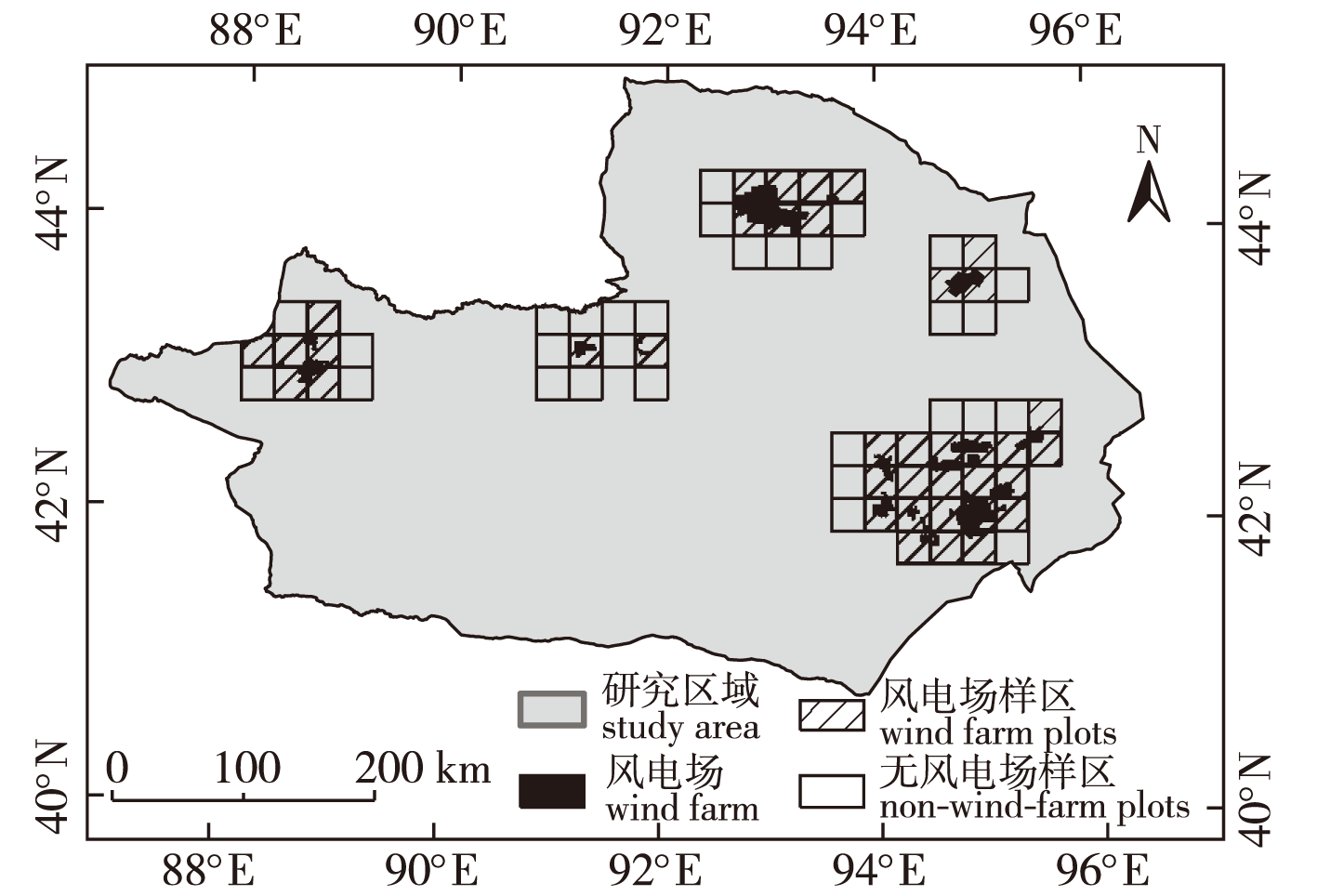
【Objective】As a crucial renewable energy base in northwestern China, the Turpan-Hami region of Xinjiang currently lacks localized research data of the impacts of roads and wind farms on avian diversity and distribution. This study aims to investigate avian diversity in the Turpan-Hami region, evaluate the spatial coupling relationships between the construction of roads and wind farms and avian diversity and distribution, and provide a scientific basis for coordinating regional energy development and ecological conservation.【Method】From 2023 to 2024, six avian diversity surveys were conducted in the Turpan-Hami region of Xinjiang. Bird distribution data were recorded using the line transect method within sample plots. Diversity indices, including the Shannon-Wiener index and functional richness index, were calculated to analyze the relationships between wind farm and road density and avian diversity. Additionally, paired t-tests, Chi-square tests, Spearman’s correlation analysis, linear models, and logistic regression models were employed to assess response differences among bird groups categorized by ecological guild, diet, nest type, and residency status to disturbances from roads and wind farms.【Result】Across the 65 sample plots surveyed, a total of 591 bird distribution records were obtained, comprising 2 916 individuals from 126 species, 82 genera, 35 families, and 16 orders. The Shannon-Wiener index in wind farm plots is significantly lower than that in non-wind-farm plots. Functional richness and evenness indices are highly significantly and significantly lower, respectively, in wind-farm plots, while functional divergence is significantly higher. However, no significant difference is observed in Rao’s quadratic entropy index between the two plot types. Significant and highly significant differences are found in the distribution frequencies of birds with different dietary preferences and residency status between wind farm and non-wind-farm plots. Spearman’s correlation results indicate that road density is significantly negatively correlated with the Shannon-Wiener index, functional evenness index, and Rao’s quadratic entropy index, and highly significantly positively correlated with functional divergence index. Wind farm density shows significant negative correlations with the Shannon-Wiener index, functional richness index, and Rao’s quadratic entropy index. Linear model results reveal that functional divergence index increases with road density, while Rao’s quadratic entropy index decreases with wind farm density. Significant differences are observed in the responses of different bird groups to road and wind farm disturbances. No significant differences are detected in either species richness or abundance of birds at distances of 50 and 1 000 m from wind farms.【Conclusion】The construction of roads and wind farms may exert certain negative impacts on avian diversity and distribution, with significant variations among different functional groups. Further research with intensified survey efforts is recommended to more comprehensively assess the potential effects of artificial infrastructures such as roads and wind farms on biodiversity, thereby providing a scientific foundation for harmonizing regional energy development and ecological conservation.
Key words

road / wind farm / bird distribution / spatial coupling / Turpan-Hami region, Xinjiang

Cite this article

Download Citations
Peng Yuyang , Xu Jiliang , Liu Zhengxiao , et al . Impacts of road and wind farms on bird diversity and spatial distribution in the Turpan-Hami region, Xinjiang, China[J]. Journal of Nanjing Forestry University (Natural Sciences Edition). 2026, 50(4): 189-196 https://doi.org/10.12302/j.issn.1000-2006.202502028

References

[1]
Farfán M A, Vargas J M, Duarte J, et al. What is the impact of wind farms on birds? a case study in southern Spain[J]. Biodiversity and Conservation, 2009, 18(14):3743-3758.DOI: 10.1007/s10531-009-9677-4.
[2]
Clements G R, Lynam A J, Gaveau D, et al. Where and how are roads endangering mammals in southeast Asia’s forests?[J]. PLoS One, 2014, 9(12):e115376.DOI: 10.1371/journal.pone.0115376.
[3]
Luo K, Wu Z L, Bai H T, et al. Bird diversity and waterbird habitat preferences in relation to wetland restoration at Dianchi Lake,southwest China[J]. Avian Research, 2019, 10(1):21.DOI: 10.1186/s40657-019-0162-9.
[4]
Alamgir M, Campbell M J, Sloan S, et al. High-risk infrastructure projects pose imminent threats to forests in Indonesian Borneo[J]. Scientific Reports, 2019, 9:140.DOI: 10.1038/s41598-018-36594-8.
[5]
Wightman P H, Martin J A, Kohl M T, et al. Effects of human and nonhuman predation risk on antipredator movement behaviors of an upland game bird[J]. Ecosphere, 2023, 14(6):e4581.DOI: 10.1002/ecs2.4581.
[6]
Jamin A, Peintinger M, Gimmi U, et al. Evidence for a possible extinction debt in Swiss wetland specialist plants[J]. Ecology and Evolution, 2020, 10(3):1264-1277.DOI: 10.1002/ece3.5980.
[7]
Luther D A, Cooper W J, Wolfe J D, et al. Tropical forest fragmentation and isolation:is community decay a random process?[J]. Global Ecology and Conservation, 2020, 23:e01168.DOI: 10.1016/j.gecco.2020.e01168.
[8]
Fernández-Bellon D, Wilson M W, Irwin S, et al. Effects of development of wind energy and associated changes in land use on bird densities in upland areas[J]. Conservation Biology, 2019, 33(2):413-422.DOI: 10.1111/cobi.13239.
[9]
于赐刚, 郭晓平, 马月, 等. 浙江松阳县鸟类群落结构和多样性分析[J]. 南京林业大学学报(自然科学版), 2023, 47(5):231-236.
Yu C G, Guo X P, Ma Y, et al. Analyses on bird community structure and diversity in Songyang County,Zhejiang Province[J]. Journal of Nanjing Forestry University (Natural Sciences Edition), 2023, 47(5):231-236.DOI: 10.12302/j.issn.1000-2006.202204014.
[10]
Loss S R, Dorning M A, Diffendorfer J E. Biases in the literature on direct wildlife mortality from energy development[J]. Bio Science, 2019, 69(5):348-359.DOI: 10.1093/biosci/biz026.
[11]
Wilson M W, Fernández-Bellon D, Irwin S, et al. Hen Harrier Circus cyaneus population trends in relation to wind farms[J]. Bird Study, 2017, 64(1):20-29.DOI: 10.1080/00063657.2016.1262815.
[12]
Jones N F, Pejchar L, Kiesecker J M. The energy footprint:how oil,natural gas,and wind energy affect land for biodiversity and the flow of ecosystem services[J]. BioScience, 2015, 65(3):290-301.DOI: 10.1093/biosci/biu224.
[13]
Shaffer J A, Buhl D A. Effects of wind-energy facilities on breeding grassland bird distributions[J]. Conservation Biology, 2016, 30(1):59-71.DOI: 10.1111/cobi.12569.
[14]
Cabrera-Cruz S A, Villegas-Patraca R. Response of migrating raptors to an increasing number of wind farms[J]. Journal of Applied Ecology, 2016, 53(6):1667-1675.DOI: 10.1111/1365-2664.12673.
[15]
Benítez-López A, Alkemade R, Schipper A M, et al. The impact of hunting on tropical mammal and bird populations[J]. Science, 2017, 356(6334):180-183.DOI: 10.1126/science.aaj1891.
[16]
Jin F J, Chen Z. Evolution of transportation in China since reform and opening up:patterns and principles[J]. Journal of Geographical Sciences, 2019, 29(10):1731-1757.DOI: 10.1007/s11442-019-1688-9.
[17]
Fan X C, Wang W Q. Spatial patterns and influencing factors of China’s wind turbine manufacturing industry:a review[J]. Renewable and Sustainable Energy Reviews, 2016, 54:482-496.DOI: 10.1016/j.rser.2015.10.020.
[18]
Zhang Q L, Yan M, Zhang L, et al. Three decades of oasis transition and its driving factors in Turpan-Hami basin in Xinjiang,China:a complex network approach[J]. Remote Sensing, 2024, 16(3):465.DOI: 10.3390/rs16030465.
[19]
沈小军, 周冲成, 吕洪. 大型风电场风电机组分组方法研究综述[J]. 电气工程学报, 2016, 11(5):1-10.
Shen X J, Zhou C C, H. Review on grouping method of large wind farm wind turbine generators[J]. Journal of Electrical Engineering, 2016, 11(5):1-10.DOI:10.11985/2016.05.001
[20]
Wilman H, Belmaker J, Simpson J, et al. EltonTraits 1.0:species-level foraging attributes of the world’s birds and mammals[J]. Ecology, 2014, 95(7):2027.DOI: 10.1890/13-1917.1.
[21]
Tobias J A, Sheard C, Pigot A L, et al., AVONET:morphological,ecological and geographical data for all birds[J]. Ecology Letters, 2022, 25(3):581-597.DOI: 10.1111/ele.13898.
[22]
王彦平, 宋云枫, 钟雨茜, 等. 中国鸟类的生活史和生态学特征数据集[J]. 生物多样性, 2021, 29(9):1149-1153.
Wang Y P, Song Y F, Zhong Y X, et al. A dataset on the life-history and ecological traits of Chinese birds[J]. Biodiversity Science, 2021, 29(9):1149-1153.DOI: 10.17520/biods.2021201.
[23]
Palomino D, Carrascal L M. Threshold distances to nearby cities and roads influence the bird community of a mosaic landscape[J]. Biological Conservation, 2007, 140(1/2):100-109.DOI: 10.1016/j.biocon.2007.07.029.
[24]
Cooke S C, Balmford A, Donald P F, et al. Roads as a contributor to landscape-scale variation in bird communities[J]. Nature Communications, 2020, 11:3125.DOI: 10.1038/s41467-020-16899-x.
[25]
Gutzwiller K J, Barrow W C Jr. Influences of roads and development on bird communities in protected Chihuahuan Desert landscapes[J]. Biological Conservation, 2003, 113(2):225-237.DOI: 10.1016/s0006-3207(02)00361-0.
[26]
Gómez-Catasús J, Garza V, Traba J. Wind farms affect the occurrence,abundance and population trends of small passerine birds:the case of the Dupont’s lark[J]. Journal of Applied Ecology, 2018, 55(4):2033-2042.DOI: 10.1111/1365-2664.13107.
[27]
约翰·马敬能. 中国鸟类野外手册[M].李一凡,译. 北京: 商务印书馆, 2022.
Mackinnon J. Guide to the birds of China[M].Li Y F, translate. Beijing: The Commercial Press, 2022.
[28]
郑光美. 中国鸟类分类与分布名录[M]. 第4版. 北京: 科学出版社, 2023.
Zheng G M. A checklist on the classification and distribution of the birds of China[M]. 4th ed. Beijing: Science Press, 2023.
[29]
Villéger S, Mason N W H, Mouillot D. New multidimensional functional diversity indices for a multifaceted framework in functional ecology[J]. Ecology, 2008, 89(8):2290-2301.DOI: 10.1890/07-1206.1.
[30]
Fan J, Wang X D, Wu W, et al. Function of restored wetlands for waterbird conservation in the Yellow Sea coast[J]. Science of the Total Environment, 2021, 756:144061.DOI: 10.1016/j.scitotenv.2020.144061.
[31]
Mason N W H, Mouillot D, Lee W G, et al. Functional richness,functional evenness and functional divergence:the primary components of functional diversity[J]. Oikos, 2005, 111(1):112-118.DOI: 10.1111/j.0030-1299.2005.13886.x.
[32]
Wu X L, Zhang L X, Zhao C F, et al. Satellite-based assessment of local environment change by wind farms in China[J]. Earth and Space Science, 2019, 6(6):947-958.DOI: 10.1029/2019EA000628.
[33]
Li D, Li B, Hou X Y, et al. Habitat suitability assessment for saunders’s gull (Saundersilarus saundersi) in the Yellow River Delta,China[J]. Ecological Informatics, 2024, 79:102393.DOI: 10.1016/j.ecoinf.2023.102393.
[34]
Zhao S S, Xu H, Song N N, et al. Effect of wind farms on wintering ducks at an important wintering ground in China along the East Asian-Australasian Flyway[J]. Ecology and Evolution, 2020, 10(17):9567-9580.DOI: 10.1002/ece3.6701.
[35]
Mdluli M V, Bhembe Z D, Brown L, et al. The loss of vegetation cover has distinct but short-term impact on multiple vertebrate taxa in a grassland ecosystem[J]. Global Ecology and Conservation, 2022, 38:e02198.DOI: 10.1016/j.gecco.2022.e02198.
[36]
Kroeger S B, Hanslin H M, Lennartsson T, et al. Impacts of roads on bird species richness:a meta-analysis considering road types,habitats and feeding guilds[J]. Science of The Total Environment, 2022, 812:151478.DOI: 10.1016/j.scitotenv.2021.151478.
[37]
Marques A T, Batalha H, Bernardino J. Bird displacement by wind turbines:assessing current knowledge and recommendations for future studies[J]. Birds, 2021, 2(4):460-475.DOI: 10.3390/birds2040034.
[38]
T Findlay C S, Bourdages J. Response time of wetland biodiversity to road construction on adjacent lands[J]. Conservation Biology, 2000, 14(1):86-94.DOI: 10.1046/j.1523-1739.2000.99086.x.
[39]
Veon J T, Mcclung M R. Disturbance of wintering waterbirds by simulated road traffic noise in Arkansas wetlands[J]. The Journal of Wildlife Management, 2023, 87(4):e22387.DOI: 10.1002/jwmg.22387.
[40]
Sriyaraj K, Shutes R B E. An assessment of the impact of motorway runoff on a pond,wetland and stream[J]. Environment International, 2001, 26(5/6):433-439.DOI: 10.1016/S0160-4120(01)00024-1.
[41]
Coppes J, Kämmerle J L, Grünschachner-Berger V, et al. Consistent effects of wind turbines on habitat selection of capercaillie across Europe[J]. Biological Conservation, 2020, 244:108529.DOI: 10.1016/j.biocon.2020.108529.
[42]
Devereux C L, Denny M J H, Whittingham M J. Minimal effects of wind turbines on the distribution of wintering farmland birds[J]. Journal of Applied Ecology, 2008, 45(6):1689-1694.DOI: 10.1111/j.1365-2664.2008.01560.x.
[43]
Pearce-Higgins J W, Stephen L, Langston R H W, et al. The distribution of breeding birds around upland wind farms[J]. Journal of Applied Ecology, 2009, 46(6):1323-1331.DOI: 10.1111/j.1365-2664.2009.01715.x.
[44]
Larsen J K, Guillemette M. Effects of wind turbines on flight behaviour of wintering common eiders:implications for habitat use and collision risk[J]. Journal of Applied Ecology, 2007, 44(3):516-522.DOI: 10.1111/j.1365-2664.2007.01303.x.
[45]
李婷, 张东向, 张德胜, 等. 2001—2022年扎龙湿地植被覆盖时空演变特征[J]. 森林工程, 2024, 40(4):79-87.
Li T, Zhang D X, Zhang D S, et al. The spatiotemporal evolution characteristics of vegetation cover in Zhalong Wetland from 2001 to 2022[J]. Forest Engineering, 2024, 40(4):79-87. DOI:10.7525/j.issn.1006-8023.2024.04.009.
[46]
姜琳琳, 张怡, 杨羽佳, 等. 苏州湿地鸟类多样性热点时空分布变化及其影响因素研究[J]. 生态与农村环境学报, 2024, 40(3):386-397.
Jiang L L, Zhang Y, Yang Y J, et al. Spatiotemporal distribution and influencing factors of bird diversity hotspots in suzhou wetland[J]. Journal of Ecology and Rural Environment, 2024, 40(3):386-397.DOI: 10.19741/j.issn.1673-4831.2022.1004.
[47]
Benítez-López A, Alkemade R, Verweij P A. The impacts of roads and other infrastructure on mammal and bird populations:a meta-analysis[J]. Biological Conservation, 2010, 143(6):1307-1316.DOI: 10.1016/j.biocon.2010.02.009.
PDF(2046 KB)

Accesses

Citation

Detail

Sections
Recommended
The full text is translated into English by AI, aiming to facilitate reading and comprehension. The core content is subject to the explanation in Chinese.

/