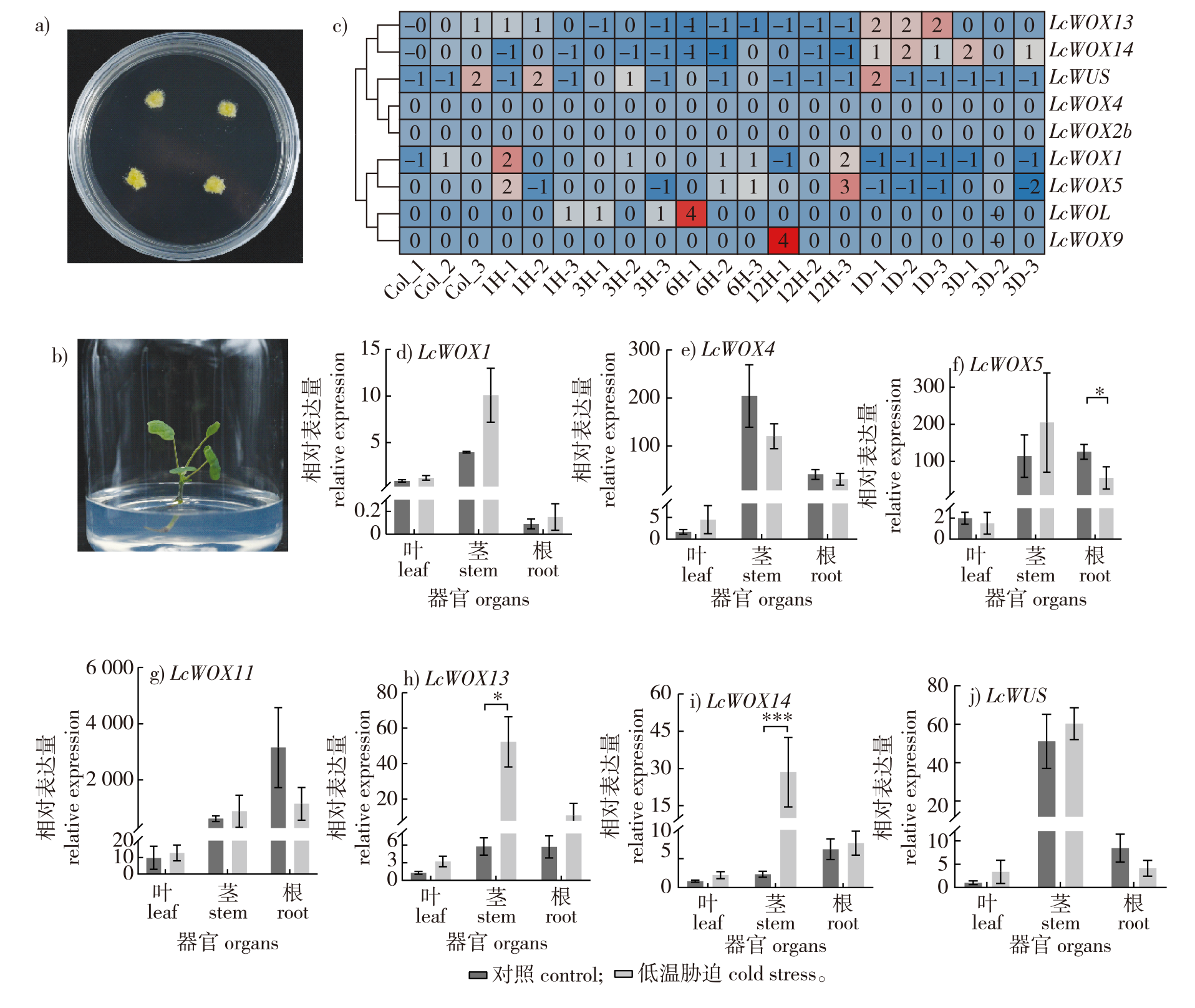
【Objective】Against the backdrop of intensified global climate change and continued ecological deterioration, abiotic stresses, including low temperature, drought, and salinity, have become major environmental constraints limiting plant growth and development, productivity, and geographical distribution. As sessile organisms, plants are unable to escape unfavorable environmental conditions and have therefore evolved sophisticated and efficient mechanisms for stress perception, signal transduction, and regulatory responses to maintain normal growth and enhance environmental adaptability. WUSCHEL-related homeobox (WOX) transcription factors, a family of plant-specific transcriptional regulators, play essential roles in embryogenesis, meristem maintenance, organ formation, and stem cell fate determination. In addition, accumulating evidence indicates that WOX genes are extensively involved in plant responses to abiotic stresses by regulating stress-related signaling pathways and the expression of downstream stress-responsive genes, thereby enhancing stress tolerance. However, the biological functions and molecular regulatory mechanisms of the WOX gene family in woody plants, particularly in Liriodendron sino-americanum, remain poorly understood. Elucidating the functions of the LcWOX transcription factor family in the abiotic stress responses of L. sino-americanum will not only facilitate the identification of key genetic resources for stress-resistant breeding and clarify the molecular basis of stress adaptation but also provide a theoretical foundation and candidate genes for the molecular breeding and genetic improvement of forest trees. Therefore, this study aimed to systematically characterize the expression patterns, functional responses, and potential regulatory mechanisms of the WOX transcription factor family in L. sino-americanum under abiotic stress conditions.【Method】L. sino-americanum was used as the experimental material. Abiotic stress conditions were simulated by low-temperature (4 ℃), drought (15% PEG 6000, mass fraction), and salt treatments (200 mmol/L NaCl). Immature embryos were first induced to undergo dedifferentiation to obtain callus tissues, followed by plant regeneration through somatic embryogenesis. Stress-responsive transcriptome sequencing combined with quantitative real-time PCR (qRT-PCR) was employed to analyze the expression patterns of LcWOX genes in response to abiotic stresses and to identify key stress-responsive genes. Subsequently, regenerated plants of L. sino-americanum subjected to drought and salt stress were evaluated through phenotypic observation and physiological and biochemical analyses, including measurements of relative water content (RWC), malondialdehyde (MDA) content, proline content, peroxidase (POD) activity, superoxide dismutase (SOD) activity, and catalase (CAT) activity.【Result】Based on previously generated transcriptomic data and further validated by qRT-PCR, the expression patterns of LcWOX family members under low-temperature, drought, and salt stresses were systematically analyzed, revealing distinct dynamic expression profiles in response to different abiotic stresses. The results demonstrated that different LcWOX genes exhibited distinct stress-responsive expression patterns. (1) Under low-temperature stress, only LcWOX13 and LcWOX14 were significantly upregulated in stem tissues, whereas the remaining LcWOX genes showed little or no transcriptional response in roots, stems, or leaves. (2) Under drought and salt stress, most LcWOX genes exhibited progressively enhanced inducible expression. Among them, LcWOX5 was significantly upregulated in roots under both drought and salt stresses, with an increase approaching 100%; LcWOX11 was significantly induced in stem tissues; and LcWOX13 and LcWOX14 were significantly upregulated in roots, stems, and leaves under both stress conditions. Furthermore, regenerated plants were subjected to drought and salt treatments for stress tolerance evaluation. Compared with the control, both drought and salt stresses reduced relative water content (RWC) from approximately 90% to approximately 75% and increased malondialdehyde (MDA) content to approximately 1.5-fold that of the control, indicating varying degrees of oxidative damage to cellular membranes. In response to stress-induced oxidative damage, the antioxidant defense system was markedly activated, with particularly pronounced increases in peroxidase (POD) and catalase (CAT) activities, accompanied by an increase in superoxide dismutase (SOD) activity. Notably, the proline content remained relatively stable at approximately 450 μg/g under drought stress, showing no significant change, whereas salt stress caused a significant reduction in proline accumulation of approximately 35%. 【Conclusion】 The LcWOX gene family plays an important regulatory role in the response of L. sino-americanum to abiotic stresses, potentially enhancing reactive oxygen species scavenging capacity and maintaining cellular homeostasis through coordinated regulation of the antioxidant defense system and osmotic adjustment, thereby alleviating stress-induced oxidative damage and improving stress tolerance. This study provides preliminary insights into the functional characteristics of LcWOX genes in the abiotic stress response of L. sino-americanum and offers a theoretical basis for elucidating their biological functions and identifying candidate genes for stress-resistant breeding. Nevertheless, the molecular regulatory network mediated by LcWOX genes, together with their upstream and downstream regulatory mechanisms during abiotic stress responses, remains largely unknown. Their specific functions and regulatory modes in different stress-signaling pathways warrant further investigation through molecular genetic approaches and functional validation.
 PDF(3036 KB)