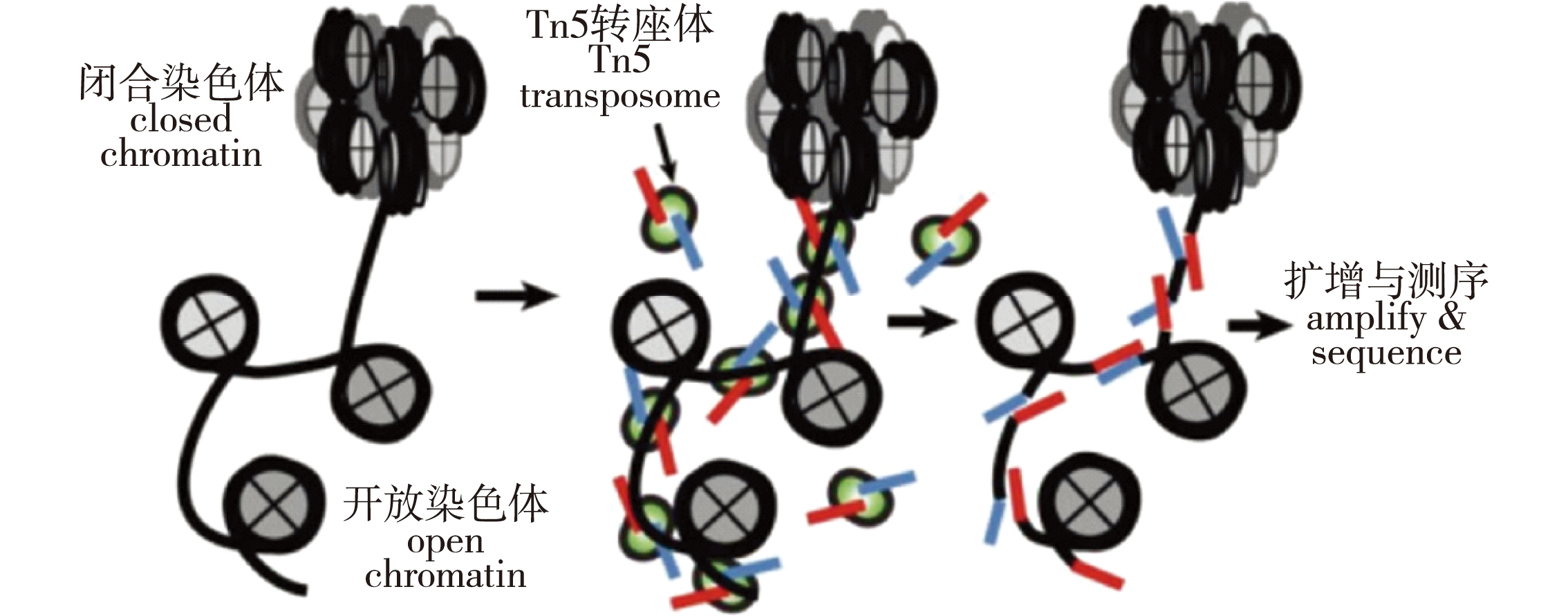
Epigenomics have significantly advanced our understanding of regulatory mechanisms governing plant growth, development, stress responses, and adaptive evolution by elucidating heritable changes in gene expression that occur independently of DNA sequence alterations. Chromatin accessibility, a key component of epigenetic regulation, directly modulates the binding efficiency of transcription factors and other regulatory proteins to DNA, thereby establishing the spatiotemporal specificity of gene expression patterns. The assay for transposase-accessible chromatin with high-throughput sequencing (ATAC-seq) has emerged as the method of choice for mapping open chromatin regions due to its technical advantages including minimal cell input requirements, simplicity in protocol execution, superior signal-to-noise ratio, and genome-wide coverage. This technique utilizes an engineered Tn5 transposase enzyme that preferentially cleaves accessible chromatin regions while simultaneously incorporating sequencing adapters, facilitating the generation of chromatin accessibility maps through high-throughput sequencing. Since its introduction in 2013, ATAC-seq has been employed in studies; however, fewer of these investigations have focused on plant systems, with research efforts predominantly concentrated in limited model species such as Arabidopsis thaliana, rice (Oryza sativa), and maize (Zea mays). This distribution highlights the need for broader and deeper applications within plant sciences to fully realize the potential of this transformative technology. In plant stress research, integrating ATAC-seq with multi-omics approaches including RNA-seq has enabled identification of transcription factors mediating pear responses to Penicillium expansum infection, characterization of a critical promoter deletion linked to reduced cold sensitivity in tomato, elucidation of an MdRAD5B-regulated drought tolerance module in apple, pinpointing of OsbZIP14 as a central regulator during heat stress in rice, and revelation of HSFA1a-mediated enhancer-promoter conformational dynamics in tomato. These studies collectively establish chromatin dynamics as fundamental components in stress signal transduction pathways. Within growth and development research, this methodology has advanced understanding through construction of an epigenetic atlas for wheat spike development, delineation of early regulatory networks in maize embryogenesis, mapping of regulatory interaction modules controlling rice glume morphology, dissection of methylation-accessibility coupling mechanisms associated with poplar growth, and identification of chromosomal spatial organization transitions correlating with flavonoid biosynthesis in peanut, thereby comprehensively illustrating the regulatory influence of chromatin accessibility on organogenesis and yield determination processes. Nevertheless, plant ATAC-seq research faces significant challenges: the presence of cell walls and chloroplasts complicates nuclear isolation, and standardized protocols remain underdeveloped; ATAC-seq data alone cannot directly resolve transcription factor binding or histone modification patterns, whereas multi-omics integration requires substantial financial and technical resources; plant genomes contain abundant repetitive sequences with incomplete annotations, limiting the efficacy of animal-derived analytical tools for peak calling and repeat masking; additionally, insufficient genomic resources and transformation systems in non-model species hinder widespread implementation. Future advancements should prioritize developing efficient plant-specific nuclear extraction methodologies, establishing cost-effective multi-omics frameworks, creating dedicated bioinformatics pipelines, and enhancing genomic tools and transformation platforms for major crops. Overcoming these limitations will position ATAC-seq as a pivotal tool for elucidating chromatin dynamics in regulatory networks underlying complex agronomic traits, thereby advancing crop genetic improvement through novel mechanistic insights and theoretical foundations.
 PDF(2422 KB)