PDF(1607 KB)

Molecular mechanisms of SPL transcription factors in plant stress responses
Chen Yingnan, Zhao Wenran, Yin Tongming
Journal of Nanjing Forestry University (Natural Sciences Edition) ›› 2026, Vol. 50 ›› Issue (4) : 15-26.
PDF(1607 KB)
 PDF(1607 KB)
Molecular mechanisms of SPL transcription factors in plant stress responses
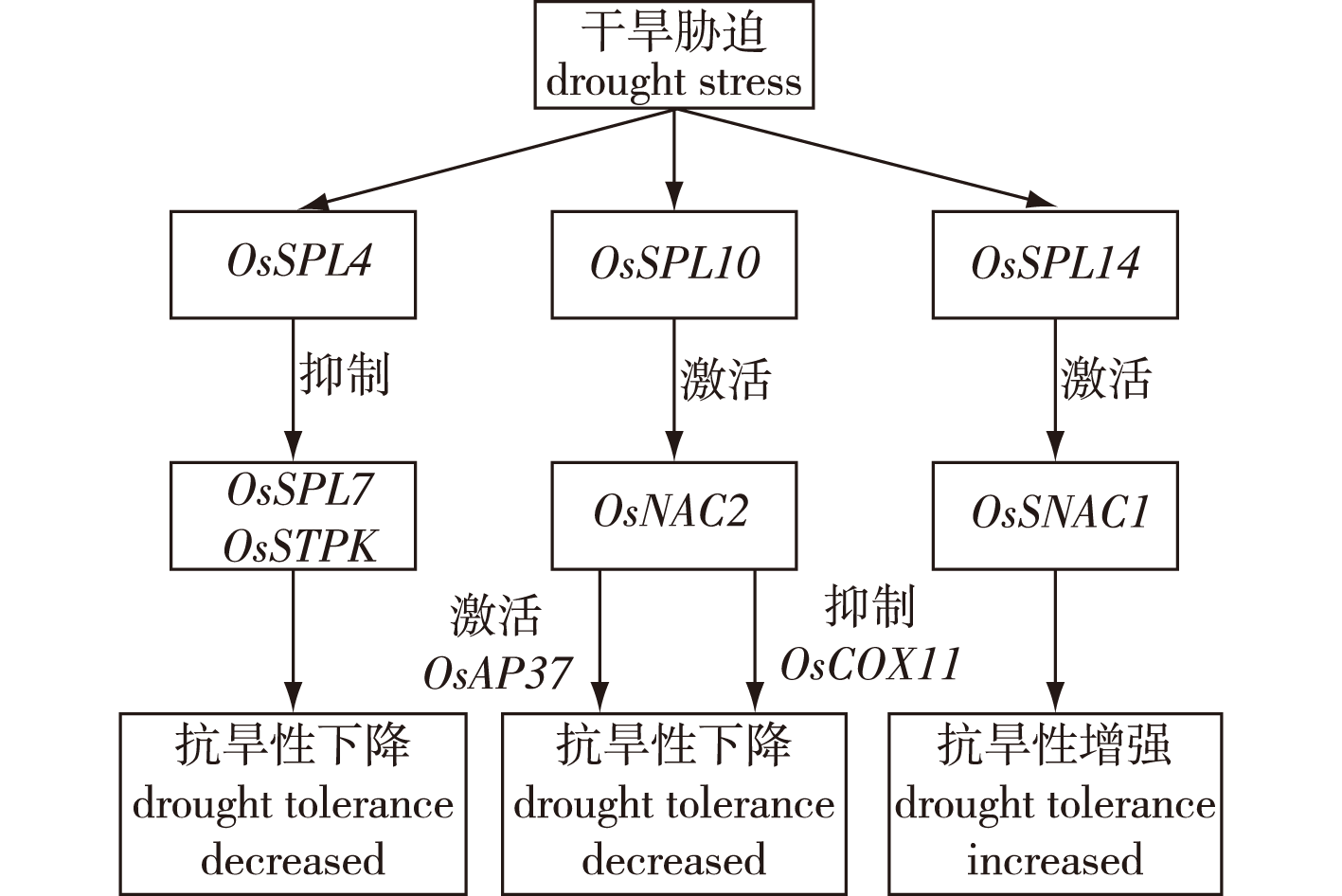
SPL (SQUAMOSA promoter binding protein-like) proteins are a class of plant-specific transcription factors that play essential roles in a wide range of biological processes, including plant growth and development, phase transition, metabolic regulation, and responses to environmental stimuli. In recent years, with the rapid development of functional genomics and molecular biology techniques, significant progress has been achieved in elucidating the functions of SPL genes, particularly in plant stress responses. However, a comprehensive understanding of their regulatory mechanisms under diverse stress conditions remains incomplete. This review systematically summarizes the regulatory roles and molecular mechanisms of SPL transcription factors in plant responses to both abiotic and biotic stresses. Under abiotic stress conditions, SPL genes enhance plant adaptability through multiple regulatory pathways. These include the modulation of reactive oxygen species (ROS) homeostasis (e.g. the OsSPL14-SNAC1 pathway), regulation of cuticular wax biosynthesis (e.g. AtSPL13-CER1), maintenance of ion homeostasis (e.g. the AtSPL7-miR398 cascade), and participation in cold response signaling (e.g. AtSPL9-CBF2). Through these pathways, SPL transcription factors coordinate physiological and biochemical processes to improve plant tolerance to drought, salinity, heavy metal stress, and low-temperature conditions. In response to biotic stress, SPL members function as key regulators of plant immunity against pathogens and insect pests. They modulate disease resistance by integrating hormone signaling pathways, particularly jasmonic acid (JA) and salicylic acid (SA), and by regulating downstream defense-related genes. For example, OsSPL10-JAmyb and AtSPL6-RPS4 regulatory modules play important roles in coordinating immune responses and enhancing resistance. In addition, SPL genes are involved in the regulation of secondary metabolism, which contributes to plant defense. Furthermore, this review discusses the potential applications of SPL genes in crop genetic improvement, particularly in enhancing stress resistance, optimizing plant architecture, and improving yield stability through genetic engineering and genome editing approaches. Considering limited studies on SPL gene functions in woody plants, future research should focus on comparative functional analyses and the exploration of evolutionary mechanisms, including gene duplication and functional divergence. Overall, this review provides a comprehensive overview of SPL transcription factors in plant stress responses, offering insights into their regulatory networks and functional diversity, and providing a theoretical basis for their application in molecular breeding of stress-resistant plants.
SQUAMOSA promoter binding protein-like(SPL) transcription factor / abiotic stress / biotic stress / molecular mechanism
| [1] |
|
| [2] |
|
| [3] |
|
| [4] |
|
| [5] |
|
| [6] |
|
| [7] |
|
| [8] |
|
| [9] |
|
| [10] |
|
| [11] |
|
| [12] |
|
| [13] |
|
| [14] |
|
| [15] |
|
| [16] |
|
| [17] |
|
| [18] |
曾慧玲. 转录因子OsSPL4在水稻干旱胁迫响应中的分子作用机理研究[D]. 福州: 福建农林大学, 2023.
|
| [19] |
|
| [20] |
|
| [21] |
|
| [22] |
|
| [23] |
|
| [24] |
|
| [25] |
|
| [26] |
|
| [27] |
|
| [28] |
|
| [29] |
|
| [30] |
|
| [31] |
|
| [32] |
|
| [33] |
|
| [34] |
|
| [35] |
|
| [36] |
|
| [37] |
|
| [38] |
|
| [39] |
|
| [40] |
|
| [41] |
|
| [42] |
|
| [43] |
|
| [44] |
|
| [45] |
|
| [46] |
|
| [47] |
|
| [48] |
|
| [49] |
|
| [50] |
|
| [51] |
|
| [52] |
|
| [53] |
|
| [54] |
|
| [55] |
|
| [56] |
|
| [57] |
|
| [58] |
|
| [59] |
|
| [60] |
|
| [61] |
|
| [62] |
|
| [63] |
|
| [64] |
|
| [65] |
|
| [66] |
|
| [67] |
|
| [68] |
|
| [69] |
|
| [70] |
|
| [71] |
|
| [72] |
|
| [73] |
|
| [74] |
|
| [75] |
|
| [76] |
|
| [77] |
|
| [78] |
曹妮, 陈渊, 季芝娟, 等. 水稻抗稻瘟病分子机制研究进展[J]. 中国水稻科学, 2019, 33(6):489-498.
|
| [79] |
|
| [80] |
|
| [81] |
|
| [82] |
|
| [83] |
|
| [84] |
|
| [85] |
|
| [86] |
|
| [87] |
|
/
| 〈 |
|
〉 |